News
2026 Top Solar Street Lamp Types for Global Buyers
As global cities pursue lower energy costs and cleaner public infrastructure, the Solar Street Lamp market is becoming more diverse. In 2026, buyers can choose among integrated all-in-one lamps, split solar systems, hybrid models, and smart connected designs. Each type serves different roads, climates, budgets, and maintenance plans. There is no universal best option.
This guide examines practical choices for international buyers. It considers lighting performance, solar panel efficiency, battery chemistry, pole height, installation space, and control systems. A coastal road may require stronger corrosion protection. A cloudy region may need larger panels and better battery reserves. A busy urban street may benefit from motion dimming and remote monitoring. Small details matter.
Real projects often reveal more than product brochures. A stated wattage does not always describe useful brightness. Battery capacity can also look impressive while providing limited nighttime runtime. Buyers should request test reports, warranty terms, photometric data, and clear replacement procedures. Independent certification and supplier experience deserve careful review. Field references are valuable, although they are not perfect evidence.
The right selection depends on measured demand, local weather, traffic patterns, and available technical support. This article compares major Solar Street Lamp types and explains where each design performs well. It also highlights common purchasing mistakes, including choosing by price alone. Some recommendations may need adjustment after site testing. That is normal. Reliable decisions come from verified data, practical experience, and honest attention to limitations.
What Solar Street Lamps Are and How They Work
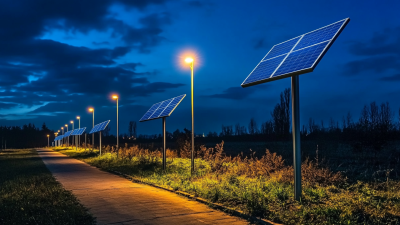
Solar street lamps are outdoor lighting systems powered by sunlight rather than continuous grid electricity. They combine a photovoltaic panel, rechargeable battery, LED fixture, controller, and supporting pole. During daylight, the panel converts sunlight into electrical energy. The controller regulates charging and protects the battery from overcharging or deep discharge. At dusk, a light sensor activates the LED, which uses stored energy through the night.
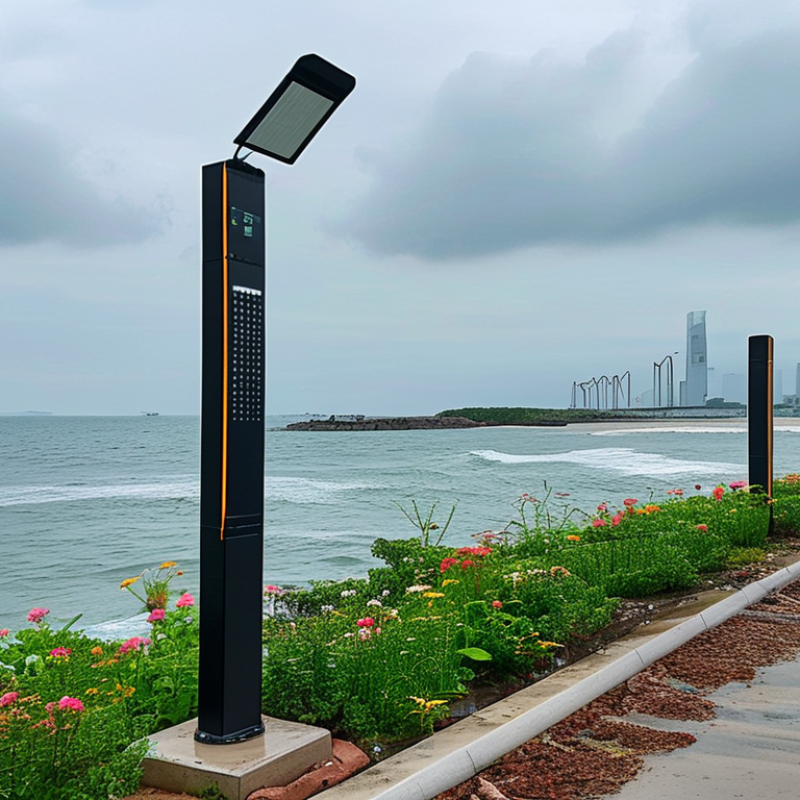
Some models integrate the panel, battery, and lamp into one compact unit. Others separate the panel from the fixture, allowing better positioning in shaded locations. No grid cable is required. Site conditions decide the practical design. A coastal road may need corrosion-resistant housing, while a narrow sidewalk may require controlled brightness and careful glare management. Motion sensors can reduce battery use in areas with limited nighttime activity.
Site inspections often reveal problems that catalog photos hide. Dust can reduce panel output, and nearby trees may create seasonal shade. Engineers should check solar exposure, road width, mounting height, drainage, battery temperature, and local lighting requirements. Battery capacity must match the longest expected low-sun period, not an average sunny day. Yet no design is perfect. A cloudy week, aging battery, or poorly aimed panel can reduce performance. Reliable planning includes realistic weather data, accessible maintenance points, and regular cleaning.
2026 Top Solar Street Lamp Types for Global Buyers — What Solar Street Lamps Are and How They Work
Solar street lamps use photovoltaic panels to convert sunlight into electricity, store energy in batteries, and power LED luminaires automatically at night. The chart shows representative LED power ranges commonly used for major solar street lamp configurations; actual specifications vary by road width, lighting class, climate, and required autonomy.
All-in-one lamps integrate the solar panel, battery, controller, and LED light in one housing and are convenient for fast installation. Split solar lamps place the panel and battery separately, allowing larger panels and batteries for higher-power applications. Semi-integrated lamps combine selected components while retaining some installation flexibility. Solar-hybrid lamps can use grid electricity as backup when sunlight or battery capacity is insufficient.
Main Types of Solar Street Lamps for Different Applications
In 2026, solar street lamps are selected by application, not only by wattage. Integrated solar lamps place the panel, battery, controller, and LED unit together. They suit residential lanes, small parks, and pathways with simple installation needs. Their compact design reduces wiring, but limited panel size can affect performance during long cloudy periods.
Split solar street lamps separate the panel from the lamp body. This design works well on wider roads, rural routes, and industrial areas requiring stronger lighting. Installers can adjust the panel angle and place it away from tree shade.
All-in-one models are practical for urban walkways, while smart solar lamps support dimming, motion sensing, and remote monitoring. High-output systems may serve highways or large public spaces, but they require careful pole spacing and stronger structural planning.
More power is not always better.
Tips: Check local solar radiation, winter weather, road width, and required illumination levels before choosing a type. Confirm battery protection, waterproof ratings, and heat management. A lamp that performs well in a showroom may struggle beside tall buildings or dusty roads. Pilot testing one section can reveal shadows, glare, and unexpected nighttime traffic. Also review maintenance access. Easy servicing often matters more than a slightly higher initial brightness.
Key Components and Technologies in Modern Solar Street Lamps
Solar street lamps in 2026 are less about lamp wattage and more about system balance. The photovoltaic module must match local sunlight, temperature, and seasonal cloud cover. IRENA’s Renewable Capacity Statistics 2024 recorded 346 GW of new solar capacity in 2023, representing 73% of renewable additions. That growth supports better module availability, but it does not remove design risks.
The battery remains the system’s quiet backbone. Lithium iron phosphate cells offer strong cycle life and thermal stability, while a smart controller manages charging, dimming, and low-voltage protection. MPPT technology can improve energy harvesting during weak sunlight. LED optics then shape the beam, reduce glare, and place light on roads instead of nearby windows. Motion or microwave sensors can lower output after midnight. Small details matter. Enclosures should match IEC 60529 ingress ratings, while mechanical protection should follow IEC 62262 impact classifications.
Real projects still expose uncomfortable gaps. A lamp may perform well in a laboratory but fail after several cloudy nights. Oversized batteries increase cost and embodied materials. Undersized batteries create dark streets. The IEA’s Renewables 2024 report expects global renewable capacity to expand by 5,500 GW between 2024 and 2030, with solar providing most growth. Yet procurement teams should not copy global averages blindly. Local autonomy targets, salt exposure, dust, maintenance access, and actual pedestrian patterns deserve separate calculations. No calculation is perfect. Field monitoring must challenge the original design.
2026 Top Solar Street Lamp Types for Global Buyers - Key Components and Technologies in Modern Solar Street Lamps
| Solar Street Lamp Type | Typical Application | PV Module Configuration | Battery Technology | Typical Rated Power | Typical Autonomy | Lighting Performance | Control and Smart Features | Key Buyer Considerations |
|---|---|---|---|---|---|---|---|---|
| All-in-One Integrated Solar Street Lamp | Residential roads, parks, pathways, small parking areas | Integrated monocrystalline silicon panel; commonly 20–80 Wp | Lithium iron phosphate, LiFePO4; typically 10–40 Ah at 12.8 V | 20–60 W LED | 2–5 nights, depending on local solar resource and operating profile | Approx. 120–190 lm/W system efficacy; usually 3,000–6,500 K CCT | Photocell, timer dimming, motion sensor options, remote monitoring options | Fast installation and low cabling requirements; limited component access compared with split systems |
| All-in-Two Solar Street Lamp | Urban streets, residential developments, commercial access roads | Separate panel and luminaire; commonly 40–120 Wp | LiFePO4; typically 20–80 Ah at 12.8 V | 30–100 W LED | 3–7 nights, with programmable dimming | Approx. 130–200 lm/W system efficacy; optics selected for road distribution | MPPT charge control, adaptive dimming, PIR or microwave motion sensing, optional wireless management | Better thermal separation and serviceability than fully integrated designs; requires accurate pole orientation and wiring |
| Split-Type Solar Street Lamp | Main roads, highways, public infrastructure, high-demand lighting zones | Independently mounted monocrystalline panel; commonly 80–300 Wp | LiFePO4; typically 40–200 Ah at 12.8 V or 25.6 V | 60–180 W LED | 4–10 nights, subject to design irradiance and load requirements | Approx. 130–210 lm/W system efficacy; asymmetric road optics are common | MPPT, multi-stage charging, programmable schedules, fault alerts, cellular or LoRaWAN options | Highest design flexibility and easier replacement of individual components; greater installation complexity and cable protection needs |
| Solar LED Retrofit Luminaire | Replacement of conventional luminaires on existing poles | External PV module sized to the existing pole and energy demand; commonly 60–200 Wp | LiFePO4; capacity selected from site load calculations | 40–150 W LED | 3–8 nights | Approx. 120–190 lm/W; compatible with roadway, walkway, and area-light distributions | DALI or 0–10 V compatibility may be available; photocell, dimming, and occupancy controls | Useful for phased upgrades; pole strength, mounting dimensions, cable routes, and existing foundation condition must be verified |
| Smart Connected Solar Street Lamp | Smart cities, municipal networks, campuses, logistics and transport areas | Separate or integrated monocrystalline panel; commonly 60–250 Wp | LiFePO4 with battery management system; modular capacities are common | 40–180 W LED | 3–8 nights, supported by adaptive load control | Approx. 130–200 lm/W; dimming profiles can reduce overnight energy use | Remote monitoring, GPS, energy reporting, fault alarms, motion sensing, cellular, NB-IoT, or LoRaWAN connectivity | Evaluate network coverage, cybersecurity, software interoperability, data ownership, and recurring connectivity costs |
| Highway and High-Mast Solar Street Lamp | Highways, interchanges, wide carriageways, large intersections | Large split PV array; commonly 150–500 Wp per lighting point | LiFePO4 or engineered lithium battery bank; 100–400 Ah equivalent capacity | 100–300 W LED | 4–7 nights, based on road-class lighting requirements and solar design data | Approx. 130–190 lm/W; precise photometric design is essential for uniformity and glare control | Central or remote control, adaptive dimming, surge protection, battery diagnostics, optional traffic or weather sensors | Requires structural analysis, wind-load assessment, high-quality foundations, and compliance with local roadway standards |
| Solar Street Lamp with Motion-Adaptive Lighting | Low-traffic roads, cycleways, footpaths, parks, rural access routes | Integrated or separate monocrystalline panel; commonly 30–150 Wp | LiFePO4; commonly 15–100 Ah at 12.8 V | 20–100 W LED | 3–7 nights, depending on detection frequency and standby level | Standby output may be 20–50% of rated output; full output is activated when movement is detected | PIR or microwave sensor, programmable detection range, time delay, dimming, and optional remote monitoring | Can reduce battery and PV sizing; sensor placement, false triggers, ambient temperature, and pedestrian privacy should be considered |
| Solar Street Lamp with Hybrid Grid Backup | Critical roads, security zones, public facilities, locations with unreliable solar conditions | Monocrystalline PV array; commonly 60–300 Wp | LiFePO4; sized for solar operation and backup transition requirements | 40–200 W LED | 2–7 solar-only nights, with grid backup available when battery state of charge is low | Approx. 120–200 lm/W; stable output can be maintained during extended low-irradiance periods | Automatic grid changeover, MPPT, battery protection, scheduled dimming, remote fault reporting | Higher reliability and smaller battery requirements; requires grid connection, compliant switching equipment, and electrical protection |
How to Choose Solar Street Lamps for Global Markets
2026 Top Solar Street Lamp Types for Global Buyers
How to Choose Solar Street Lamps for Global Markets
Global buyers should match lamp design with climate, road use, and maintenance capacity. The IEA’s Renewables 2024 report expects solar PV to deliver nearly 80% of renewable capacity growth through 2030. IRENA recorded about 1,865 GW of global solar capacity at the end of 2024. These figures show strong solar momentum, but they do not validate every street lamp. That assumption needs caution.
Start with measured lighting performance. Request photometric files, maintained lux values, beam angles, and uniformity data. Wattage alone is weak evidence. A residential lane may need different optics from a high-speed road. Check battery chemistry, usable capacity, charging time, and autonomy during cloudy periods. Three nights may be suitable in one region, but inadequate during monsoon conditions.
Inspect the enclosure before signing a contract. IP66 protection, corrosion resistance, and suitable IK ratings matter near coasts or dusty highways. Ask for operating tests across local temperature ranges. The World Bank’s energy-efficiency guidance consistently emphasizes lifecycle cost, not purchase price alone. Include battery replacement, pole access, spare parts, and warranty response in the calculation. Standards differ between markets, so confirm electrical, photometric, and safety requirements locally. No checklist is flawless. Pilot testing can still reveal poor shade tolerance, glare, or disappointing winter performance.
Installation, Maintenance, and Performance Evaluation Criteria
Solar street lamps perform well only when installation matches local conditions. Survey the road at different times, not just from a plan. Check winter sunlight, nearby trees, buildings, and pole shadows. A clear solar panel needs the correct tilt and orientation for the site latitude. The foundation must resist wind, flooding, and vehicle vibration. Keep battery access practical. A difficult battery compartment creates future maintenance problems.
Use a light-level meter after installation. Measure illuminance at the road center, edges, crossings, and pedestrian areas. Uniform lighting matters as much as peak brightness. Record operating hours through several cloudy nights. A reliable system should meet its expected autonomy without unsafe battery discharge.
Check panel output, charging current, controller alarms, and battery voltage during commissioning. Small errors here can become expensive failures.
Maintenance should include panel cleaning, cable inspection, corrosion checks, and fastener tightening. Dust may reduce charging noticeably in dry regions. Inspect after severe weather. Replace damaged seals before moisture reaches the electronics. Review performance records every month, including night runtime and fault frequency. Ratings such as IP protection are useful, but installation quality still decides real durability.
One field lesson deserves attention: theoretical autonomy often looks better than actual performance. Seasonal clouds, shade growth, and battery aging are easy to underestimate. Test again, and question the original assumptions.
Related Posts
-
Understanding the Technical Specifications and Installation Guide for Best Solar Street Lights
-

Challenges in Choosing the Best Solar Led Street Light for Global Buyers
-

China Top 10 Solar Street Lamp Brands You Should Know?
-

Best Commercial Solar Street Lights for Global Buyers?
-
The Ultimate Guide to Choosing the Best Solar Lamp for Your Outdoor Spaces
-
How Solar Street Lamps are Revolutionizing Urban Lighting and Enhancing Sustainability