
News

What Is the Best Chandelier LED Lamp in 2026?

Choosing the best Chandelier Led Lamp in 2026 means looking beyond sparkle. A chandelier may brighten a dining table beautifully, yet feel harsh when its bulbs have poor color quality or cannot dim smoothly. Check the fixture’s socket type, maximum wattage, bulb shape, and dimmer compatibility before comparing prices. Small details matter.

The U.S. Department of Energy’s LED lighting guidance reports that residential LEDs use at least 75% less energy and can last up to 25 times longer than incandescent bulbs. These figures offer useful context, but they are not a promise that every chandelier bulb will achieve the same results. Heat, operating hours, product quality, and fixture design all affect performance. Still, the numbers are meaningful.

For a practical comparison, this guide considers brightness, color temperature, color rendering, dimming, efficiency, and replacement convenience. A warm 2700K glow can suit a traditional dining room, while a brighter neutral tone may work better in a high-ceiling entryway. Look for clear specifications and independent certification, such as ENERGY STAR where applicable. A sleek bulb is not automatically a good one.

There is room for judgment. A technically efficient lamp can still look cold above a wooden table. The best choice balances measured performance with the room’s actual use, and no single model suits every home. This introduction sets up a careful look at what buyers should verify before choosing a chandelier LED lamp for 2026.
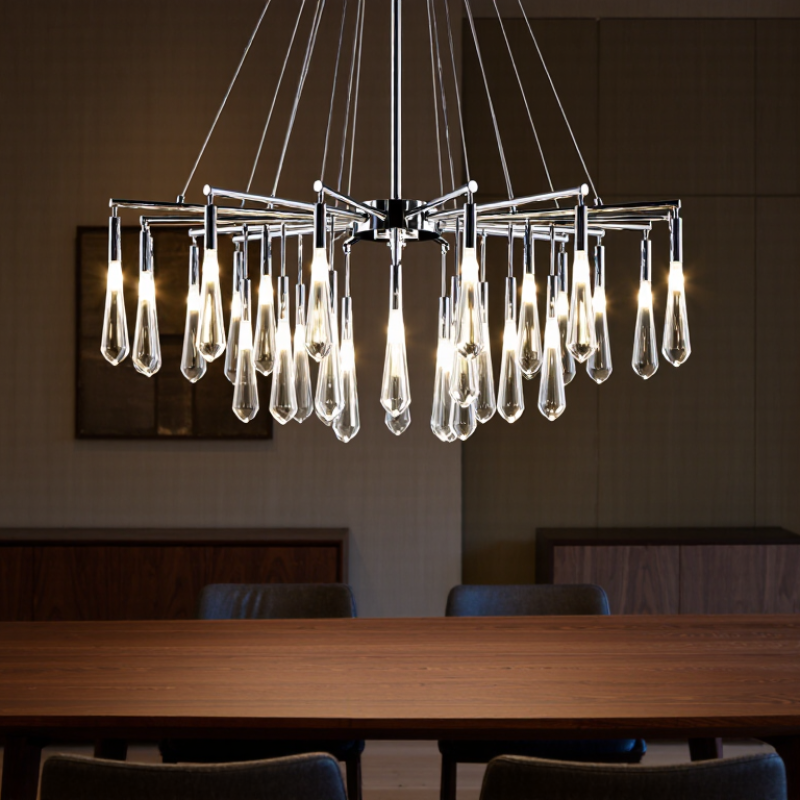
What Is the Best Chandelier LED Lamp in 2026?

What a Chandelier LED Lamp Is and How It Works

A chandelier LED lamp is a decorative ceiling light that uses light-emitting diodes instead of traditional incandescent bulbs. Some fixtures take replaceable LED bulbs; others use built-in LED modules. That difference matters when a light needs maintenance. Picture a dining-room chandelier: several small lamps illuminate the table while the frame shapes the room’s appearance. Small details matter.

When switched on, household alternating current reaches a driver inside the fixture or bulb. The driver regulates the electricity into a form the LED chips can use. The chips produce light with less heat than incandescent filaments, though they still need proper heat management. Metal arms or a heat-dissipating base help carry warmth away. A glass shade softens the output. It is not magic.

Brightness is measured in lumens, while color temperature describes whether light looks warm or cool. Warm white often makes wood and food feel inviting; a cooler setting can seem stark in a dining area. Check dimmer compatibility and bulb shape before choosing. Color rendering also affects how fabrics and paint appear. One detail is easy to miss: even a suitable LED can look harsh if its shade exposes the chips directly. A “warm” label does not guarantee the exact tone you expect.

How Chandelier LED Lamps Differ by Style and Configuration

A chandelier LED lamp is not defined by brightness alone. Its style changes how light feels in a room. Crystal or glass drops scatter small highlights across walls, while a clean, linear frame gives kitchens and dining spaces a more even, directed look. Candle-shaped LEDs suit traditional arms, but their exposed points can feel harsh without shades or frosted glass. Subtle details matter.

Configuration affects daily use. Integrated LED fixtures often have a slim profile and can offer smooth dimming, but the light source may not be replaceable by the homeowner. Socket-based designs allow bulb changes, though the chosen bulb must match the fixture’s shape and dimmer requirements. Check the product’s specifications rather than assuming every LED is dimmable. A warm color temperature, around 2700K, usually feels inviting over a dining table; cooler light can look stark there.

Room size and ceiling height should guide the fixture’s shape and scale. A wide chandelier needs enough clearance from cabinets and walkways, while a tall, multi-tier design can overwhelm a low ceiling. Measure before buying. Also check fixture weight and mounting requirements, especially for older ceilings. One trade-off is easy to miss: decorative glass can create sparkle, but it may need frequent dusting. The right choice balances appearance, usable light, and the effort required to maintain it.

Which Features Matter When Comparing Chandelier LED Lamps

What Is the Best Chandelier LED Lamp in 2026?

Which Features Matter When Comparing Chandelier LED Lamps

A good chandelier LED lamp should suit the room, not just look striking in a product photo. Check its light output in lumens and compare that figure with the room’s size and purpose. Warm white light often feels comfortable over a dining table, while neutral white can make kitchen details easier to see. Color rendering also matters: a higher CRI can help food, fabrics, and wood tones look more natural. Dimming is useful, but confirm that the lamp and dimmer are compatible.

Light matters.

Check the chandelier’s dimensions, weight, and bulb base before ordering. Measure from the ceiling to the intended lowest point, then leave enough clearance for people to walk beneath it. Review the LED driver’s replacement options and the stated lifespan; these details are easy to overlook. A long lifespan is not a promise that every part will last equally long. For hardwired fixtures, have a qualified electrician confirm that the ceiling support and wiring are suitable.

A beautiful fixture can still be the wrong fit.

Tips: Compare the lamp’s lumen output, color temperature, CRI, dimming compatibility, and dimensions side by side. Read the warranty terms carefully. Measure twice. One small regret: choosing by appearance alone can leave a room brighter, cooler, or more crowded than expected.

How to Match a Chandelier LED Lamp to a Room

A chandelier LED lamp should fit the room before it becomes a focal point. Measure the room’s length and width in feet, then add those numbers to estimate a starting diameter in inches. A 12-by-14-foot dining room, for example, suits a fixture near 26 inches wide. Treat this as a guide, not a rule; ceiling height and furniture can change the balance.

Over a dining table, hang the fixture’s bottom roughly 30 to 36 inches above the tabletop, adjusting for ceiling height and sightlines. For a living room, check that people can walk beneath it without ducking. Scale matters. A large chandelier can feel heavy in a compact bedroom, while a small one may disappear above a long table. I still think room measurements alone can mislead: a dark ceiling or bulky chairs can make the same fixture feel different.

Choose light output for the room’s actual use, not just the lamp’s wattage. DOE Energy Saver guidance says LEDs use at least 75% less energy than incandescent lamps. It also reports lifespans up to 25 times longer. Look for a dimmable fixture when one room needs both bright cleaning light and softer evening light. Check dimmer compatibility, too; that detail is easy to miss, and a flickering lamp is not a pleasant surprise.

What Is the Best Chandelier LED Lamp in 2026? - How to Match a Chandelier LED Lamp to a Room

Room or Use Room Size or Furniture Guide Suggested Chandelier Size Suggested LED Light Output Color Temperature Placement and Matching Tips
Dining room Room around 12 × 14 ft; dining table about 36–48 in wide About 26 in diameter using the room-dimension rule; keep the fixture narrower than the table About 1,500–3,000 lumens from the chandelier, with dimming recommended 2,700–3,000 K for a warm, relaxed dining atmosphere Center the fixture over the table. As a starting point, place its bottom about 30–36 in above the tabletop for an 8 ft ceiling; adjust for ceiling height and sightlines.
Living room Room around 16 × 18 ft About 34 in diameter using the room-dimension rule About 2,000–4,000 lumens as one layer of a layered lighting plan 2,700–3,000 K for a cozy feel; 3,000–3,500 K for a cleaner, brighter look Center it in the main seating area. Use floor or table lamps as well, and choose a dimmable fixture to adapt the light for different activities.
Bedroom Room around 12 × 12 ft About 24 in diameter using the room-dimension rule About 1,000–2,000 lumens for general lighting, supplemented by bedside lights 2,700 K is a common choice for warm evening light Choose a design that does not obstruct movement or feel oversized above the bed. A dimmer helps make the room more comfortable at night.
Entryway or foyer Room around 8 × 10 ft with adequate ceiling height About 18 in diameter using the room-dimension rule About 1,000–2,000 lumens, depending on ceiling height and available daylight 2,700–3,000 K for a welcoming first impression Keep the fixture clear of doors and circulation paths. In walkways, aim for at least 7 ft of clearance beneath the fixture, subject to local requirements.
Kitchen or breakfast area Room around 12 × 12 ft, or a small dining table within the kitchen About 24 in diameter using the room-dimension rule; size to the table if positioned above one About 1,500–3,000 lumens for general lighting, with separate task lighting for counters 3,000–3,500 K for a brighter, more task-friendly appearance Position the chandelier so it does not interfere with cabinet doors or work areas. Use diffused shades to reduce glare while seated or working.

How to choose: A useful starting point for chandelier diameter is to add the room’s length and width in feet, then use that number in inches (for example, a 12 × 14 ft room suggests about a 26 in diameter). These are planning ranges, not fixed requirements: ceiling height, daylight, wall colors, fixture shade design, and other light sources all affect the result. Check the fixture’s stated lumen output and confirm that the LED lamp or integrated LEDs are dimmer-compatible when needed.

How to Assess Energy Use, Light Quality, and Installation Needs

Choosing a chandelier LED lamp starts with energy use, but wattage alone can mislead. Compare the lamp’s lumens with its watts: lumens indicate visible brightness, while watts show power consumption. For example, a 1,600-lumen lamp using 16 watts gives about 100 lumens per watt. Check the fixture’s total output, too. Several low-output bulbs may look bright on paper but leave a dining table dim.

Light quality changes the room as much as brightness. A warm 2700K tone can soften wood and evening meals; a cooler setting may feel sharper in a workspace. Look for a high color-rendering index when accurate fabric or food colors matter. Still, specifications do not fully predict how light will feel against dark walls. If possible, test one bulb in the room before buying a full set. Small details matter.

Installation needs deserve an early check. Measure ceiling height, chandelier width, and the distance above a table; a beautiful fixture can hang too low. Confirm that the bulbs fit the sockets and that dimmers are compatible with LED loads. Some combinations flicker or buzz, even when the labels seem reassuring. Check the ceiling box’s support and the fixture’s weight before installation. If wiring or structural support is uncertain, ask a qualified electrician rather than guessing.

What Is the Best Chandelier LED Lamp in 2026?

Compare estimated annual energy use at three common light-output levels.

Estimates use representative LED power levels of 4.5 W for 450 lumens, 8 W for 800 lumens, and 11 W for 1,100 lumens, operated 3 hours per day for 365 days. Actual wattage varies by lamp. For a good fit, check the fixture’s socket and maximum-wattage limits, confirm dimmer compatibility, and compare color temperature and CRI on the lamp packaging.