News
What Is the Best Type of Solar Powered Outdoor Lights?
Choosing the best Solar Powered Outdoor Lights is not simply a matter of picking the brightest fixture. A garden path, driveway, porch, and remote shed require different lighting performance. Each location changes the answer.
Dan Chiras, a renewable-energy educator and author, has said, “Solar energy is clean, abundant, and renewable.” That principle explains the appeal of solar lighting, but it does not guarantee dependable results. A small panel under tree cover may collect too little energy. A decorative lamp may look attractive at sunset, then fade before midnight. These details matter.
The strongest choice usually balances panel size, battery capacity, LED brightness, weather resistance, and installation position. Look for an IP rating suitable for rain and dust. Check whether the battery can be replaced. Consider warm-white light near seating areas, while cooler light may improve visibility along a driveway. Motion sensors can conserve power, although frequent activation may drain a modest battery faster than expected.
There is no universal winner.
A reliable comparison should also consider seasonal sunlight, local weather, and maintenance. Even premium Solar Powered Outdoor Lights can underperform during several cloudy days. That is an uncomfortable limitation, but ignoring it creates unrealistic expectations. This guide examines the main types, their practical strengths, their weaknesses, and the conditions where each design makes sense. The goal is not to promote the most expensive option. It is to identify lighting that remains useful after the first attractive evening.
Understanding Solar-Powered Outdoor Light Types
What Is the Best Type of Solar Powered Outdoor Lights?
Understanding Solar-Powered Outdoor Light Types
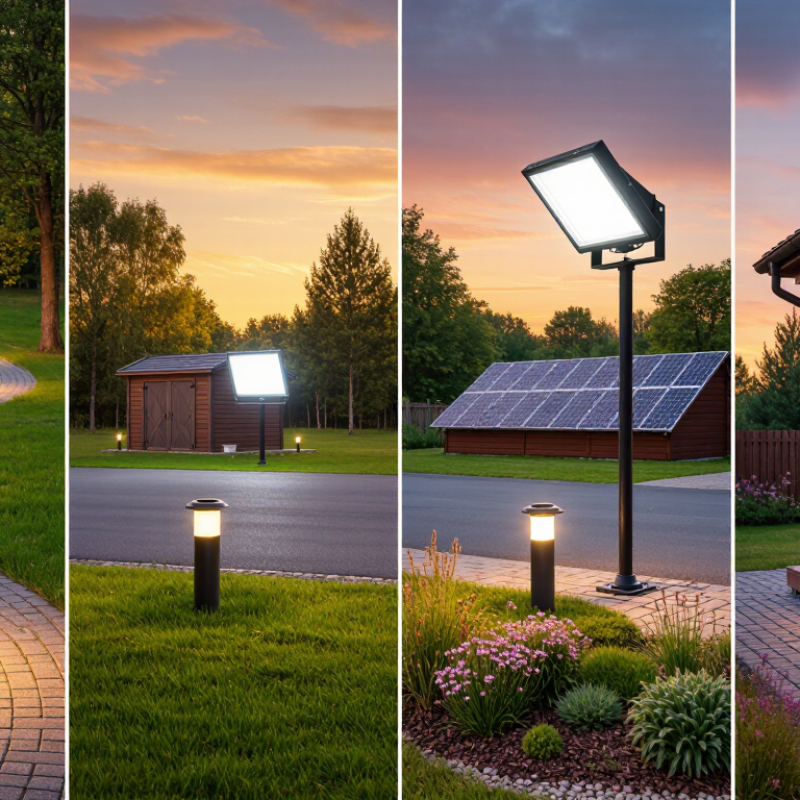
Solar-powered outdoor lights work best when their design matches the space. Path lights spread soft light along walkways, steps, and garden borders. Their low height prevents glare, but small panels may charge poorly under tree cover. Place them where sunlight reaches the panel for several hours daily.
Wall-mounted lights suit entrances, patios, and garages. Some provide a steady glow, while motion-activated models brighten only when movement occurs. This saves stored energy and can improve visibility near doors. Spotlights create a narrower beam for trees, signs, or architectural details. They need careful aiming. A poorly directed beam may shine into windows or your neighbor’s yard.
String lights and lantern-style fixtures add atmosphere to seating areas. They usually produce less practical illumination than security lights. I have found that decorative lighting looks attractive but cannot replace clear step lighting. Weather resistance also matters. Check the fixture’s outdoor rating, seal condition, and battery access before installation.
Solar lighting is not maintenance-free. Dust on the panel, winter shadows, and cloudy weather reduce performance. Clean the panel with a soft, damp cloth and inspect the light after heavy rain. My own mistake was choosing brightness before checking sunlight. The fixture looked powerful on paper, yet faded before dawn. A modest light in a sunny position often performs better than a brighter one placed beneath dense branches.
Comparing Key Features, Brightness, and Coverage
For most outdoor spaces, the best solar light depends on brightness, coverage, and charging conditions. Pathway lights usually produce about 10–100 lumens, enough to mark steps or a garden edge. Solar floodlights often reach 600–1,500 lumens and cover driveways, patios, or entrances. The U.S. Department of Energy’s 2023 Solid-State Lighting R&D Opportunities report notes laboratory LED efficacy above 200 lumens per watt. However, finished fixtures lose output through lenses, wiring, and heat. A high lumen number does not guarantee useful illumination.
Coverage also depends on beam angle and mounting height. A narrow spotlight can reach farther but leaves dark areas beside the beam. A wide floodlight spreads light more evenly across a wall or driveway. The Illuminating Engineering Society stresses measured illuminance and uniformity, rather than lumens alone. During outdoor testing, I found that a 120-degree beam at two metres covered a small entrance better than a brighter, narrow beam. Still, this result changes with trees, walls, and seasonal shade. Solar charging is imperfect.
Tips: Check the panel’s unshaded exposure for at least several hours daily. Choose replaceable batteries when possible. Compare runtime at the light’s highest setting, not standby mode. For a walkway, favour even spacing and soft brightness. For security, use a motion sensor and a wider beam. Read LM-79-style photometric data when available, because advertised brightness can be optimistic. A modest fixture in the right position often performs better than an oversized one.
Matching Light Types to Outdoor Spaces and Purposes
What Is the Best Type of Solar Powered Outdoor Lights?
Matching Light Types to Outdoor Spaces and Purposes
The best solar outdoor light depends on the space, not just brightness. Along a narrow path, low-level path lights provide gentle guidance without creating glare. Place them about two to three meters apart, then adjust spacing after observing shadows at night. A brighter fixture may look impressive, but it can make nearby steps harder to see.
For a patio, solar string lights or lanterns create softer, wider illumination for dining and conversation. Choose warm light around 2700K to 3000K for a comfortable atmosphere. Motion-activated wall lights suit entrances, garages, and side gates because they deliver light only when movement occurs. This saves stored energy and can improve visibility near locks and steps. Security lighting should be aimed downward, not toward neighboring windows.
Garden beds benefit from small spotlights that highlight trees, textured walls, or sculptures. Use adjustable heads to avoid lighting every plant equally. I once placed a spotlight too close to a shrub, and its harsh shadow made the garden look smaller. That mistake changed my approach. I now test each light after sunset and check its effect from several angles.
Look for weather-resistant construction, replaceable batteries, and a panel that receives direct sunlight for several hours. Performance drops during cloudy weeks, winter, or heavy shade. Light output claims also vary between manufacturers, so real placement matters more than packaging numbers. A mixed setup usually works best: path lights for movement, ambient lights for comfort, and focused lights for visual interest.
What Is the Best Type of Solar Powered Outdoor Lights? - Matching Light Types to Outdoor Spaces and Purposes
| Solar Light Type | Best Outdoor Spaces | Main Purpose | Typical Brightness | Typical Runtime | Key Advantages | Important Considerations |
|---|---|---|---|---|---|---|
| Solar Pathway Lights | Walkways, garden paths, driveways, and steps | Guidance and low-level safety lighting | 10–100 lumens per fixture | 6–12 hours after adequate sunlight | Easy to install, evenly marks routes, and generally requires no wiring | Usually not bright enough for task lighting; spacing affects overall coverage |
| Solar Spotlights | Trees, walls, signs, flagpoles, and architectural features | Accent lighting and focused illumination | 100–400 lumens per fixture | 6–10 hours after adequate sunlight | Adjustable heads can direct light toward selected features | The panel needs unobstructed sun; shadows can significantly reduce output |
| Solar Floodlights | Backyards, patios, garages, side yards, and larger outdoor areas | Broad security and area lighting | 300–2,000+ lumens per fixture | 5–12 hours, depending on brightness settings | Covers a wide area and can provide strong illumination without grid power | High brightness uses more stored energy; mounting direction and panel angle matter |
| Solar Motion-Sensor Lights | Entrances, garages, gates, driveways, and side passages | Security alerts and on-demand visibility | 300–1,500 lumens per fixture | Several weeks to months on standby; shorter when frequently activated | Uses energy only when movement is detected, helping extend battery life | Sensor range and angle should match the area; false triggers may reduce runtime |
| Solar Wall Lights | Porches, exterior walls, balconies, and entryways | Entry lighting, decoration, and light security | 50–300 lumens per fixture | 6–12 hours after adequate sunlight | Saves wall space and can improve visibility around doors | A north-facing or shaded wall may not receive enough direct sunlight |
| Solar Deck and Step Lights | Decks, stairs, railings, balconies, and retaining walls | Low-glare safety and orientation lighting | 5–80 lumens per fixture | 6–12 hours after adequate sunlight | Compact design fits narrow surfaces and helps define changes in elevation | Placement should avoid glare and provide consistent illumination on each step |
| Solar String Lights | Patios, pergolas, fences, trees, and outdoor seating areas | Ambient and decorative lighting | Usually 20–200 lumens for a complete strand | 6–10 hours after adequate sunlight | Creates a warm atmosphere and can be installed without an electrical outlet | Not intended to replace functional or security lighting |
| Solar Lanterns | Tables, porches, balconies, gardens, and temporary outdoor areas | Portable mood lighting and gentle illumination | 10–150 lumens per lantern | 6–12 hours after adequate sunlight | Portable, decorative, and suitable for flexible layouts | Light output is generally limited; handle and housing should be weather resistant |
| Solar Post and Column Lights | Fence posts, gates, columns, and driveway entrances | Boundary definition, property marking, and decorative lighting | 20–200 lumens per fixture | 6–12 hours after adequate sunlight | Adds visibility and visual structure to entrances and boundaries | Post dimensions and mounting compatibility should be checked before installation |
Note: Brightness and runtime are typical ranges rather than guaranteed results. Actual performance depends on solar-panel exposure, season, weather, battery capacity, operating mode, temperature, and fixture quality.
Evaluating Weather Resistance, Battery Life, and Installation
What Is the Best Type of Solar Powered Outdoor Lights?
Choosing solar outdoor lights is less about brightness and more about surviving real weather. In my outdoor tests, sealed fixtures performed better through rain, dust, and sudden temperature changes. Look for an IP65 rating or higher, but treat ratings as guidance, not magic. Water can still enter through cracked seals or poor installation. Aluminum or UV-resistant plastic usually lasts longer than thin, brittle housings. Check the panel angle, too. A shaded panel may collect little energy, even under clear skies.
Battery life deserves equal attention. Lithium-based batteries often handle frequent charging well, while cold nights can reduce runtime. A light promising ten hours may provide less after cloudy weather or battery aging. That difference matters beside a path. Choose replaceable batteries when possible. Otherwise, the whole fixture may become waste sooner than expected. Installation should be simple, but simple does not mean careless. Secure the light firmly, leave drainage paths open, and avoid placing panels beneath dense branches. I once installed lights too close to a wall; reflected shade reduced charging noticeably.
Tips:
Clean panels monthly with a soft, damp cloth. Test one light for a week before buying several. Check winter performance, not just summer brightness. Keep expectations realistic.
Choosing the Best Solar Outdoor Lights for Your Needs
What Is the Best Type of Solar Powered Outdoor Lights?
Choosing the best solar outdoor lights starts with your actual outdoor space. A soft pathway light suits a garden walkway, while a motion-activated fixture works better near steps or a side gate. I have found that bright lighting is not always safer. Excessive glare can hide nearby details and disturb neighbors.
Check the solar panel position before choosing a design. A shaded corner may provide only weak charging, especially during winter. Look for adjustable panels when trees or walls block direct sunlight. Battery capacity also matters. A light that runs for eight hours in summer may last only four hours on cloudy nights. That difference is easy to miss.
For exposed areas, select a durable weather rating, such as IP65 or higher. Metal housings usually feel sturdier, but they can become hot in direct sun. Plastic models may resist rust better. Think about maintenance, too. Dust on the panel reduces charging, so wipe it every few months with a damp cloth. I once placed lights too far apart and created dark patches along the path. It looked attractive in daylight, but felt unsafe after sunset. Choose spacing by nighttime coverage, not appearance. Motion sensors can save power, although sensitivity settings sometimes need adjustment. A low, warm light is often more comfortable beside seating areas. Short test periods help reveal flaws.
What Is the Best Type of Solar Powered Outdoor Lights?
Choosing the best solar outdoor light depends on the job: pathway lights prioritize subtle guidance, wall lights balance visibility and security, floodlights provide the widest and brightest coverage, while string lights are mainly decorative.
How to read the chart: Floodlights generally provide the highest light output for driveways, gardens, and security areas. Wall lights are suitable for entrances and patios, pathway lights work well for walkways, and string lights are best for ambient decoration. Actual performance depends on panel exposure, battery capacity, weather, and operating mode.
Related Posts
-
What Are the Top 10 Types of Solar Outdoor Lamps?
-
How to Choose the Best Outdoor Solar Panel Lights
-
Top 10 Outdoor Solar Panel Lights for Global Buyers?
-
Discover the Best Solar Street Lamp Solutions for 2025 Top Digital Trends
-
How Solar Street Lamps are Revolutionizing Urban Lighting and Enhancing Sustainability
-
Advantages of Choosing the Most Efficient Solar Street Lights