
News

China Best Electric Frying Pan Types for Global Buyers?

China Best Electric Frying Pan Types for Global Buyers? This question deserves more than a supplier list. Global buyers must compare heating stability, coating durability, capacity, safety design, and certification readiness. An Electric Frying Pan may look simple, yet its thermostat, power cord, handle, and food-contact surface determine daily performance.

Recent industry research supports this practical focus. Grand View Research’s 2024 cookware market analysis identifies convenience cooking and multifunctional designs as important consumer trends. Fortune Business Insights’ electric cooking appliance research also highlights energy efficiency, compact formats, and temperature control as key purchase factors. However, public reports rarely separate electric frying pans from broader cookware categories. That limitation matters. Buyers should not treat every market-size claim as product-specific evidence.

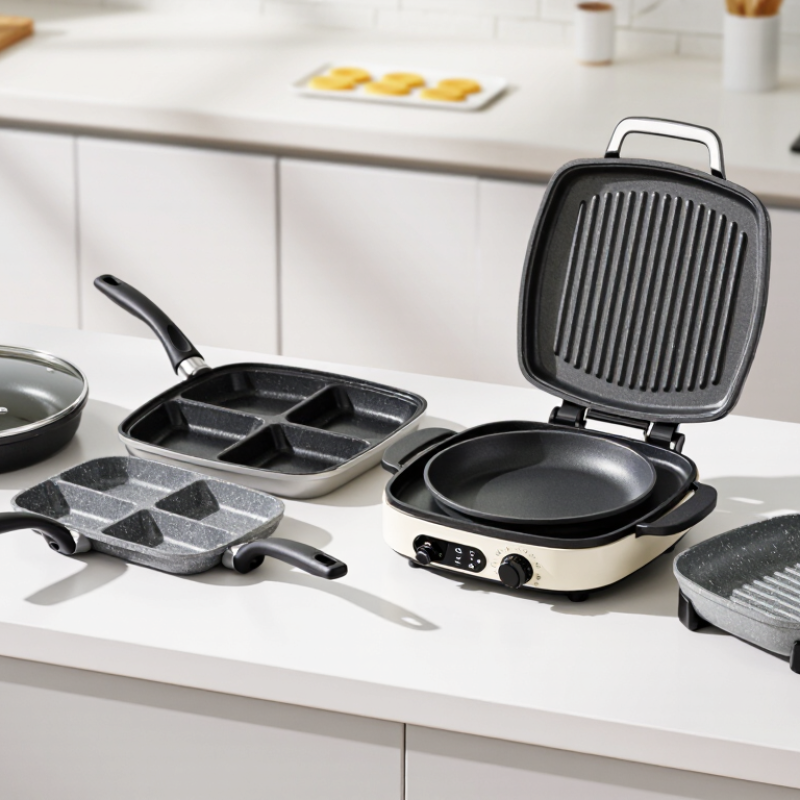
Chinese manufacturers offer several useful types, including deep nonstick pans, divided breakfast pans, hot-pot and grill combinations, and compact travel models. During supplier evaluations, request thermal mapping, cycle-testing records, coating specifications, and independent safety reports. A pan that heats quickly may still create a cold edge or unstable cooking zone. Small details matter. Ask whether the probe is replaceable, whether the socket detaches fully, and whether the coating survives repeated cleaning.

Compliance should guide the shortlist. Relevant buyers commonly review IEC or EN 60335 requirements, RoHS documentation, REACH declarations, and food-contact testing under the destination market’s rules. UL, ETL, CE, or UKCA marking may apply differently by region. These marks are not interchangeable. This guide compares Chinese Electric Frying Pan types through documented performance, practical use, and supplier reliability, while acknowledging that factory claims require verification before purchase.
China Best Electric Frying Pan Types for Global Buyers?

Electric Frying Pan Types Made in China: An Overview

China’s electric frying pans are not one uniform product. Common types include flat skillets, deep sauté pans, grill pans, divided hot-pot pans, and multifunction cookers. Each design serves a different kitchen routine. Flat skillets suit pancakes and eggs. Deep pans handle noodles, stews, and family portions. Grill versions need raised ribs and stronger heat recovery.

Grand View Research estimated the global small kitchen appliances market at over US$230 billion in 2023, with continued growth expected through 2030. However, electric frying pans are usually grouped inside broader appliance categories. Buyers should treat market figures as directional, not exact. Chinese factories often offer adjustable thermostats, detachable heating controls, tempered glass lids, and ceramic or non-stick surfaces. Material quality still varies. One attractive specification does not prove long-term durability.

Tips: Ask for heating uniformity tests, coating thickness data, food-contact material reports, and plug compatibility samples. Confirm testing against IEC 60335-2-13 and the destination market’s electrical requirements. Check whether the pan reaches stable temperature after repeated cycles. A compact 1,200-watt model may suit small homes, while a 1,800-watt deep pan cooks faster but needs stronger sockets. Packaging also matters; glass lids can arrive damaged without molded protection. My practical concern is simple: suppliers may describe “multifunctional” performance too broadly. Test frying, simmering, and temperature recovery separately before placing a large order.

Key Features of China-Made Electric Frying Pans

China-made electric frying pans come in several practical types for global buyers. Shallow pans suit eggs, vegetables, and quick stir-frying. Deep models handle soup, hotpot-style meals, and larger family portions. Some designs include divided cooking zones, which help separate ingredients during testing or daily use.

The key feature is stable temperature control. A clear dial or digital setting should respond consistently at low and high heat. In product evaluations, I check whether the center cooks faster than the edges. Uneven heating remains a common weakness. It should not be ignored. A thick aluminum body can improve heat distribution, while a tested nonstick surface may reduce oil use and simplify cleaning. However, coating durability depends on utensils, heat, and washing habits.

Safety features matter more when products cross borders. Buyers should confirm voltage, frequency, plug type, insulation, and overheating protection before ordering. Cool-touch handles, a secure lid, and a detachable power connector also improve daily handling. Removable parts are convenient, but their seals need careful inspection. Capacity claims should be measured against actual food volume, not only the advertised size. Independent electrical testing and clear user instructions add credibility. Still, specifications can look stronger than real kitchen performance. A sample inspection is worth the extra effort.

China Best Electric Frying Pan Types for Global Buyers? - Key Features of China-Made Electric Frying Pans

Electric Frying Pan Type Typical Size and Capacity Typical Heating and Temperature Common Cooking Surface Main Features Best Applications Key Checks for Global Buyers
Standard Round Electric Frying Pan 26–36 cm diameter; approximately 2–5 L cooking capacity Usually 1,000–1,500 W; commonly adjustable from about 100°C to 240°C Aluminum body with a non-stick coated interior Removable thermostat, tempered-glass lid, cool-touch handles, indicator light and detachable power cord Frying eggs, vegetables, meat, noodles, pancakes and everyday family meals Verify coating compliance, thermostat accuracy, detachable-control design and local plug configuration
Deep Sauté Electric Pan 28–36 cm diameter; approximately 3–6 L capacity; deeper sides than a standard pan Usually 1,200–1,800 W; low-to-high heat settings for simmering and frying Die-cast aluminum or stamped aluminum with a non-stick coating High side walls, stable base, glass lid, adjustable temperature control and larger cooking volume Stir-frying, braising, shallow frying, stewing and cooking larger portions Check wall height, usable base diameter, heat distribution, lid venting and shipping protection
Divided-Compartment Electric Pan 28–36 cm overall diameter; commonly 2–4 separate cooking sections Approximately 1,200–1,800 W; independent or shared temperature control depending on design Non-stick coated aluminum, often with a molded divider structure Separate food zones, reduced cross-contact between ingredients, lid options and easy portion control Breakfast sets, hot pot-style meals, mixed ingredients and simultaneous cooking Confirm divider sealing, cleaning access, heat balance between sections and whether controls are independent
Electric Grill and Griddle Pan Typical cooking area of 30 × 20 cm to 45 × 30 cm; shallow profile Commonly 1,200–2,000 W; usually reaches approximately 200°C–240°C Die-cast aluminum or metal plate with flat, ribbed or reversible cooking surfaces Large flat surface, grease channel or drip tray, removable plate on some models and adjustable thermostat Grilling meat, seafood, sandwiches, pancakes and teppanyaki-style cooking Check plate thickness, temperature recovery, grease drainage, dishwasher guidance and countertop stability
Electric Hot Pot and Frying Pan Combo Approximately 28–36 cm diameter; commonly 3–5 L capacity Usually 1,300–2,000 W; low simmer to high frying settings Non-stick coated aluminum or stainless-steel cooking vessel, depending on model Deep vessel, soup and frying functions, glass lid, removable temperature probe and larger volume Hot pot, soup, pasta, deep frying and shared-table cooking Review maximum-fill markings, boil-dry protection, handle strength, drainage design and electrical safety documentation
Compact Personal Electric Pan 16–24 cm diameter; approximately 0.8–2 L capacity Commonly 600–1,000 W; basic low, medium and high settings Aluminum or stainless-steel body; non-stick coating is common Lightweight construction, small footprint, simple controls and quick heating for small portions Dormitories, offices, single-person households, travel and light meal preparation Check energy rating, cord length, portability, minimum order packaging and suitability for the target market
Stainless-Steel Electric Frying Pan 26–36 cm diameter; approximately 2–5 L capacity Generally 1,000–1,800 W; adjustable thermostat on most full-size models Stainless steel or stainless-steel-clad cooking surface; some models combine aluminum for heat spreading Higher scratch resistance than coated surfaces, durable body, glass lid and long service life when properly maintained Searing, browning, stir-frying and buyers seeking a coating-free cooking surface Confirm steel grade, handle insulation, surface flatness, cleaning instructions and resistance to discoloration

Note: Specifications shown are typical market ranges for China-made electric frying pans and vary by model, configuration and target market. Buyers should request product-specific test reports, electrical ratings, coating documentation and samples before placing an order.

Comparing Electric Frying Pan Types for Different Cooking Needs

Electric frying pans vary widely, so the best type depends on cooking habits, serving size, and available space. A shallow pan suits eggs, pancakes, and quick stir-fries. Its low sides make turning food easier. It also heats quickly, but sauces may splash during cooking. A deeper electric skillet works better for stews, braised vegetables, and family-sized meals. The added depth reduces spills and holds more ingredients. However, it needs more storage space.

For shared meals, a divided electric pan can cook meat and vegetables separately. This design helps manage different cooking times and reduces cross-flavoring. It is useful for breakfast service or small gatherings. The partitions can limit stirring, though. A pan with a removable temperature probe offers better control for delicate foods, such as fish or milk-based sauces. Look for steady heat, clear controls, cool-touch handles, and a stable base. These details matter more than decorative features.

Material also changes the cooking experience. A coated surface usually needs less oil and simplifies cleanup. It may require wooden or silicone utensils to prevent scratches. Stainless steel can tolerate more vigorous use, but food may stick without proper preheating. I have found that advertised capacity can feel optimistic once ingredients are added. A larger pan is not always better, especially on a small counter. Check the actual cooking surface, cord length, temperature range, and cleaning instructions before choosing.

Safety, Materials, and Energy Efficiency Considerations

For global buyers, electric frying pans usually fall into three groups: thermostatic countertop pans, induction-compatible pans, and ceramic-coated models. The safest choice combines stable temperature control, insulated handles, a grounded plug, and automatic overheat protection. IEC 60335-2-13 provides relevant safety requirements for electric frying pans and similar household appliances. Buyers should request test reports, not rely only on attractive packaging.

Materials affect both safety and cooking performance. Food-contact surfaces should have traceable compliance documentation for the destination market. Stainless steel offers durability, while ceramic coatings can reduce oil use but may wear from metal utensils. Avoid deep scratches, loose handles, or exposed heating elements. Small details matter. The U.S. Consumer Product Safety Commission reports that cooking equipment causes thousands of residential fires annually, often involving unattended cooking. A cool-touch exterior and a clear power indicator are practical safeguards.

Energy efficiency depends on heat transfer, pan size, and thermostat accuracy. The U.S. Department of Energy estimates induction cooking transfers about 85% of input energy to cookware, compared with roughly 32% for gas. A compact electric pan may still waste energy if its base is oversized or poorly insulated. Look for adjustable temperature control, short preheating, and a detachable power cord for easier inspection. I would not treat every “energy-saving” claim as proven; independent laboratory results are more dependable. Temperature stability also deserves testing, because a pan that cycles aggressively can scorch food while consuming less power on paper.

How Global Buyers Can Select a Reliable Chinese Supplier

China offers many electric frying pan types, but product choice should follow supplier reliability. A compact pan suits small kitchens, while a deeper model supports family meals and food-service use. Ask for samples before discussing large orders. Test heat-up time, temperature stability, handle strength, and coating performance after repeated cleaning. A smooth surface is useful, but appearance alone proves little.

Reliable Chinese suppliers provide clear factory addresses, production photos, and traceable material records. Request electrical safety reports from recognized testing laboratories for your target market. Confirm plug type, voltage, thermostat design, cord quality, and packaging protection. Ask how defects are recorded and replaced. Small details matter. A cracked carton can damage an otherwise sound appliance.

Visit the factory when possible, or arrange a live video inspection. Check whether workers follow written assembly steps and final inspection records. Discuss minimum order quantities, sample fees, lead times, and spare-part availability in writing. Clear communication is a practical test of professionalism. Some suppliers answer quickly but vaguely. That is a warning. One sourcing mistake is trusting polished photos too early. I would also compare two or three samples, because the first sample may receive extra attention. A dependable partner accepts reasonable testing, explains limitations, and improves weak points without hiding them.