
News
10 Tips to Choose the Best Portable Car Jump Starter
A dead car battery rarely chooses a convenient moment. It may happen outside a supermarket, during a freezing morning, or beside an unfamiliar road. A Portable Car Jump Starter can restore mobility quickly, but only when its design matches your vehicle and your real driving conditions.
Automotive educator Mark Polk writes, “The battery is the heart of your RV electrical system.” His point also matters for cars: starting power depends on battery condition, engine size, temperature, and electrical connections. A high peak-current number alone does not guarantee dependable performance. That figure can look impressive while the unit remains difficult to use.
This guide examines 10 practical ways to choose the best Portable Car Jump Starter. It considers cold-cranking support, battery capacity, clamp quality, cable length, safety protections, charging methods, size, display clarity, durability, and warranty support. Small details matter. Thick, flexible cables can be easier to position around a crowded engine bay. Bright indicators help when roadside visibility is poor. A sealed case may protect the device from dust and occasional splashes, but it does not make careless storage acceptable.
There is no perfect model.
A compact unit may fit a glove box yet struggle with repeated starts. A powerful model may provide confidence but become heavy to carry. Buyers should also question marketing language and verify testing information. That step is easy to skip. It is also where many purchasing mistakes begin.
The right choice is not the largest or cheapest device. It is the one offering suitable starting power, clear operation, reliable protection, and sensible maintenance for your vehicle.
Understanding Portable Car Jump Starter Basics
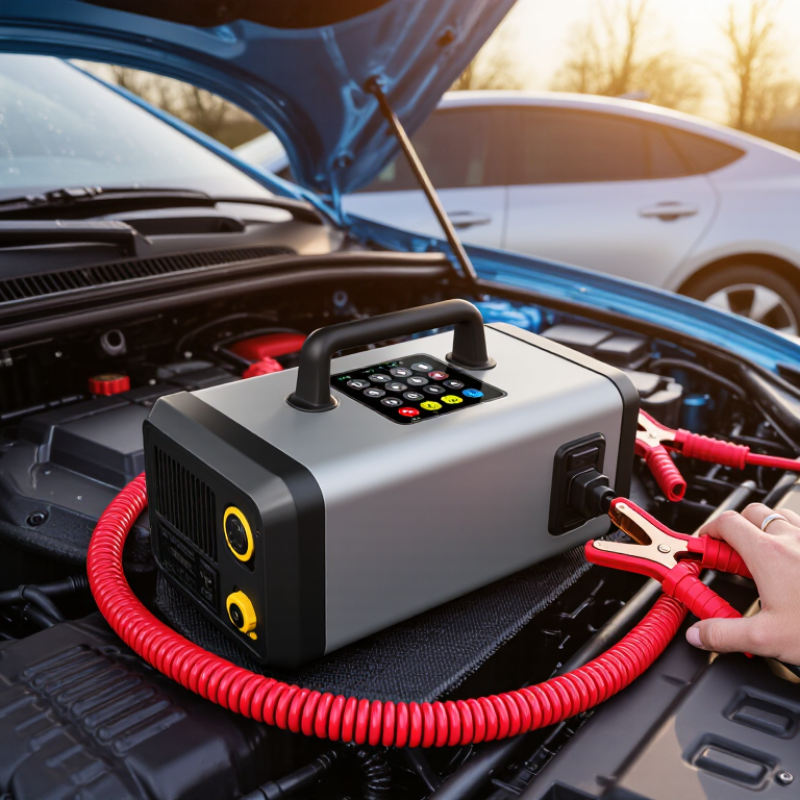
A portable car jump starter is a compact battery pack designed to restart a vehicle when its battery is weak. Before choosing one, check that its output matches your vehicle’s voltage and engine size. A petrol engine may need less starting power than a large diesel engine. Peak current looks impressive, but cranking current often gives a more realistic performance measure.
Look for reverse-polarity, short-circuit, overcharge, and overheating protection. These features reduce mistakes when connecting the clamps in poor lighting. Cable length also matters. Short, thin cables can make a roadside job awkward, especially when the battery terminals sit far apart. Read the label. Do not rely on appearance alone.
Battery capacity affects how many attempts the unit can support. However, stored capacity can fall in cold weather or after months without charging. I have learned that a neglected starter is little better than an empty flashlight. Recharge it periodically, inspect the clamps for corrosion, and store it in a dry case. A built-in light, USB port, or display may help, but these extras should not outweigh reliable starting power. Always follow the vehicle and device instructions. Even careful users can connect clamps too quickly.

Checking Battery Compatibility and Starting Power
10 Tips to Choose the Best Portable Car Jump Starter
Checking battery compatibility should come before comparing flashy specifications. Confirm that the jump starter supports your vehicle’s battery voltage, usually 12 volts for passenger cars. Some vehicles use different systems, so check the owner’s manual carefully. Battery chemistry also matters. Lead-acid, AGM, and lithium auxiliary batteries may require different charging and starting procedures.
Starting power needs honest evaluation. Peak amps look impressive, but starting amps are often more useful for real conditions. A small petrol engine may need less power than a large diesel engine, especially in freezing weather. Choose a unit with a comfortable margin above your vehicle’s recommended cranking requirement. More power is not always better if the cables are thin or the internal cells are poorly protected. Check cable length, clamp insulation, reverse-polarity alerts, and short-circuit protection.
I once underestimated cold-weather resistance. The starter worked in a garage but struggled beside a frozen roadside vehicle. That experience changed how I judge capacity. Look for watt-hours or amp-hours, not only peak amps. A larger engine may also need several starting attempts, reducing available charge quickly. Keep the unit fully charged and inspect its condition every few months. Heat, age, and repeated deep discharge can weaken performance. Specifications can be confusing. When uncertain, compare the manual’s battery requirements with the starter’s tested operating range.
Portable Car Jump Starter: Suggested Starting Power by Vehicle Type
These practical minimum peak-current guidelines help match a jump starter to the vehicle engine. Larger engines and diesel vehicles generally require more starting power, especially in cold weather. Always check the vehicle manual and the jump starter’s battery-system compatibility before purchase.
Evaluating Safety Features and Protection Systems
When choosing a portable car jump starter, I study its safety systems before its peak current. A high number means little if the unit lacks dependable protection. Look for reverse-polarity alerts, short-circuit control, and automatic shutoff. These features can prevent sparks when clamps touch incorrectly. A clear alarm helps, especially beside a dark roadside. Keep it simple.
Thermal protection should stop charging or boosting when the battery becomes dangerously hot. Overcurrent protection limits excessive flow through thin cables or weak vehicle connections. Good units also include insulated clamps, covered terminals, and a stable grip. Check whether the casing resists dust and splashed water, using a stated IP rating. Water changes everything. Independent testing and readable certification details are stronger evidence than vague words like “professional grade.” The manual should explain warning lights, charging limits, storage temperatures, and emergency procedures.
From practical testing, I connect the clamps only after turning off lights, fans, and the ignition. I confirm positive and negative contact twice. Then I place the starter on a dry, stable surface. If the engine does not respond quickly, I stop and let the device cool. Repeated attempts can stress both batteries and cables. I admit that I once trusted a bright display too much. It showed charge, but the clamps were loose. That small mistake changed my checklist: inspect the hardware, not just the screen.
Comparing Size, Capacity, Charging, and Port Options
A portable car jump starter should fit the vehicle, not merely advertise a large number. S&P Global Mobility reported that the average light vehicle age reached 12.6 years in 2024. Older vehicles may need more starting support, especially with larger engines or cold batteries. Choose a compact unit that fits under a seat, but avoid ultra-small designs with unclear output ratings. Peak amps attract attention. Cranking amps are more useful for real starting conditions.
Capacity deserves careful checking. Watt-hours provide a clearer comparison than vague “starts per charge” claims. A 60Wh unit may offer several attempts, but cold weather, cable losses, and battery age reduce that estimate. The U.S. Department of Energy notes that low temperatures reduce battery performance, although jump starters are not tested identically to electric vehicles. My earlier rule was too simple: bigger capacity is not always better. It can also mean more weight and slower recharging.
Charging and ports affect daily usefulness. USB-C input can shorten charging time when paired with a suitable power adapter, while USB-A remains practical for older cables. A 12V outlet may power accessories, but it should not replace proper jump-start cables. Look for reverse-polarity protection and safety testing aligned with UL 2743 guidance. Ports get overlooked. I still prefer a clear charge display, strong clamps, and a cable long enough to reach awkward battery terminals. Claims need skepticism. Test the unit before an emergency, then recharge it every few months.
| Tip | Comparison Dimension | Practical Specification or Target | Why It Matters | What to Verify Before Buying |
|---|---|---|---|---|
| 1 | Vehicle Compatibility | Choose a unit rated for the engine type and displacement of the vehicle. A 12-volt starter is typical for passenger cars, while larger engines may require a higher peak-current rating. | A starter that is undersized may not deliver enough current to crank the engine, especially in cold weather or with an aging battery. | Confirm the manual lists compatibility with the vehicle's fuel type, engine size, and electrical system. |
| 2 | Peak and Starting Current | For many compact and midsize cars, approximately 400–800 starting amps can be a practical range. Larger engines generally need more capacity. | Starting current indicates the output available during cranking, but advertised peak current may last only briefly and should not be the sole selection factor. | Look for both peak current and starting-current ratings, and compare them with the vehicle manufacturer's requirements. |
| 3 | Battery Capacity | A built-in battery of about 8,000–20,000 mAh is common for portable automotive units. Higher capacity usually supports more starting attempts between charges. | Capacity affects standby time, the number of emergency uses, and how often the device must be recharged. | Check whether the stated capacity is measured at the internal cell voltage and review the manufacturer's estimated jump-start count. |
| 4 | Physical Size and Weight | For regular car use, a compact unit around 15–25 cm long and approximately 0.8–1.8 kg is generally easier to store and carry. | A smaller, lighter design is more convenient for a glove box or roadside use, although very high-output models may be larger. | Measure the available storage space and compare the product's dimensions and weight, including cables and accessories. |
| 5 | Recharge Method and Input | USB-C input is convenient; an input of approximately 15–30 W can provide faster recharging than basic low-power USB charging. | Faster and more widely compatible charging reduces the time needed to restore the unit after an emergency. | Verify whether the required charging cable and wall adapter are included and whether the device supports the stated input power. |
| 6 | USB Output Ports | At least one USB-A output is useful for common cables, while a USB-C output with power delivery can support newer phones and tablets. | Multiple output types allow the starter to function as a portable power bank during travel or roadside emergencies. | Compare the output voltage, current, and total wattage rather than counting ports alone. |
| 7 | 12-Volt Auxiliary Port | A regulated 12-volt outlet can support compatible accessories such as tire inflators, coolers, or vehicle electronics. | The port expands the device's emergency usefulness, but connected accessories may drain the internal battery quickly. | Confirm the port's maximum current or wattage and ensure the accessory plug matches the socket size. |
| 8 | Safety Protection | Look for reverse-polarity, short-circuit, over-current, over-temperature, overcharge, and spark-resistant protection. | These safeguards help reduce the risk of cable damage, battery damage, sparks, and incorrect connection during a jump start. | Read the operating instructions to confirm which protections are built into the clamps and control unit. |
| 9 | Operating Conditions | A broad working range, such as approximately -20°C to 60°C, is useful for seasonal and roadside storage, provided it is supported by the specifications. | Battery performance can decrease in cold temperatures, while excessive heat can shorten lithium-battery life and affect safety. | Review the stated operating and storage temperature ranges and avoid leaving the unit in a hot vehicle for long periods. |
| 10 | Indicators, Cables, and Maintenance | A clear battery-level display, adequately long insulated clamps, bright work light, and periodic recharging are desirable features. | Clear indicators and accessible cables make the unit easier to use in darkness, while regular charging keeps it ready for emergencies. | Choose a model with readable status indicators, durable cable insulation, secure clamp storage, and a recommended maintenance-charging schedule. |
Selecting Durable Models for Your Driving Needs
10 Tips to Choose the Best Portable Car Jump Starter
Selecting a durable jump starter begins with real driving conditions, not impressive packaging. The ADAC 2024 breakdown report found starter-battery faults caused about 44% of roadside breakdowns. That figure shows why dependable backup power matters. Check the unit’s cold-weather performance, cable thickness, clamp strength, and operating temperature range. Peak amperage can look attractive, but it does not guarantee reliable starting power. Ask for tested output data instead. A compact case should still protect the battery from vibration, dust, and occasional moisture.
Safety details deserve equal attention. Look for reverse-polarity protection, short-circuit control, overcharge protection, and clear status indicators. IEC 62133-2 covers safety requirements for rechargeable lithium cells and batteries used in portable applications. UL 2743 addresses portable power packs and related safety testing. Certification marks should be verifiable, not decorative. I once trusted a very small model because its numbers looked excellent. Its clamps felt weak in freezing weather. That was my mistake. Consider recharge cycles, storage loss, USB performance, and replacement-cable availability. A jump starter left in a hot trunk needs stronger temperature protection. The U.S. Department of Energy notes that lithium-ion battery performance can decline at low temperatures, especially during high-power use. Test the device every few months, keep it charged, and store it away from direct heat.
Real durability is often quiet.