
News

How to Choose a Delta Frequency Drive for Global Sourcing?

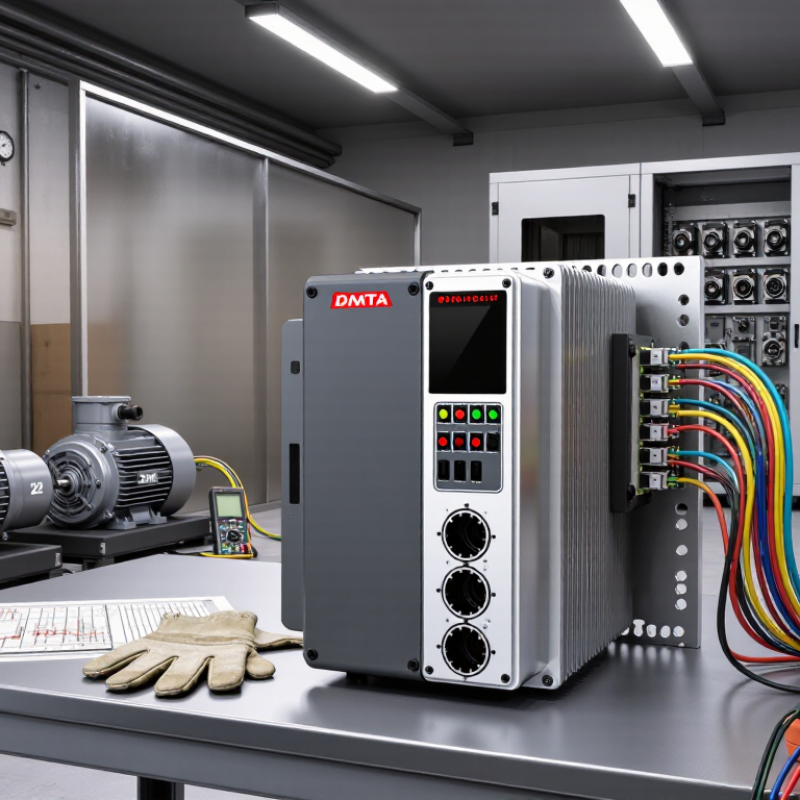
Choosing a Delta Frequency Drive for global sourcing requires more than comparing prices and output power. The right model must match the motor, supply voltage, operating environment, and destination market requirements. A 22 kW motor on a 400 V three-phase system may need a different drive than a similar motor used with 230 V power. Small details matter.

Look beyond the product page. Review the datasheet, overload rating, control method, enclosure rating, communication options, and braking requirements. Ask suppliers for serial-number traceability, factory test records, warranty terms, and technical support response times. A drive intended for a dusty workshop may require stronger protection than one installed inside a clean control cabinet. Check ambient temperature, altitude, ventilation, and expected duty cycles before approving a quotation.

Supplier experience also deserves careful attention. Reliable vendors can explain compatibility, provide clear documentation, and identify limitations without hiding them. They should support regional compliance reviews and offer replacement planning for long supply chains. Still, no checklist removes every risk. I have seen sourcing teams select a lower-cost drive, then discover that software tools or spare parts were unavailable locally. That mistake can delay commissioning for weeks. A practical evaluation should compare total ownership cost, not only the invoice price. It should also include sample testing, application verification, shipping conditions, and after-sales support. The best choice is rarely the cheapest one. It is the Delta Frequency Drive that performs predictably, remains supportable, and fits the real conditions of global operation.
How to Choose a Delta Frequency Drive for Global Sourcing?

Define Your Motor Control Goals and Operating Conditions

Choosing a frequency drive starts with the motor, not the catalog. Define the control goal clearly. Do you need steady conveyor speed, soft starting, accurate torque, or frequent reversing? A pump may prioritize energy control, while a hoist needs dependable torque at low speed. These are different duties.

Record the motor’s rated voltage, current, power, base frequency, and speed. Then measure the real load, including startup resistance and peak demand. A drive that matches horsepower but ignores current can overheat. I have seen clean equipment panels fail because the selected unit could not handle repeated acceleration. That detail is easy to miss.

Operating conditions also shape the choice. Check ambient temperature, altitude, dust, moisture, enclosure space, and cooling airflow. A drive installed beside a hot furnace needs more thermal margin than one in a cool cabinet. Confirm input voltage and frequency for the destination market. Review local electrical requirements, EMC limits, documentation, and service support before placing a global order.

Control wiring matters too. Decide whether the system needs digital inputs, analog speed reference, communication, braking, or a safety stop circuit. Keep spare capacity for future changes, but avoid paying for features nobody will use. A tidy specification is useful. It is not perfect. Test the proposed drive with the actual motor and load whenever possible, because laboratory assumptions can differ from a dusty factory floor.

Match Drive Ratings to Voltage, Power, Current, and Frequency Needs

Choosing a delta frequency drive for global sourcing starts with the motor nameplate, not the supplier catalog.

Check the available voltage carefully. A motor marked for 380–415 V may not suit a 460 V installation. Confirm phase count, allowable voltage variation, and the local 50 or 60 Hz supply. Frequency affects motor speed, cooling, and output torque. A drive rated for the wrong input frequency can create avoidable heat and nuisance trips.

Match power and current separately. Two motors may share the same kilowatt rating but require different full-load currents. Select the drive using the motor’s rated current, then check overload capacity for starting, lifting, or rapid acceleration. Keep some thermal margin. Enclosures installed in hot control rooms may need derating. Dust and poor ventilation matter too. They are easy to overlook.

During commissioning, technicians should compare measured current with the nameplate value at several speeds. Confirm the drive’s output voltage, frequency range, braking method, and protection settings. A spreadsheet helps, but it is not proof. I prefer a documented test with recorded temperatures and load conditions. Sometimes the apparently larger drive is not the safer choice; its control settings may be poorly matched. Review the manual, wiring diagram, certifications, and regional installation requirements before ordering. Small rating errors can become expensive delays.

Evaluate Control Modes, Feedback Options, and Performance Features

How to Choose a Delta Frequency Drive for Global Sourcing?

Control mode should match the machine, not the sales quotation. V/f control suits pumps and fans with predictable loads. Sensorless vector control gives stronger low-speed torque for conveyors and mixers. Closed-loop vector control adds an encoder for precise speed and position. In factory audits, I have seen simple V/f drives installed on lifting equipment. The result was unstable starting and avoidable mechanical stress.

Feedback selection deserves equal attention. Incremental encoders provide accurate speed information but need careful wiring and shielding. Resolvers tolerate heat and vibration better in demanding environments. Some applications need no external feedback, but sensorless control can lose precision at very low speeds. The U.S. Department of Energy’s 2022 Industrial Motor System Market Assessment reports that motor-driven equipment uses about 70% of industrial electricity. Small control errors can therefore create measurable operating costs.

Performance features should be checked under real conditions. Look for overload capacity, automatic tuning, safe torque off, braking performance, thermal protection, and harmonic mitigation. The International Energy Agency has estimated that motor systems consume about 46% of global electricity. Efficiency is not only a motor rating issue. It also depends on acceleration settings, load matching, and maintenance quality. For global sourcing, verify voltage ranges, grid frequency, EMC compliance, documentation, and local technical support. A perfect specification sheet is still not a perfect machine. I still allow margin for imperfect installation data.

Check Global Compliance, Environmental Protection, and Installation Needs

Choosing a delta frequency drive for global sourcing requires more than comparing power ratings and prices. Compliance documents should match the destination market, not merely the manufacturing location. Ask for current declarations, test reports, and installation instructions in clear English. Check electromagnetic compatibility, electrical safety, hazardous-substance restrictions, and recycling obligations. Requirements may differ between regions.

Paperwork matters. Verify the rated input voltage, frequency range, and fault protection before ordering samples. A drive designed for one grid may need different filters or wiring elsewhere. Confirm whether the product supports local certification marks and approved components. Do not rely on a supplier’s copied certificate. Check the model number, revision date, and testing scope.

Environmental conditions also shape the selection. In a dusty workshop, an appropriate enclosure rating can protect cooling paths. Near a washdown area, moisture resistance becomes critical. Review operating temperature, altitude, humidity, and vibration limits. Installation space matters too. Leave room for airflow, cable bending, and service access. Measure twice. A compact cabinet can still overheat when packed tightly. No checklist is perfect. A missed grounding detail or poorly routed motor cable may create noise, trips, or costly downtime. Request wiring diagrams, parameter examples, and remote commissioning support before shipment. Include spare cooling fans and a documented replacement process when long-distance service is difficult.

How to Choose a Delta Frequency Drive for Global Sourcing?

Check global compliance, environmental protection, and installation needs

The chart summarizes the protection levels defined by IEC 60529 that are commonly considered when selecting a variable frequency drive. The first IP digit indicates protection against solid objects and dust, while the second digit indicates protection against water. IP20 is generally suited to clean, enclosed control cabinets; IP54 offers limited dust and splash protection; IP65 provides dust-tight and water-jet protection; and IP66 provides dust-tight and powerful water-jet protection. Final selection should also verify local electrical codes, supply voltage and frequency, EMC requirements, operating temperature, altitude, cooling method, and installation space.

Compare Suppliers, Total Costs, Support, and Supply Reliability

When sourcing a delta frequency drive, check the motor’s delta voltage, load profile, enclosure rating, and regional certification. Compatibility failures are expensive.

The U.S. Department of Energy reports that motor systems consume about 68% of industrial electricity. The IEA estimates electric motor systems use roughly half of global electricity. Energy performance deserves serious attention. Model five-year costs using purchase price, freight, duties, installation, electricity, maintenance, and downtime. Use measured load data, not brochure claims. That distinction matters.

Compare at least three suppliers using the same specification sheet. Request efficiency curves, harmonic limits, EMC test records, warranty terms, and spare-part prices. A cheaper unit may need extra filters or cooling. It may also require a specialist technician. Ask for factory lead time, shipping options, production location, and a documented replacement plan. Price alone is a weak comparison.

Support and reliability need evidence. McKinsey’s 2020 global value-chain survey found that 93% of supply-chain leaders planned to increase resilience. Require named technical contacts, response-time commitments, remote troubleshooting, and local service coverage. Verify whether critical boards and fans are stocked near your operating region. I would also test one unit before a large order. The uncomfortable truth: supplier promises can sound precise, while actual response during a breakdown remains uncertain. Reliability needs records, not optimism.