News

How to Choose Solar Landscape Lighting for Global Buyers?

Global demand for Solar Landscape Lighting is rising with broader solar adoption. IRENA reported 473 GW of renewable capacity additions in 2023. Solar contributed approximately 346 GW, or nearly 73% of that growth. This momentum matters to buyers, but garden lighting has different priorities. A rooftop panel can tolerate complexity. A pathway lamp cannot.

The International Energy Agency describes solar PV as “the new king of electricity markets.” Fatih Birol, IEA Executive Director, made this widely cited observation about solar’s expanding role. For landscape buyers, the lesson is practical. Select products for dependable light, not impressive panel labels. Check battery chemistry, lumen output, charging time, waterproofing, and operating hours. A shaded walkway may need a larger panel. A coastal garden may require stronger corrosion protection. Small details decide performance.

This guide compares those details for international purchasing teams, distributors, designers, and property owners. It considers climate, seasonal sunlight, installation labor, packaging, replacement parts, and supplier evidence. The Global Off-Grid Solar Market Report also shows the importance of product quality and after-sales support in solar lighting markets. Yet one weakness remains easy to overlook: published specifications are not always measured under identical conditions. Ask for test methods. Request sample units. Inspect light output after several cloudy nights. The cheapest fixture may become expensive after repeated replacements. No single design fits every landscape. Good purchasing requires evidence, practical testing, and a willingness to question attractive claims.
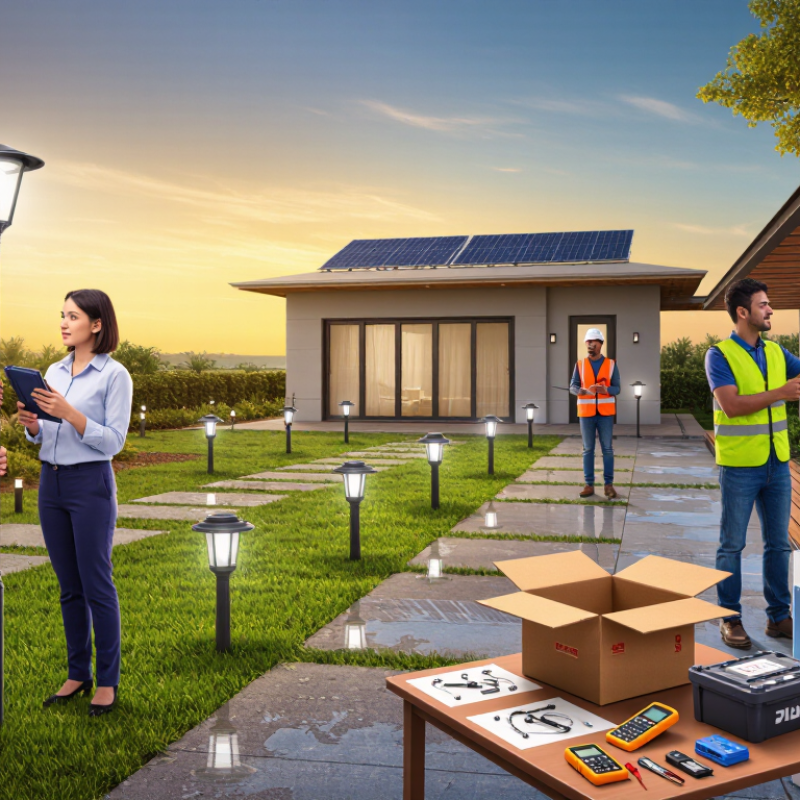
How to Choose Solar Landscape Lighting for Global Buyers?

Understanding Solar Landscape Lighting Types and Core Components

How to Choose Solar Landscape Lighting for Global Buyers?

Understanding Solar Landscape Lighting Types and Core Components

Solar landscape lighting comes in several practical forms. Path lights guide walkers along driveways and garden edges. Spotlights highlight trees, walls, signs, or architectural details. Floodlights cover wider areas, while wall lights improve visibility near entrances. Decorative lanterns create atmosphere, but they may provide less usable illumination. Match each type to its lighting purpose, not only its appearance.

The core system includes a solar panel, rechargeable battery, LED module, controller, housing, and mounting hardware. Panel size affects charging speed, especially during cloudy seasons. Battery capacity influences nighttime runtime. LEDs offer efficient light, but color temperature changes the scene noticeably. Warm white feels comfortable near patios. Cooler white improves visual clarity around gates and steps. Check the product’s water-resistance rating and operating temperature range for local conditions.

Placement requires practical judgment. Avoid shade from trees, rooflines, and tall fences during peak daylight. Keep the panel clean; dust can reduce charging performance. In field inspections, poor placement causes more failures than weak lighting components. That is easy to overlook. A motion sensor can reduce battery use, yet frequent activation may shorten runtime. No design is perfect. Test one fixture through several weather cycles before expanding the installation. Also review local electrical and lighting requirements, because outdoor rules differ between regions.

Assessing Site Conditions, Climate, and Lighting Requirements

Choosing solar landscape lighting begins with the site, not the fixture. Walk the area at different times of day. Note trees, walls, roof overhangs, and seasonal shadows. A panel receiving full sun in June may lose hours of sunlight in winter. Check the soil too. Poor drainage can shorten battery and cable life.

Climate affects every component.
In snowy regions, panels need a suitable angle and regular clearing. Hot climates require batteries rated for high temperatures. Coastal sites expose metal parts to salt and moisture. Dusty locations may need frequent panel cleaning. Heavy rainfall also tests seals and ground stability. A quick visual check is not enough.

Lighting requirements should match the landscape’s function. Pathways need even, low-glare illumination. Steps require clearer contrast and reliable nighttime operation. Trees, signs, and building edges may need narrower beams. Measure the desired brightness instead of judging only by appearance. Also consider winter autonomy, usually across several cloudy nights. That requirement can increase panel and battery capacity. It is easy to oversize the system, though, and create unnecessary cost.

Color temperature, mounting height, and spacing change how safe and natural the area feels. Use warmer light near seating areas and avoid shining it toward windows. Keep fixtures stable in soft soil and protect them from lawn equipment. One imperfect assumption can affect the whole design: local weather records are useful, but actual shade and maintenance habits often matter more.

Comparing Brightness, Battery Capacity, Runtime, and Solar Efficiency

How to Choose Solar Landscape Lighting for Global Buyers?

Brightness should match the space, not merely the product label. Pathways often need gentle illumination, while steps require clearer contrast. Lumens describe total light output , but beam angle controls where that light lands. The U.S. Department of Energy reports that modern LED systems can exceed 100 lumens per watt, although outdoor performance varies with optics, temperature, and driver quality. A 100-lumen lamp may look bright on a narrow path, yet weak across a wide garden.

Battery capacity determines how long brightness survives after sunset. Compare watt-hours, not only milliamp-hours, because voltage changes the calculation. For example, a 3.7-volt, 2,000-mAh battery stores about 7.4 watt-hours before system losses. Runtime also depends on brightness settings, temperature, and battery age. The IEA PVPS Trends 2024 report shows continued global solar expansion, but local sunlight remains highly seasonal. A cloudy winter week can expose an optimistic specification quickly.

Solar efficiency includes panel conversion, charging control, and usable energy storage. NREL’s PVWatts guidance emphasizes that orientation, shading, and weather strongly affect solar yield. Place panels away from walls, trees, and decorative overhangs. Small details matter. Buyers should request measured runtime, charging conditions, battery chemistry, and operating temperature ranges. IP ratings also deserve attention, but they do not guarantee perfect long-term performance. Specifications can look precise. Real gardens are less cooperative, so testing one sample across several weather cycles is wiser than trusting a single bright evening.

Evaluating Materials, Durability, Installation, and Maintenance Needs

How to Choose Solar Landscape Lighting for Global Buyers?

Material selection affects service life more than appearance. Choose corrosion-resistant aluminum or stainless steel for outdoor housings. Tempered glass protects panels from hail and falling debris. UV-resistant polymer can reduce weight, but poor formulations may become brittle. Coastal buyers should check salt-spray resistance carefully. Small details matter.

Durability depends on climate, installation, and daily exposure. Look for a suitable IP rating, but do not treat it as permanent protection. Seals can age. Strong wind can loosen ground stakes, while frozen soil may push fixtures upward. Install lights where panels receive several hours of direct sunlight. Avoid placing them beneath dense branches or near bright security lamps. In my experience, incorrect positioning causes more failures than weak hardware.

Tips: Match materials to the local climate, not only the purchase price. Inspect screws, seals, and cable joints before installation. Clean panels with soft water and a non-abrasive cloth every few months. Remove leaves quickly after storms. Check battery performance before winter, especially in colder regions. Replace damaged components promptly. No product is maintenance-free. A practical maintenance schedule may still need adjustment after the first season, because shade, dust, and weather rarely behave as expected.

Choosing Global Suppliers, Certifications, Costs, and Shipping Terms

Global buyers should assess suppliers beyond catalog photos. IRENA’s Renewable Capacity Statistics 2024 reports 346 GW of solar capacity added worldwide in 2023. This expansion increases supplier choice, but quality varies sharply. Request factory audit records, production samples, and test reports for battery life, charging performance, and light output. Prefer suppliers that explain failures honestly. Perfect claims deserve caution.

Certifications should match the destination market. Ask for reports based on IEC 60598-1 and IEC 60598-2-3, plus appropriate electrical safety and electromagnetic compatibility requirements. An IP65 rating can protect against dust and water jets, but it does not prove winter durability. Check operating temperatures, UV resistance, corrosion testing, and replacement-part availability. I have seen attractive samples fail after one wet season. Certifications help, but installation conditions still matter.

Tips: Compare total landed cost, not unit price. Include tooling, inspection, inland transport, duties, insurance, and replacement batteries. Use clear Incoterms, such as FOB or DDP, and confirm responsibility in writing. UNCTAD’s Review of Maritime Transport notes that over 80% of global merchandise trade moves by sea, so port delays can affect project schedules. Build realistic buffer time. Freight quotes change quickly. Also compare carton strength, pallet dimensions, and minimum order quantities. A cheaper supplier may create higher waste, rework, or storage costs. Recheck every assumption.