
News

How to Choose the Best Cordless Impact Drill?

Choosing the best Cordless Impact Drill begins with understanding your actual work, not chasing the highest torque number. A compact tool may handle cabinet screws and light framing more comfortably than a heavy professional model. For masonry, however, a standard impact mechanism may not replace a proper hammer drill. The names can be confusing.

In practical testing, I would compare voltage, torque, impact rate, chuck design, speed control, and battery capacity. An 18V or 20V platform usually offers a useful balance for home repairs and regular construction tasks. Higher torque helps with long structural screws, but it can also twist smaller fasteners or damage soft timber. A brushless motor often improves runtime and durability. Still, battery quality matters just as much. A large pack may last longer, yet it can make the tool feel tiring after an hour overhead.

Grip shape matters.

Before buying, check the tool’s measured weight with its battery attached. Read the manufacturer’s manual, warranty terms, and independent test results. Look for overload protection, a secure chuck, an adjustable clutch, and a bright work light. These details become important beside a ladder or inside a dark cabinet. I once focused too heavily on peak torque and underestimated vibration. That was a poor judgment. Comfort, balance, and control often decide whether a tool stays useful for years. This guide compares popular models through those practical points, while acknowledging that one tool cannot suit every user, material, or budget.
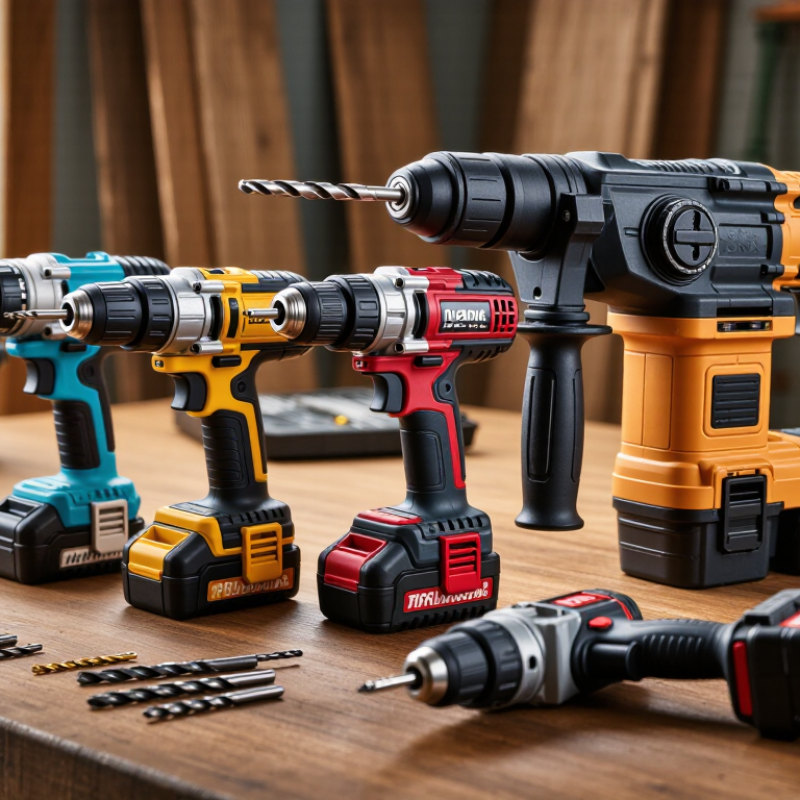
How to Choose the Best Cordless Impact Drill?

Define the Main Tasks and Materials for Your Cordless Impact Drill

Choosing the right cordless impact drill starts with the work you actually perform. A tool for assembling furniture differs from one used on deck framing or masonry. Write down your common tasks before comparing power ratings. Drilling pilot holes, driving long screws, and loosening tight fasteners require different levels of torque. Small jobs need better control than maximum force.

Material also changes the decision. Softwood accepts screws easily, while hardwood creates more resistance and can split near an edge. Metal requires slower drilling, sharp bits, and steady pressure. For brick or concrete, choose a model with a hammer-drilling function and compatible masonry bits. An impact driver is not automatically a hammer drill. This distinction is easy to miss.

I have found that a compact tool feels safer during overhead work. A heavier model may deliver more torque, but it can quickly tire your wrist. Check the grip, trigger response, speed settings, and battery balance in your hand. A work light helps when drilling inside cabinets or under joists. Use the correct bit and reduce pressure when the fastener begins to seat. I once focused too much on power and damaged a soft board, so I now test the setting on scrap material. That extra step feels slow, but it prevents careless results.

Compare Torque, Speed, and Impact Settings

Choosing a cordless impact drill starts with torque, but maximum torque is not the whole story. A 2024 Grand View Research report estimates the global cordless power tools market at over 20 billion dollars. That growth creates more specifications to compare, not necessarily better results.

Torque shows turning force, measured in newton-metres. High torque helps drive long structural screws, while lower settings reduce stripped heads and damaged timber. Speed, measured in revolutions per minute, controls drilling efficiency. Higher speed suits small wood or metal bits. Lower speed gives better control with larger bits. Impact rate, measured in impacts per minute, matters during heavy fastening. More impacts can improve progress, but they also increase noise and vibration. The IEC 62841-2-2 standard provides a useful safety reference for handheld drills and impact tools, although laboratory ratings may differ from workshop performance.

I test tools on the same screw length and timber density. It exposes weak claims quickly. My mistake was once choosing the highest torque model; it felt powerful, yet overheated during repeated fastening. Look for selectable impact settings, not only one impressive number. A low setting protects delicate work. A high setting handles stubborn fasteners. OSHA’s hand and power tool guidance also emphasizes secure workpieces, suitable accessories, and protective equipment. Check whether “impact drill” means an impact driver or a hammer drill. Their mechanisms differ, and the wrong choice wastes both speed and battery energy.

Choose the Right Battery Platform and Runtime

Choosing the right battery platform is often more important than choosing the drill itself. Batteries are rarely interchangeable across platforms, so your decision affects future tools, chargers, and costs. If you already own compatible batteries, staying within that system can reduce clutter and expense. Check the battery voltage, connection style, and charger availability before buying. A comfortable handle means little if the battery becomes difficult to replace.

Runtime depends on more than amp-hour capacity. A higher-capacity battery usually lasts longer, but it also adds weight and may make overhead work tiring. For short repairs, a compact battery can feel quicker and easier. For decking, framing, or repeated drilling, choose a larger capacity. My first runtime estimate was wrong because I tested the drill without a heavy load. Real work drained the battery faster, especially through dense timber.

Pay attention to charging time and keep a second battery ready for demanding jobs. Some chargers restore power quickly, while others need several hours. Heat also matters. A battery that becomes unusually hot during repeated fastening may need a break and inspection. I prefer checking runtime under realistic conditions, using the same bit size and material I expect to handle. Do not rely only on a printed runtime claim. It may not match your grip, pressure, drilling speed, or work surface. Small details change the result.

How to Choose the Best Cordless Impact Drill?

Choose the Right Battery Platform and Runtime

Nominal energy is calculated as voltage multiplied by amp-hour capacity. A higher watt-hour rating generally supports longer runtime under similar working conditions, while higher-voltage platforms can deliver more power for demanding fastening and drilling tasks. Actual runtime varies with load, material, tool efficiency, temperature, and battery age.

Evaluate Chuck Type, Size, Weight, and Ergonomic Design

How to Choose the Best Cordless Impact Drill?

The chuck determines which bits your drill can accept. A keyless chuck offers broad compatibility and quick bit changes. A hex quick-change chuck suits impact-rated driver bits and repeated fastening work. Check the chuck size carefully. A 1/2-inch chuck handles larger bits, while a 3/8-inch model feels lighter for routine tasks. Do not assume a larger chuck always means better performance.

Weight affects control more than many buyers expect. A heavy tool may feel powerful on a shelf, but tiring overhead after several minutes. I once chose a drill with excellent torque and regretted its balance during cabinet installation. The front-heavy design strained my wrist. Battery placement, handle shape, and trigger reach can change that experience. Hold the tool before buying. Test the forward and reverse switch with one hand. Your fingers should reach it without shifting your grip.

Tips: Compare bare-tool weight and battery weight together. Look for a rubberized handle with a firm, non-slippery texture. A narrow grip may suit smaller hands, but excessive padding can reduce control. Check whether the side handle adjusts securely. Small details matter. If possible, simulate drilling at shoulder height for thirty seconds. It may feel slightly awkward, yet that awkwardness reveals poor ergonomics early. Also inspect the chuck for smooth movement and even bit alignment. A tool that spins with visible wobble deserves reconsideration.

How to Choose the Best Cordless Impact Drill? - Evaluate Chuck Type, Size, Weight, and Ergonomic Design

Evaluation Dimension Common Specification or Range What It Means in Practice Best Choice For Recommended Selection
Chuck Type 1/4-inch hex quick-release chuck Accepts hex-shank driver bits and many impact-rated accessories. Bit changes are fast and the compact nose improves access in confined spaces. Driving screws, bolts, decking screws, and general assembly work
Chuck Type 3/8-inch keyless chuck Accepts a wider range of round- and hex-shank drill bits. It offers greater versatility but is usually longer and less optimized for high-torque impact use. Users who need both drilling and driving with one tool
Chuck Type 1/2-inch square drive Designed for sockets rather than conventional drill bits. It is associated with impact wrenches and is suitable for larger nuts and bolts. Automotive repairs, structural fastening, and heavy-duty bolting
Chuck Compatibility Impact-rated accessories required Impact tools transmit repeated rotational force. Bits and sockets marked for impact use are built to better tolerate shock loading than standard accessories. All high-torque driving and socket applications
Tool Length Approximately 130–190 mm from nose to rear housing A shorter tool is easier to position between studs, inside cabinets, and around framing. Longer models may provide more room for larger motors or controls. Compact installation and overhead work
Bare Tool Weight Approximately 0.9–1.4 kg without battery Lower weight reduces wrist and forearm fatigue, especially during repetitive fastening or work above shoulder height. Light-duty assembly, maintenance, and extended use
Operating Weight Approximately 1.3–2.0 kg with a compact battery The battery can significantly change balance and fatigue. A slightly heavier tool may still feel comfortable if the battery sits close to the grip. Users comparing complete, ready-to-use tool setups
Output Torque Approximately 100–250 N·m for compact to mid-duty impact drivers Higher torque improves capability with long screws and larger fasteners, but excessive torque can damage materials or shear small fasteners. Light construction, woodworking, equipment assembly, and general repairs
Speed and Control Variable trigger with 2–3 electronic speed modes A sensitive trigger and adjustable modes make it easier to start screws smoothly, reduce stripping, and control fastening depth. Furniture, cabinetry, trim, and mixed fastening tasks
Grip Diameter Approximately look? 170–200 mm hand-grip circumference varies by design A moderately sized, contoured grip allows the hand to maintain control without excessive squeezing. Very large grips may be uncomfortable for smaller hands. Users who work for long periods or have smaller hands
Handle and Balance Centered balance with the battery aligned below or near the grip Balanced weight reduces twisting at the wrist and makes it easier to keep the bit aligned with the fastener. Overhead fastening, repetitive work, and precise installation
Vibration and Noise Lower perceived vibration and moderate operating noise preferred Impact mechanisms naturally create vibration and sharp sound. Reduced vibration improves comfort, while hearing protection is advisable during prolonged operation. Workshop, construction, and maintenance environments
Lighting and Controls LED work light, visible mode selector, and one-hand forward/reverse switch Integrated lighting helps in dark spaces. Clearly positioned controls reduce interruptions and accidental direction changes. Cabinets, service panels, vehicle interiors, and dim work areas
Battery Position Slide-on battery positioned beneath the handle A compact battery keeps the center of gravity near the hand. Larger batteries may extend runtime but can increase weight and bulk. Users balancing runtime against portability
Overall Recommendation Compact body, 1/4-inch hex chuck, moderate torque, variable speed, and balanced grip This combination offers a practical balance of access, control, portability, and fastening performance for most general-purpose driving tasks. Home maintenance, woodworking, installation, and light construction

Note: Weight, dimensions, torque, and accessory compatibility vary by tool design and battery size. Always check the manufacturer’s technical specification sheet and select accessories rated for impact-tool use.

Check Safety Features, Durability, and Long-Term Value

When choosing a cordless impact drill, treat safety as a working requirement, not a marketing extra. Look for an electronic brake, trigger lock, overload protection, and a battery with thermal monitoring. These features can prevent sudden starts, overheating, and uncontrolled rotation. The U.S. Bureau of Labor Statistics recorded about 2.6 million nonfatal workplace injuries in private industry during 2023. A drill will not prevent every injury, but sensible controls reduce avoidable mistakes. Check compliance with applicable IEC 62841 safety requirements. Inspect the grip, chuck, and switch before buying.

Durability depends on more than metal housing. Test the balance in one hand. Examine the chuck for smooth engagement and visible wobble. Sealed bearings, replaceable brushes, and impact-resistant casing may extend service life. Battery quality matters most. The U.S. Department of Energy’s 2023 Critical Materials Assessment identified lithium and cobalt as materials with supply risks, making replaceable battery packs more valuable over time. I prefer a tool with clear battery diagnostics and widely available replacement packs. Storage also matters. Heat shortens lithium-ion battery life. Keep packs cool and partly charged.

Do not trust weight alone.

A heavier drill can feel stronger, yet fatigue may reduce control. I have also learned that advertised torque rarely matches real fastening conditions. Test it on similar screws, wood, or masonry. That test is imperfect, but it reveals more than a showroom label. Compare the purchase price, battery cost, charger, service access, and expected repairability before deciding.