
News
How to Choose the Right Aluminum Extrusion Supplier?
Choosing the right Aluminum Extrusion supplier is not simply a price comparison. It is a manufacturing decision that can affect strength, appearance, delivery, and total project cost.
Industry data shows why this choice matters. The International Aluminium Institute’s Aluminium Sector Greenhouse Gas Pathways to 2050 report projects that aluminum demand could rise by nearly 80% by 2050. The U.S. Geological Survey’s Mineral Commodity Summaries 2024 also reported global primary aluminum production near 70 million metric tons in 2023. More demand may increase pressure on capacity, energy use, and lead times. A capable supplier should explain these risks clearly.
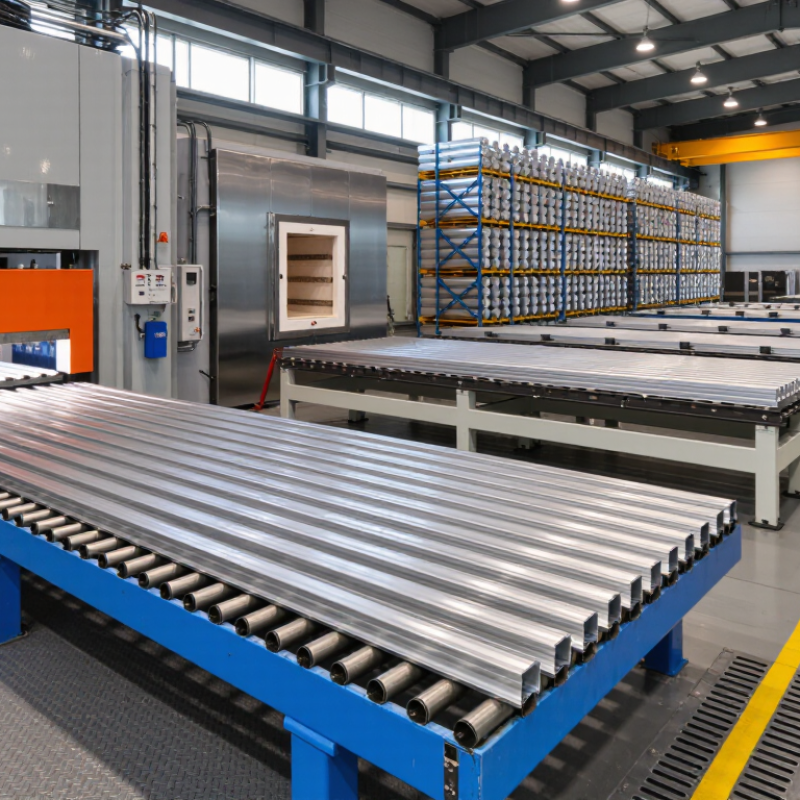
Look beyond a polished website. Ask for alloy certificates, extrusion-tolerance data, die-design experience, and inspection records. A practical audit should examine the billet storage area, extrusion press, cooling table, aging oven, and packing line. Small details matter. Can the supplier maintain a clean surface after anodizing? Can it hold a tight wall thickness across a long profile? Can it repeat the same finish across several production lots?
The Aluminum Association’s industry research highlights aluminum’s broad economic and manufacturing importance in North America. Yet industry reputation alone cannot prove supplier reliability. I might initially favor a lower quotation. That can be a mistake. Tooling corrections, rejected profiles, and delayed shipments may erase the apparent saving. Evaluate production capacity, quality systems, traceability, recycled-content claims, and logistics together. ISO 9001 certification helps, but it does not replace process evidence. No checklist is perfect. The right supplier is the one that communicates limitations honestly, documents performance, and supports your design from prototype to stable production.
Define Your Aluminum Extrusion Requirements
How to Choose the Right Aluminum Extrusion Supplier?
Define Your Aluminum Extrusion Requirements
A reliable supplier search starts with a precise requirement sheet. State the profile’s function, finished dimensions, wall thickness, alloy, temper, and acceptable tolerances. Include the expected load, operating temperature, corrosion exposure, and assembly method. A window frame and a heat sink may both use aluminum, but they demand different alloys and performance tests.
Demand also matters. Specify prototype quantity, monthly volume, forecast changes, packaging needs, and delivery location. The USGS Mineral Commodity Summaries 2025 reports approximately 72 million metric tons of global aluminum smelter production in 2024. Large output does not guarantee suitable extrusion capacity. Ask whether the supplier controls die design, inspection, finishing, and batch traceability. Request sample inspection reports, not only attractive certificates.
Tips: Share a marked-up drawing and one physical reference part. Ask for alloy certificates, dimensional reports, surface-finish samples, and a documented corrective-action process. Confirm whether tolerances follow a recognized standard. Small omissions become expensive later. I have seen projects specify “high quality” without defining flatness or color variation. That phrase is nearly useless. The International Aluminium Institute notes that recycling aluminum can save about 95% of the energy used for primary production. Therefore, also define recycled-content targets, verification evidence, and material segregation requirements. A supplier should challenge unclear specifications respectfully, because agreement is not the same as technical understanding.

Evaluate Supplier Capabilities and Technical Expertise
When choosing an aluminum extrusion supplier, examine capabilities before discussing price. A reliable supplier should explain its alloys, equipment, tolerances, and production limits clearly. Ask which press sizes can handle your profile design. Confirm whether the facility supports prototyping, die correction, cutting, drilling, and surface finishing. Their answers should include measurable details, not broad promises. Vague responses are warning signs.
Technical expertise becomes visible in production decisions. Ask whether engineers review wall thickness, corners, hollow sections, and dimensional risks before tooling begins. Experienced teams can suggest changes that reduce distortion, material waste, or difficult machining. They should also describe how they use drawings, simulations, inspection tools, and sample approvals. Request trial samples. Measure them independently.
Quality systems matter beyond polished brochures. Look for incoming material checks, in-process inspections, and final dimensional reports. Traceability should connect each batch with material records and inspection results. Ask how the supplier handles nonconforming parts and repeated deviations. I have learned that even capable teams can overlook small communication gaps. A drawing revision may reach production late, or a tolerance may be interpreted differently. That risk deserves direct discussion. Review technical documents with the supplier’s engineers, not only sales staff. Visit the facility if possible, and observe die storage, calibration routines, packing methods, and the condition of finished profiles. A supplier may have excellent machinery but weak follow-through. Capability must be judged through evidence, communication, and repeatable results.
Check Quality Standards, Certifications, and Testing Processes
Choosing an aluminum extrusion supplier starts with evidence, not polished brochures. Ask for a current ISO 9001 certificate and verify its scope, site, and expiry date. The ISO Survey 2023 recorded more than 1.26 million ISO 9001 certificates worldwide, but certification alone does not guarantee consistent profiles. A reliable supplier should also follow relevant standards, such as ASTM B221 or EN 755, for dimensions, mechanical properties, and alloy requirements. Request material certificates for each production lot. Check chemical composition, tensile strength, hardness, and dimensional results.
Testing must be visible and repeatable. Ask whether equipment is calibrated and whether laboratories follow ISO/IEC 17025 practices. Useful controls include spectrometer testing, tensile tests, surface inspection, coating-thickness measurement, and corrosion testing when finishing matters. Review sample sizes and acceptance limits, not only final pass statements. A certificate can look reassuring, yet it may not represent your actual batch. That gap deserves attention.
Tips: Request a sample inspection report before signing a contract. Compare the report with your drawing tolerances. Confirm lot traceability from billet to shipment. The Aluminum Association’s 2023 Aluminum Statistical Review shows how widely aluminum moves through industrial supply chains, making traceability increasingly important. Still, paperwork can be imperfect. Visit the facility if possible, observe testing procedures, and ask how failed results are handled. A supplier that documents mistakes may be more dependable than one claiming zero problems.
How to Choose the Right Aluminum Extrusion Supplier?
Compare suppliers by verifying applicable quality standards, certification scope, and documented mechanical testing. The chart shows example minimum tensile-strength requirements for common extrusion alloys under EN 755-2.
Check that ISO 9001 certification covers the production site and relevant extrusion processes.
Confirm alloy, temper, dimensions, and mechanical requirements against EN 755-2 or ASTM B221.
Request tensile, dimensional, surface, hardness, and chemical-composition test records for each production lot.
For independent test results, verify that the laboratory operates under ISO/IEC 17025 and that the requested method is within its scope.
Compare Pricing, Lead Times, and Production Flexibility
How to Choose the Right Aluminum Extrusion Supplier?
Price matters, but the lowest quotation can hide important costs. Ask whether the price includes tooling, packaging, surface treatment, inspection, and freight. A detailed quotation should show material grade, profile weight, tolerances, minimum order quantity, and payment terms. One missing line can change the final budget.
Lead time needs evidence, not optimistic promises. Ask for the sample schedule, tooling completion date, production window, and shipping estimate. In my experience, a supplier that explains possible delays is often more reliable than one promising everything immediately. Request recent delivery records or measurable service targets. A spreadsheet is useful. It is not proof by itself.
Production flexibility becomes important when designs change. Check whether the supplier can adjust die dimensions, support small trial batches, or manage several profiles in one project. Ask how quickly engineering reviews a revised drawing. Confirm available press capacity, alloy options, finishing processes, and quality documents. A capable team should explain inspection points, such as wall thickness, straightness, and surface marks. I once focused too heavily on unit price and underestimated packaging changes. That mistake affected both cost and delivery. Suppliers should also clarify what happens when materials arrive late or a batch fails inspection. Clear answers build trust, although no production plan is perfect.
Assess Communication, Logistics, and Long-Term Support
Choosing an aluminum extrusion supplier requires more than comparing prices. Communication often reveals operational maturity. Ask how quickly engineers answer technical questions. Request clear drawings, tolerances, alloy options, and sampling schedules. Reliable suppliers explain limitations instead of promising everything.
Logistics deserve equal attention. Confirm packaging methods, loading photos, delivery terms, and backup plans for delays. A practical supplier should provide production updates before shipment. Ask whether they can trace each batch through inspection records and material certificates. I once accepted a convenient delivery estimate without checking holiday closures. The order arrived late. That mistake changed my review process.
Long-term support matters after the first shipment. Discuss tooling maintenance, repeat-order consistency, design changes, and complaint handling. A capable partner keeps technical records and assigns a responsible contact. Small issues still happen. What matters is the response: evidence, corrective action, and a realistic timeline.
Tips: Test communication with a small sample order. Measure response time, document accuracy, packaging quality, and problem ownership. Do not judge support from one friendly sales call. Ask for references from comparable projects, and verify claims through records when possible.
| Assessment Area | Weight | Measurable Dimension | Practical Benchmark | Recommended Evidence to Review |
|---|---|---|---|---|
| Communication | 8% | Initial response time | Acknowledge technical or commercial inquiries within 1 business day. | Email records, quotation history, and a defined contact escalation path. |
| 7% | Technical clarification quality | Provide clear answers on alloy, temper, tolerance, surface finish, tooling, and inspection requirements. | Completed drawing review, technical questionnaire, and written deviation list. | |
| 5% | Drawing and revision control | Use revision numbers, approval records, and controlled changes before production. | Approved drawings, change notices, and document-control procedure. | |
| 5% | Meeting and reporting discipline | Issue action lists with owners and due dates after project meetings. | Sample meeting minutes, project schedule, and open-issue tracker. | |
| 5% | Language and time-zone coverage | Provide a reliable business contact during the buyer’s normal working hours. | Named account manager, backup contact, and agreed communication channels. | |
| Logistics | 8% | Quoted lead time | State tooling, sampling, production, finishing, and transit time separately. | Detailed quotation with milestone dates and assumptions. |
| 8% | On-time delivery performance | Target at least 95% of shipments delivered within the agreed delivery window. | Previous 6–12 months of shipment records and corrective-action reports. | |
| 6% | Packaging and protection | Protect profiles from bending, scratching, moisture, and mixed-part identification errors. | Packaging specification, loading photos, and sample packaging approval. | |
| 6% | Documentation accuracy | Provide packing list, commercial invoice, certificate of conformity, and inspection records without material errors. | Redacted shipping document samples and document checklist. | |
| 5% | Capacity and supply continuity | Demonstrate available extrusion, finishing, tooling, and backup capacity for the planned volume. | Capacity statement, production plan, maintenance schedule, and contingency plan. | |
| Long-Term Support | 8% | Quality management | Maintain documented inspection controls for dimensions, alloy, temper, surface finish, and packaging. | Quality manual, inspection plan, calibration records, and recent audit summary. |
| 7% | Traceability | Trace finished profiles to production lot, material source, inspection results, and shipment. | Anonymized material certificates, lot labels, and traceability records. | |
| 6% | Nonconformance response | Acknowledge quality complaints within 1 business day and provide a containment plan promptly. | Corrective-action procedure, sample 8D report, and complaint-response timeline. | |
| 5% | Tooling and design support | Support die design, manufacturability review, trial correction, and controlled tooling storage. | Tooling terms, die-maintenance records, trial reports, and ownership conditions. | |
| 4% | Continuous improvement | Review recurring defects, yield, delivery performance, and cost-reduction opportunities periodically. | Quarterly review format, improvement log, and documented corrective actions. | |
| Commercial Control | 5% | Total landed-cost transparency | Separate profile price, tooling, finishing, packaging, freight, duties, and other applicable charges. | Itemized quotation and clearly stated Incoterms® 2020 rule. |
| 4% | Payment and change terms | Define payment milestones, price-validity period, raw-material adjustment rules, and change charges. | Draft purchase terms and quotation validity statement. | |
| 3% | Business continuity and compliance | Maintain documented risk controls for equipment failure, material shortages, severe weather, and regulatory changes. | Business-continuity plan, compliance declarations, and insurance information. | |
| Total Evaluation Weight | 100% — Compare suppliers using the same evidence, scoring scale, specifications, and delivery assumptions. | |||