How to Find Botanical Garden Light Show Suppliers in 2026?
Planning a botanical garden light show in 2026 means finding more than a company with bright fixtures and polished renderings. The right supplier should understand how evening crowds move, how temporary cables cross paths, and how light affects delicate planting. Ask how its team protects roots, avoids glare near ponds, and handles rain, wind, and equipment faults. Details matter. A convincing proposal should include a site-specific lighting plan, installation schedule, maintenance coverage, and clear responsibilities—not just attractive concept images.
Compare suppliers using evidence you can check. Request references for similar gardens, photographs from completed installations, and a chance to speak with past clients. Review fixture specifications, power requirements, crew experience, and plans for daily inspections. If sustainability claims matter, ask for supporting information about energy use, reusable structures, and end-of-event removal. A small on-site mock-up can reveal harsh shadows or colors that overpower flowers before the full installation begins. Ask twice.
In 2026, digital portfolios may make vendors look equally capable; field experience often tells a different story. Confirm who will be present during setup and show nights, and how quickly they can respond when a fixture fails. Clarify costs, timelines, and change procedures in writing. Even a careful plan can miss something: a path may look wide on paper but feel cramped beside a glowing arch. Treat that gap as useful feedback, not a reason to rush. A reliable botanical garden light show supplier welcomes practical questions and explains limitations plainly.
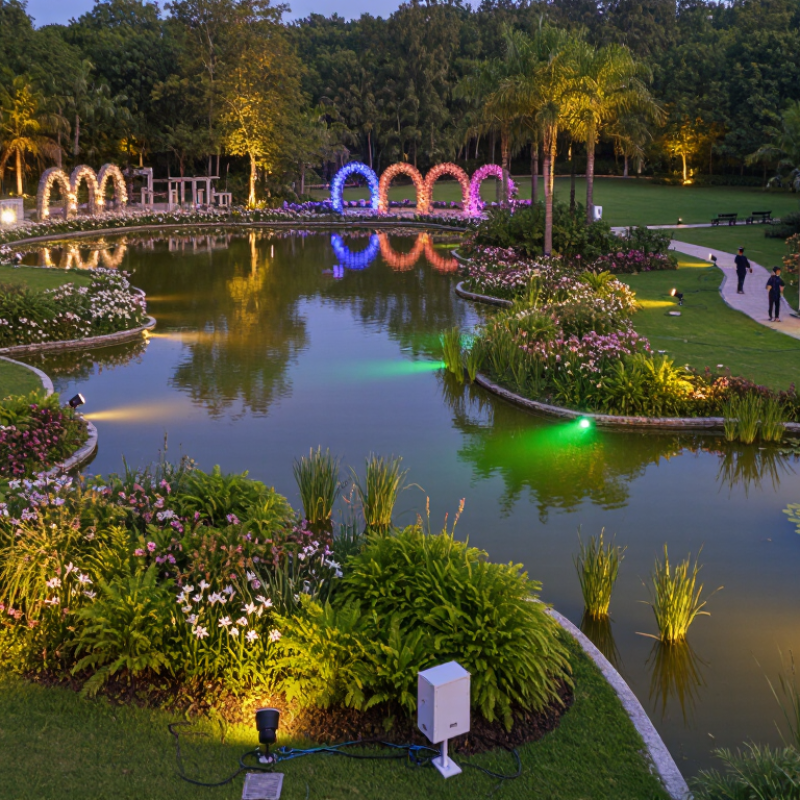
Define the Botanical Garden Light Show Requirements
Before contacting suppliers, define what the botanical garden needs visitors to experience. Walk the route after dusk and note narrow paths, low branches, wet ground, and quiet areas. Mark entry points, emergency access, and locations where cables or equipment could affect plants. A paper map with photos is more useful than a vague description.
Set practical limits in the brief. Specify the display dates, operating hours, expected attendance per hour, visitor capacity, and preferred visit duration. Include power availability, weather exposure, installation and removal windows, and any restrictions on noise or equipment placement. Decide whether the show needs synchronized lighting, sound, interactive elements, or only illuminated paths and garden features. Keep accessibility in view: paths should remain clear, and transitions between bright and dark areas should feel manageable.
Separate essential requirements from optional ideas, then share the same brief with every supplier. Ask for a site-specific layout, equipment list, staffing plan, and schedule for testing and maintenance. Request examples of comparable outdoor installations, with details about their scale and operating conditions. Be candid about the budget and what it excludes. A first draft may miss a tricky corner or a sensitive planting bed; that is normal. Review it on site before approving the final plan.
Identify Qualified Light Show Supplier Categories
Identify Qualified Light Show Supplier Categories
Separate suppliers by responsibility, not by catalog size. Design-and-build integrators coordinate concept, equipment, installation, and show operation. Lighting designers shape sightlines around trees, water, paths, and visitor movement. Event-production companies may provide temporary fixtures, power distribution, rigging, and technicians. Controls specialists program timed sequences and test dimming across zones. Installation contractors handle cabling, mounting, and weather protection. Different jobs require different proof.
Ask each category for relevant garden or outdoor-project references, named crew roles, equipment schedules, and a sample commissioning plan. A beautiful rendering is not enough.
The U.S. Department of Energy’s 2020 U.S. Lighting Market Characterization reported that LEDs represented about 48% of installed U.S. lighting stock. That is useful context, not a guarantee of outdoor performance.
Garden pathways, damp air, and delicate planting beds call for fixture ratings, glare control, and careful aiming. A supplier should explain these choices in plain language.
One awkward gap: proposals often describe the visual effect but say little about maintenance access. Check that before comparing prices.
Assess Supplier Experience, Technology, and Safety Standards
For a 2026 botanical garden light show, ask suppliers for three recent outdoor installations, not just polished renders. Request references from gardens or comparable public landscapes, plus a post-installation service record. Walk through a sample site plan together: tree-root zones, wet paths, narrow service gates, and places where visitors may pause. A supplier should explain fixture choices, controls, power loads, and maintenance access in plain language. Renderings can mislead. A U.S. Department of Energy forecast put potential annual savings at 569 terawatt-hours by 2035. Its 2017 report compared LED adoption with continued conventional-lighting use.
Safety deserves its own documented review. Request electrical load calculations, weather-rated equipment specifications, cable-routing plans, inspection records, and a clear emergency shutoff procedure. Ask how crews will protect roots, keep accessible paths clear, and respond to rain or a failed fixture. Get named safety responsibilities and a rehearsal schedule before opening night. The National Electrical Code and applicable local requirements should guide installation. Ask the supplier to identify the standards used, rather than accepting “industry standard” as an answer. Test dimming, timers, and backup procedures on site. Keep the paperwork. Small details are easy to miss, like a connector sitting in a shallow puddle, when the display looks beautiful after dark.
Compare Proposals, Budgets, and Project Timelines
How to Find Botanical Garden Light Show Suppliers in 2026?
Compare Proposals, Budgets, and Project Timelines
Compare proposals line by line, not by headline price. Ask each supplier to separate design, lighting equipment, installation, programming, maintenance, power, and removal costs. A low quote may exclude replacement fixtures or late-night troubleshooting. Small details matter. Request a sample site plan showing cable routes, tree protection, visitor paths, and service access. Then check that the proposed equipment suits outdoor conditions and the garden’s landscape.
Use operating costs as well as purchase or rental fees. The U.S. Department of Energy’s Energy Saver guidance says LEDs use at least 75% less energy and last up to 25 times longer than incandescent lighting. That comparison does not predict a whole show’s energy bill, but it helps assess fixture choices. Ask suppliers to state estimated power use, how they calculated it, and what assumptions affect the estimate. A perfect spreadsheet still cannot predict every wet evening.
Tips: Request a milestone schedule with design approval, delivery, installation, testing, opening, and removal dates. Ask how many days the crew needs on site and what delays could change the price. Compare payment schedules and written contingency terms. Ask for references from outdoor installations of similar scale, and verify who handles maintenance during operating hours. If a timeline looks unusually tight, ask what has been left out. I would not treat a polished proposal as proof of reliable delivery.
Verify References, Contracts, and Installation Support
Ask suppliers for references from botanical gardens with similar acreage, climate, and visitor numbers. Contact the site operators directly, rather than relying only on testimonials. Ask what happened during installation, how the lighting performed in wet weather, and whether support continued after opening night. Request dated photographs showing the displays after dark. Details matter.
Put the agreed scope in writing. Specify fixture counts, locations, control systems, delivery dates, installation hours, and testing responsibilities. Clarify who supplies lifts, cable protection, and replacement parts. Set out warranty coverage, response times, and extra charges for schedule changes. Link payments to clear milestones, such as delivery and successful commissioning. Vague wording costs time.
Confirm who will lead the on-site crew and how garden staff can reach that person during installation. Ask for a practical plan covering rain delays, uneven paths, and protecting planted areas. Require a walk-through before opening, with dimming controls and timers tested in place. Even a careful review can miss something; I would check the access route again with staff who know the grounds. Agree on post-opening support, not just a promise to answer emails.
How to Find Botanical Garden Light Show Suppliers in 2026?
Verify References, Contracts, and Installation Support
Use this checklist to compare suppliers: confirm three reference details, review four contract terms, and verify four installation-support arrangements. The bars count the checks listed in this framework; they are not market statistics or supplier ratings.