
News
Top Heat Recovery Ventilators for Global Buyers
Selecting a Heat Recovery Ventilator for an international project involves more than comparing airflow figures. Buyers must match ventilation capacity to occupancy, room layout, climate, and local energy conditions. A unit sized for a compact apartment may struggle in a busy school or clinic. Excess capacity can also increase noise and operating costs. Small details matter. Check filter access, condensate drainage, controls, and replacement-part availability before comparing prices. In cold regions, frost protection deserves close attention; humid climates bring different moisture-management demands. No brochure can answer every site question.
This guide reviews leading HRV options through practical criteria: verified performance data, heat-recovery efficiency, airflow range, sound levels, electrical requirements, and service support. Specifications should be checked against current manufacturer documents, since product names and configurations vary across markets. Global buyers should also confirm voltage, duct connections, language options, warranty terms, and distributor coverage. A strong shortlist is useful. Not a final design. Installer experience, building codes, and commissioning quality can change real-world results. Published ratings may be difficult to compare directly when test methods differ. That uncertainty matters. The aim is to help buyers ask sharper questions, identify trade-offs, and narrow choices without treating one model as universally best. Use this guide as a decision aid, not a substitute for project-specific engineering review.
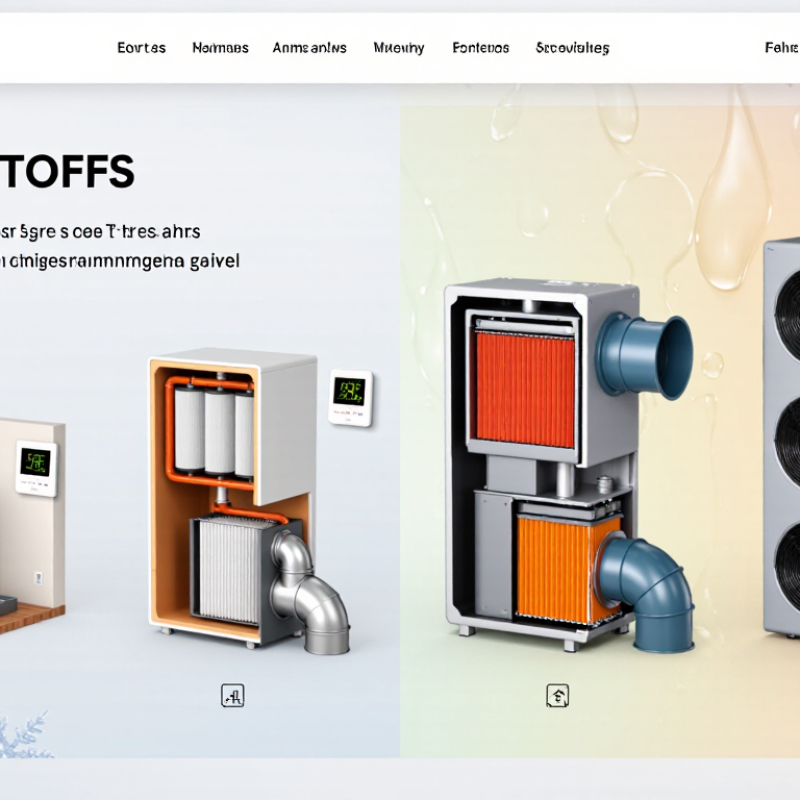
How Heat Recovery Ventilators Work
A heat recovery ventilator (HRV) removes stale indoor air while bringing outdoor air in, keeping the two streams separate. In a plate-core unit, warm exhaust air passes beside colder supply air, and heat crosses thin metal or polymer walls. On a frosty morning, this tempers incoming air before it reaches bedrooms and can reduce heating demand. That is the core. An HRV transfers sensible heat, not moisture; an enthalpy recovery ventilator can transfer some water vapor too. Fans still use electricity, and filters add resistance, so airflow and maintenance matter.
Performance is not one fixed number. The European Commission’s Ecodesign Regulation (EU) No 1253/2014 set a 73% minimum thermal efficiency from 2018 for covered residential bidirectional ventilation units. Scope and test conditions matter.
But airflow matters. Poorly balanced ducts or clogged filters can reduce real-world recovery, while cold climates may need energy-consuming frost control. U.S. Department of Energy guidance describes the basic exchange: outgoing air preheats or precools incoming air, depending on the season. The neat diagram hides the messy part: commissioning, noise, and local climate affect whether occupants keep the unit running.

Key Specifications for Comparing HRV Units
Comparing heat recovery ventilators starts with airflow, not the largest number on a brochure. Match supply and extract rates to the building’s room-by-room design. A unit rated at 250 m³/h may deliver less through long, narrow ducts. Check the fan curve. Confirm the pressure used for the rating and whether tests used clean filters. Compare independent test results measured under similar conditions.
Heat recovery efficiency matters, but read the test conditions beside it. Sensible efficiency describes temperature transfer; it does not include all fan energy or reflect every climate. Compare specific fan power at a similar airflow and pressure. Small differences add up. Check frost protection, too: preheating, bypass control, or reduced airflow can affect winter performance and energy use. Condensate drainage also needs a practical route, especially in a cold attic.
Noise data should identify where measurements were taken, not just offer a quiet-sounding rating. Check casing leakage, filter class and availability, and space for routine maintenance. Ask for sound levels during normal operation. Commissioning records can confirm balanced supply and extract flows after installation. Specifications help, but real ducts and dirty filters can shift results. Leave some capacity margin; exact-limit sizing is tempting, and not always wise.
Leading HRV Types and Product Categories
Top Heat Recovery Ventilators for Global Buyers
Leading HRV Types and Product Categories
Heat recovery ventilators come in several core designs and installation categories. Plate-core units move exhaust and supply air through separate channels, transferring heat without mixing the air streams. Counterflow plates extend the exchange path, while crossflow cores are often simpler and more compact. Rotary-wheel units transfer heat continuously, but their seals and purge arrangements need careful review. Small differences matter. An HRV transfers sensible heat; an energy recovery ventilator also transfers some moisture. Product labels can vary, so compare the stated recovery method, airflow, and test conditions—not the acronym alone.
Buyers commonly compare centralized whole-building units, compact room or apartment units, and larger ventilation systems with heat-recovery sections. The IEA’s 2023 report, Buildings, estimates that buildings used 30% of global final energy and produced 26% of energy-related emissions in 2022. These figures describe the building sector, not HRV savings. Important distinction. Match capacity to measured airflow and occupancy, then check frost protection, filter access, condensate drainage, and operating noise. High laboratory efficiency can disappoint if ducts leak or filters are neglected. Service access is easy to overlook.
| HRV Type or Product Category | Heat Exchange Core | Typical Sensible Heat Recovery Effectiveness | Common Airflow Scale | Key Characteristics | Typical Applications | Buyer Considerations |
|---|---|---|---|---|---|---|
| Counterflow Plate HRV | Fixed plate core with supply and exhaust air moving in opposite directions | Approximately 70–90%; actual results depend on test conditions, airflow balance, and product design | Residential and light-commercial units; capacity varies by model | High heat-transfer potential; no moving recovery wheel; air streams remain separated by the core | Homes, apartments, schools, and small offices | Check core material, condensate drainage, frost protection, pressure drop, and certified performance data |
| Crossflow Plate HRV | Fixed plate core with supply and exhaust air crossing at an angle | Approximately 50–70%; performance varies with core geometry and operating conditions | Compact residential and small-building systems | Simple fixed-core design; often suited to installations where compact size and straightforward maintenance are priorities | Small homes, apartments, and localized ventilation systems | Compare airflow at the required external static pressure, sound levels, filter access, and frost-control method |
| Rotary Heat-Recovery Ventilator | Rotating wheel that transfers sensible heat between exhaust and supply air | Often approximately 70–85%; results depend on wheel design, speed, and operating conditions | Commonly used in medium- and large-capacity air-handling systems | Can provide substantial heat recovery; requires a drive system and attention to sealing and air-stream carryover | Commercial buildings, institutional facilities, and larger ventilation plants | Review purge-sector options, leakage and carryover data, drive maintenance, wheel cleaning, and control requirements |
| Enthalpy-Recovery Ventilator (ERV) | Moisture-permeable fixed core or an enthalpy-transfer wheel | Sensible heat performance is design-dependent; latent performance should be evaluated separately | Residential through commercial capacities, depending on product configuration | Transfers heat and some moisture; may help moderate indoor humidity, but does not replace dedicated humidity control | Buildings where humidity balance is an important ventilation consideration | Check both sensible and latent performance, material suitability, cross-contamination data, and local climate requirements |
| Residential Ceiling or Wall-Mounted HRV | Usually a compact fixed-plate core | Model-specific; compare values reported under the same test standard and conditions | Typically designed for dwelling-scale ventilation; select by required airflow rather than unit label | Compact enclosure, integrated fans and filters, and controls intended for residential operation | Single-family homes, apartments, and retrofit projects | Confirm installation orientation, duct connections, sound at operating airflow, filter availability, and service access |
| Commercial HRV Air-Handling Unit | Plate core or rotary recovery section integrated into an air-handling unit | Varies by recovery technology and the rated operating point | Building-scale airflow; capacity is selected from the project ventilation design | Can combine heat recovery with filtration, fans, controls, and other air-treatment sections | Offices, schools, healthcare facilities, retail, and other commercial buildings | Assess total pressure drop, fan energy, access for cleaning, control integration, casing leakage, and project-specific codes |
| Frost-Protected HRV | Plate or rotary heat-recovery core with a frost-control strategy | Depends on the underlying core and operating mode; frost protection can affect delivered airflow and energy use | Available across residential and commercial product ranges | May use preheating, defrost cycles, recirculation, or airflow control to limit frost formation | Cold-climate buildings and installations exposed to low outdoor temperatures | Ask for the minimum operating temperature, defrost sequence, impact on supply airflow, and energy use during frost control |
| HRV with Bypass or Summer Mode | Typically a plate-core unit with a bypass damper | Heat recovery is bypassed when the control system determines that free cooling is appropriate | Common in residential and light-commercial ventilation systems | Allows outdoor air to bypass the recovery core under suitable conditions; operation depends on controls and outdoor temperature | Buildings that benefit from cool outdoor air during appropriate seasons or nighttime conditions | Verify whether the bypass is automatic or manual, how it is controlled, and whether the damper position is monitored |
Choosing an HRV for Climate and Building Needs
Selecting an HRV starts with the climate, not the catalogue. In cold regions, heat recovery can temper incoming winter air before it reaches occupied rooms. The U.S. Department of Energy’s Energy Saver guidance puts typical HRV heat recovery at about 70–80%. That is not guaranteed. Frost control, airflow balance, and duct resistance can all reduce real-world performance. Ask for tested efficiency and airflow data, not just a headline percentage.
Building layout matters just as much. ASHRAE Standard 62.2-2022 bases residential ventilation requirements on factors including floor area and bedroom count, so a small airtight home and a larger family house need different airflow plans. Check whether ducts can reach bedrooms and wet rooms without sharp bends or long runs. In humid climates, an energy recovery ventilator may help limit incoming moisture; in dry, cold conditions, an HRV may be the simpler fit. Filter access matters. A filter hidden above a laundry ceiling is easy to neglect. I would also check frost-protection settings and local service availability before choosing. Paper specifications rarely capture every installation detail.
Global Standards, Installation, and Ownership Factors
Global buyers should compare heat recovery ventilators against local ventilation codes and recognized test methods, not headline efficiency alone. ASHRAE Standard 62.2 covers residential ventilation, while European buyers may encounter EN 13141-7 performance testing. Requirements and test conditions differ. A rating from one market may not predict performance in another.
The Global Alliance for Buildings and Construction’s 2022 Global Status Report states that buildings used 34% of global energy in 2021 and generated 37% of energy- and process-related CO₂ emissions. That context makes efficient ventilation relevant, but it does not guarantee savings in every home. Compare heat recovery effectiveness alongside fan power, airflow, sound levels, and filter availability. A paper rating can still mislead.
Installation details shape ownership costs. Allow space to replace filters, insulate outdoor-air ducts, and provide a drain where condensate can form. Ask for commissioning records showing measured airflow and balanced supply and exhaust; a small imbalance can cause drafts or pressure problems. In cold regions, check frost-control operation and its effect on ventilation. In humid climates, review corrosion resistance and drainage. These checks take time. I’d also budget for filters and service before choosing a unit; that cost is easy to overlook.
Top Heat Recovery Ventilators for Global Buyers: Energy Recovery at a Glance
Illustrative calculation: recovered energy equals sensible heat recovery efficiency multiplied by a 10,000 kWh annual ventilation-heating load. This assumes balanced airflow and steady operation; frost protection, bypass, duct losses, climate, and fan electricity can change actual performance. Compare certified test data and local requirements when selecting a unit.