What Is an LED Phototherapy Mask and How Does It Work?
A Led Phototherapy Mask is a wearable device that shines selected wavelengths of light onto the face. It is not a magic mask. Think of small LEDs sitting a few centimeters from clean, dry skin, bathing the cheeks and forehead in red, blue, or near-infrared light. Each wavelength interacts with tissue differently, and the intended effect depends on the device and its settings.
Dermatologist Dr. Joshua Zeichner has described LED treatment as a way to deliver light energy without injuring the skin’s surface. Put simply, the light is not a laser peeling the face. Red and near-infrared wavelengths are commonly studied for their possible role in supporting skin repair and collagen activity; blue light is often used in acne-focused devices. Results vary, and research on home masks does not make every product equally effective. Small details matter: wavelength, exposure time, fit, and regular use. So does the evidence behind the claims.
That is the practical starting point. A mask may feel warm, or barely noticeable. Neither sensation proves it is working. Before using one, check the manufacturer’s instructions, protect your eyes as directed, and consider asking a dermatologist if you have a skin condition or take light-sensitive medication. The technology is promising, but not settled. This guide explains how LED masks work, what their colors may do, and how to judge their limits without mistaking polished marketing for clinical proof.
Definition and Core Features of an LED Phototherapy Mask
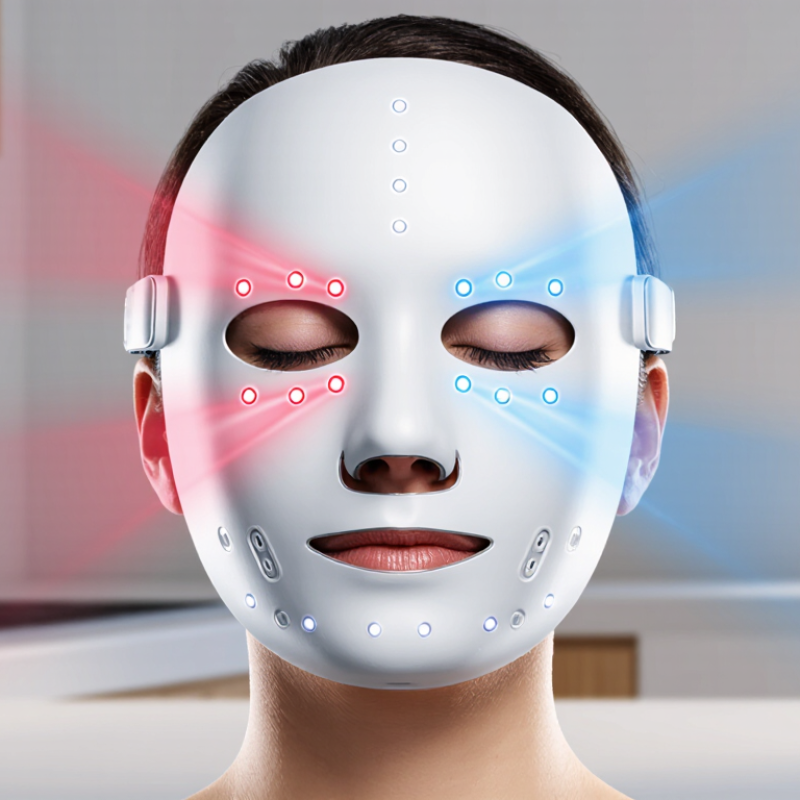
An LED phototherapy mask is a wearable device that places light-emitting diodes near the skin. It usually covers the face, with openings for the eyes, nose, and mouth. Unlike a heated mask, it delivers specific colors of light without needing to touch or massage the skin. Simple idea. The exact design, wavelength, and power can differ between devices.
Red light and near-infrared light are commonly used in skincare devices, while some masks also offer blue light. These wavelengths interact with skin in different ways, but results depend on the device and the person using it. Research is still developing, so a mask should not be treated as a guaranteed fix or a replacement for medical care. The science is promising, not magic.
Core features include a light source, a face-fitting shell, and controls for timing or light settings. Some designs use a flexible silicone surface; others have a rigid frame that sits slightly away from the skin. A secure, comfortable fit matters, since uneven placement can leave parts of the face less exposed. Clean the mask as directed, follow its session instructions, and use eye protection when recommended. If light makes your skin uncomfortable, stop and seek professional advice. Small details matter. The user guide is worth reading, even when the routine seems obvious.
What Is an LED Phototherapy Mask and How Does It Work?
Representative Wavelengths Used in LED Masks
LED phototherapy masks deliver non-UV light to the skin. Different wavelengths are used for different treatment approaches: blue light is commonly associated with acne-focused routines, while red and near-infrared light are used in skin-rejuvenation routines. The chart shows representative wavelengths, not a standard shared by all devices. Actual results depend on factors including light intensity, exposure time, and device design.
How LED Wavelengths Interact With the Skin
What Is an LED Phototherapy Mask and How Does It Work?
How LED Wavelengths Interact With the Skin
An LED phototherapy mask shines selected wavelengths onto the skin. Different wavelengths reach different depths and interact with light-absorbing molecules, called chromophores. Red light, often around 630–660 nanometers, is used to study effects on skin appearance and cellular activity. Near-infrared light, commonly around 800–850 nanometers, can reach deeper than visible red light. Blue light acts closer to the skin’s surface. Light is not heat. A mask’s color alone, however, does not tell you its strength or likely effect.
The response depends on wavelength, exposure time, distance, and how consistently the device is used. It also varies between people. More light is not automatically better; follow the device directions and protect your eyes as instructed. Some studies suggest benefits for particular skin concerns, but results depend on the device and treatment plan. The science is still being refined, and home devices may differ from those used in research. A small practical detail matters: clean, dry skin helps keep the mask sitting evenly. If your skin feels irritated, stop and seek advice from a qualified healthcare professional.
What Is an LED Phototherapy Mask and How Does It Work? - How LED Wavelengths Interact With the Skin
An LED phototherapy mask uses light-emitting diodes to deliver selected wavelengths to the skin. The light is non-ionizing; its effects depend on wavelength, dose, treatment time, device design, and individual skin response.
| Light type | Typical wavelength range | How it interacts with skin | Commonly studied use | Important context |
| Blue light | Approximately 405–420 nm | Visible blue light is absorbed relatively close to the skin surface. It can affect light-sensitive molecules, including porphyrins produced by some acne-associated bacteria. | May help reduce inflammatory acne lesions in some people, particularly as part of a broader acne-care plan. | It does not treat every cause of acne, and results vary. Blue light can cause temporary irritation or dryness in some users. |
| Red light | Approximately 630–660 nm | Red light penetrates farther into skin than blue light, although the depth varies with wavelength, tissue, and device. Cells can absorb some of this light and respond through photobiomodulation pathways. | Studied for effects on inflammation, skin appearance, and the appearance of fine lines. | Evidence and outcomes depend on the device and treatment protocol. It should not be described as a guaranteed way to remove wrinkles or rebuild collagen. |
| Near-infrared light | Commonly approximately 810–850 nm | Near-infrared light is not visible to the eye and can reach deeper tissue than visible blue light. Absorption and penetration are not uniform throughout the skin. | Studied for photobiomodulation and its potential effects on inflammation and tissue response. | Some masks combine near-infrared with red light. The presence of a wavelength alone does not establish that a device is effective or safe for every user. |
| Amber or yellow light | Often approximately 570–590 nm | Visible light in this range is absorbed and scattered in skin differently from red or blue light; its effects depend on the delivered dose and device. | Investigated for skin appearance and redness-related concerns, but evidence is less established than for some other light-based applications. | Claims should be interpreted cautiously. Research findings for one device or protocol may not apply to another. |
| How treatment is delivered | Device-specific | LEDs deliver light over a treatment area. Exposure is influenced by wavelength, irradiance, session duration, distance from the skin, and total energy delivered. | At-home masks generally provide repeated, timed sessions according to their instructions. | Different devices can have different outputs even when they list the same wavelength. Follow the device instructions rather than assuming that longer sessions work better. |
| Safety and eye protection | Depends on wavelength and device output | Bright light may cause discomfort or pose a risk to the eyes. Some users may also experience temporary redness, dryness, or irritation. | Safe use requires following the manufacturer’s eye-protection and session guidance. | People with light sensitivity, eye conditions, or medicines that increase photosensitivity should consult a qualified health professional before use. Stop if significant irritation occurs. |
Reading the evidence: LED masks are not ultraviolet tanning devices. Research results are specific to the wavelengths, dose, treatment schedule, and population studied; a mask should not replace medical care for persistent or severe skin concerns.
Typical Uses and Factors That Affect Treatment
What Is an LED Phototherapy Mask and How Does It Work?
Typical Uses and Factors That Affect Treatment
LED masks deliver selected wavelengths of light to the skin. Blue light is commonly used for acne-prone skin, while red and near-infrared light are marketed for redness and signs of skin ageing. Results depend on the device and the person using it. A 2000 British Journal of Dermatology trial involving 107 people with acne reported a 76% reduction in inflammatory lesions after 12 weeks of combined blue-red light treatment. That was a clinical light system, not proof that every home mask achieves the same result. The distinction matters.
Treatment outcomes can vary with wavelength, light dose, session length, mask fit, and regular use. Skin sensitivity and the condition being treated also matter. A loose mask may deliver light unevenly; missed sessions can make results harder to assess. LED treatment is not a substitute for medical care, especially for persistent or painful acne. Research and device specifications vary, so compare claims with published evidence and seek professional advice when unsure.
Tips: Follow the device instructions and protect your eyes as directed. Keep a simple log of sessions and skin changes. Stop if irritation develops. Results vary.
Safety Considerations and Proper Use
An LED phototherapy mask uses light-emitting diodes to deliver red, blue, or other wavelengths to the skin. It is not a heat treatment, and more light does not mean better results. Follow the device’s exact session time and schedule. Keep the mask clean, and use it on dry skin unless its instructions say otherwise. A snug fit can feel awkward; discomfort is a reason to stop, not push through.
Protect your eyes as directed, especially with blue-light settings, and never stare into the LEDs. Stop if you develop persistent redness, pain, headache, or visual changes. Ask a healthcare professional before use if you have an eye condition, a photosensitive skin disorder, or take medication that increases light sensitivity. A 2016 Cochrane review of light therapies for acne included 71 trials and 4,211 participants, but judged much of the evidence low or very low quality. Those studies were not all mask trials, so their findings cannot confirm that every home device is equally safe or effective. That limitation matters.
Tips: Set a timer, record each session, and inspect your skin afterward. Avoid adding strong exfoliating products on the same day if they irritate your skin. Small steps help.