What Are the 7 Best In Building DAS Solutions?
Reliable indoor mobile coverage depends on more than signal bars. Concrete walls, elevator shafts, and crowded meeting rooms can weaken service in different ways. In Building DAS Solutions bring cellular signals indoors through a network of antennas, cabling, and signal equipment. The right design can improve coverage across offices, hospitals, hotels, or large public venues. But no system fits every building.
This guide compares seven leading solution types and providers through practical criteria: supported frequency bands, capacity, scalability, carrier compatibility, installation demands, and ongoing support. Some deployments use passive components to distribute signal; others rely on active equipment or a hybrid design. Each approach has trade-offs. A compact office may need a very different system from a high-rise with thousands of users. That distinction matters.
Readers should look beyond headline performance claims. Ask how coverage was measured, which carriers and bands are supported, and whether the design can adapt as usage grows. Request a site assessment and a clear explanation of maintenance needs. Details vary by building. Even a well-engineered DAS may leave coverage gaps if its design assumptions are wrong or the source signal is weak. That is worth remembering. This overview is a starting point, not a substitute for a qualified RF assessment. It aims to help building owners and IT teams compare options with clearer questions and more realistic expectations.
What In-Building DAS Is and How It Works
What Are the 7 Best In Building DAS Solutions?
What In-Building DAS Is and How It Works
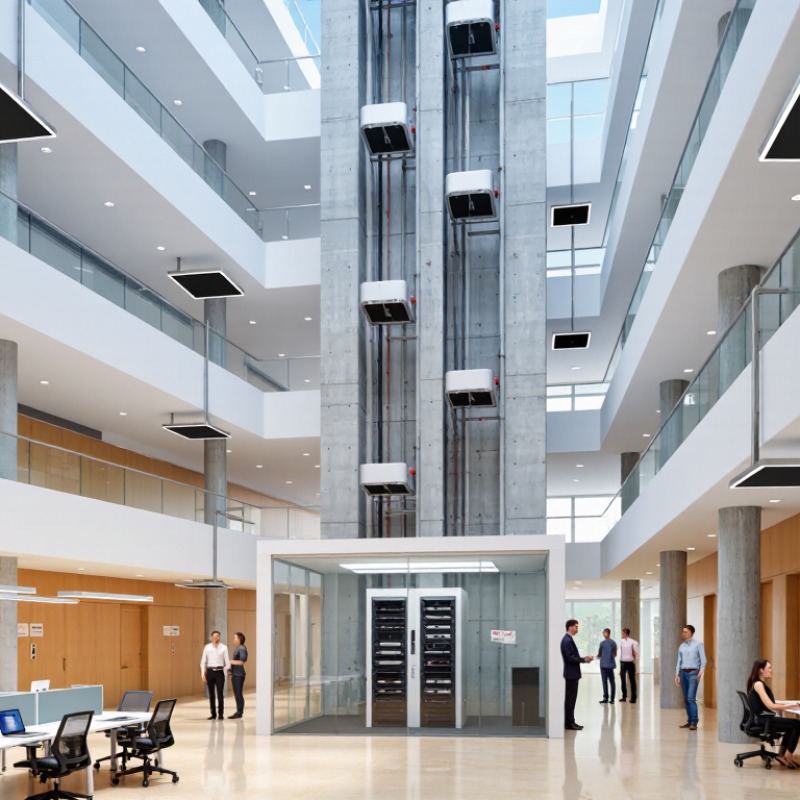
An in-building distributed antenna system (DAS) carries mobile signals through a building, where concrete walls, elevators, and basements can weaken reception. It receives signals from an outdoor network source or dedicated signal equipment, then distributes them through cables and small antennas. Think of ceiling antennas in a hotel corridor, or a remote unit near a hospital stairwell. Each serves a planned area. The system can support multiple frequency bands, but coverage depends on careful design and coordination with network operators.
A DAS typically has a signal source, a headend, distribution cabling, and remote units connected to antennas. In active systems, equipment converts and amplifies signals; passive systems use components such as coaxial cable and splitters. Hybrid designs combine approaches. Ericsson’s June 2024 Mobility Report recorded 25% year-on-year growth in global mobile network data traffic in the first quarter of 2024. That pressure makes indoor capacity planning important, not just adding more antennas.
A useful detail: more antennas do not automatically mean faster service. Results depend on signal quality, available network capacity, building materials, and user demand. CTIA’s 2024 Annual Survey reported that U.S. wireless networks carried about 100 trillion megabytes of data in 2023. A site survey can reveal dead zones and peak-use areas before installation. Still, radio conditions change, and early plans can miss a crowded lobby at lunchtime. That’s worth revisiting.
Key Criteria for Evaluating In-Building DAS Solutions
A strong in-building DAS should deliver consistent service where people actually use phones: elevator lobbies, meeting rooms, stairwells, and underground parking. Evaluate coverage by floor and frequency band, not by a single building-wide signal score. Check capacity at busy hours, uplink performance, and support for multiple carriers. GSMA Intelligence’s The Mobile Economy 2024 projects 5.5 billion 5G connections worldwide by 2030. That is a useful planning signal, not a guarantee of local demand. Ask whether the system can add bands and capacity without replacing major components.
Demand must be measured on site. ITU’s Facts and Figures 2024 estimates that 5.5 billion people used the internet in 2024, but global figures cannot predict a crowded venue’s peak load. Request walk-test results, floor plans, and clear acceptance thresholds for signal strength, quality, and throughput. Compare these with measurements after installation. Coverage matters. Also assess power use, equipment-room space, backup power, monitoring, and maintenance access. A low initial price can hide costly upgrades or difficult repairs. Still, no spreadsheet captures every change in how a building is used; review the design after occupancy and real traffic reveal its weak spots.
Seven Leading In-Building DAS Solutions
Seven Leading In-Building DAS Solutions
In-building distributed antenna systems improve cellular coverage where walls, distance, or heavy foot traffic weaken signals. These seven approaches are useful starting points, not a universal ranking. Passive DAS carries radio signals through coaxial cables and antennas. It can suit smaller buildings, though cable losses may limit coverage across large sites. Active DAS converts and distributes signals over fiber, supporting longer runs and more precise designs.
Hybrid DAS combines fiber and coax, balancing reach with installation needs. Fiber-fed DAS uses optical links between central equipment and remote units; planners often favor it for large campuses or tall buildings. Neutral-host DAS allows shared infrastructure to support multiple carriers, reducing duplicated equipment. Multi-operator DAS is designed to serve several mobile networks, but requires careful coordination and compatible radio equipment.
Venue-specific DAS is planned around a building’s shape, materials, and users. A hospital needs dependable coverage in corridors and enclosed rooms; a busy station may need capacity at platforms and entrances. Categories can overlap. That makes comparisons less tidy. Before choosing, request a walk test, capacity estimates, and post-installation measurements. Check coverage in stairwells and service areas, not just the lobby. Real buildings rarely behave exactly like drawings.
How the Seven Solutions Compare in Coverage and Capacity
What Are the 7 Best In Building DAS Solutions?
How the Seven Solutions Compare in Coverage and Capacity
Seven common approaches serve different building needs. Passive coax DAS can cover compact sites, but capacity and upgrades may be limited by its cabling design. Active fiber DAS reaches large, multi-floor buildings and can scale through added radio resources. Hybrid DAS uses fiber for long runs and coax near antennas. Digital DAS allows flexible signal routing, though planning and configuration take care. Remote-radio DAS places radio units closer to users, helping target coverage and capacity. Small-cell overlays add capacity in busy zones, such as a crowded lobby, but may not cover an entire building evenly. Neutral-host DAS can support several operators; shared infrastructure does not guarantee equal capacity for each.
Coverage is only half. Actual performance depends on frequency bands, antenna placement, carrier resources, backhaul, and user demand. A basement with thick concrete may need a different layout from an open office floor. Site surveys and traffic measurements help reveal those differences. No option wins everywhere; I would be cautious about choosing from a coverage map alone.
Tips: Map weak-signal rooms and peak-hour traffic before comparing proposals. Ask how capacity is divided across floors and operators. Check expansion needs, too. Measure before choosing. Even a sound design can miss a busy corner.
Matching DAS Solutions to Building Types and Connectivity Needs
The best in-building DAS approach depends on floor area, wall materials, carrier coverage, and user density. These seven approaches are useful options, but they are not completely separate boxes.
Passive DAS uses coaxial cable and antennas to spread an existing signal. It can suit smaller offices, hotels, or retail spaces when outdoor coverage is already reliable. Active DAS converts signals for distribution over fiber or dedicated cabling, making it a stronger fit for tall towers, hospitals, and campuses. Hybrid DAS combines both methods. It can balance reach and installation cost in buildings with varied layouts.
Fiber-fed systems help connect remote antenna zones across large sites, such as airports or multi-building campuses. Neutral-host DAS can serve multiple carriers through shared infrastructure, which may suit venues with diverse visitors. Small-cell-led designs can add targeted capacity in dense areas, such as conference floors; they are complementary to DAS, not simply another DAS type. Public-safety DAS supports designated emergency radio coverage in buildings where ordinary cellular service is not enough. Requirements vary by location, so qualified teams should verify applicable standards.
A concrete walkthrough matters. A basement garage, glass atrium, and crowded meeting room can each create different signal problems. Measure signal strength and capacity during busy periods, not only in an empty building. Even a careful plan can miss a dead zone behind a service core. That is worth checking.