
News
7 Tips for Choosing Venous Ulcer Dressings
Venous Ulcers can be slow to heal, and choosing a dressing is rarely as simple as picking the most absorbent product. The wound’s size, depth, drainage, surrounding skin, and level of discomfort all matter. So does the person wearing it. A dressing that works well for one wound may irritate another or need changing too often. Small details count.
This guide introduces seven practical tips for choosing venous ulcer dressings. It considers how to match absorbency to wound drainage, protect fragile skin, support comfort, and make dressing changes manageable. It also looks at product fit, wear time, and cost. These are useful questions, not a substitute for clinical assessment. Venous Ulcers need care that addresses the underlying circulation problem; compression may be recommended after a qualified clinician has assessed whether it is appropriate. Dressing choice should fit that broader plan.
Experience at the bedside can reveal what product descriptions miss: a dressing may shift beneath a bandage, stick to healing tissue, or leave the surrounding skin damp. Not every time. Review the wound regularly, and ask a healthcare professional to reassess it if pain, redness, warmth, odor, or drainage changes. Those signs do not prove infection, but they deserve attention. No dressing is best for everyone. A thoughtful choice balances wound needs with comfort, safety, and the realities of daily care—and sometimes the first choice needs reconsidering.
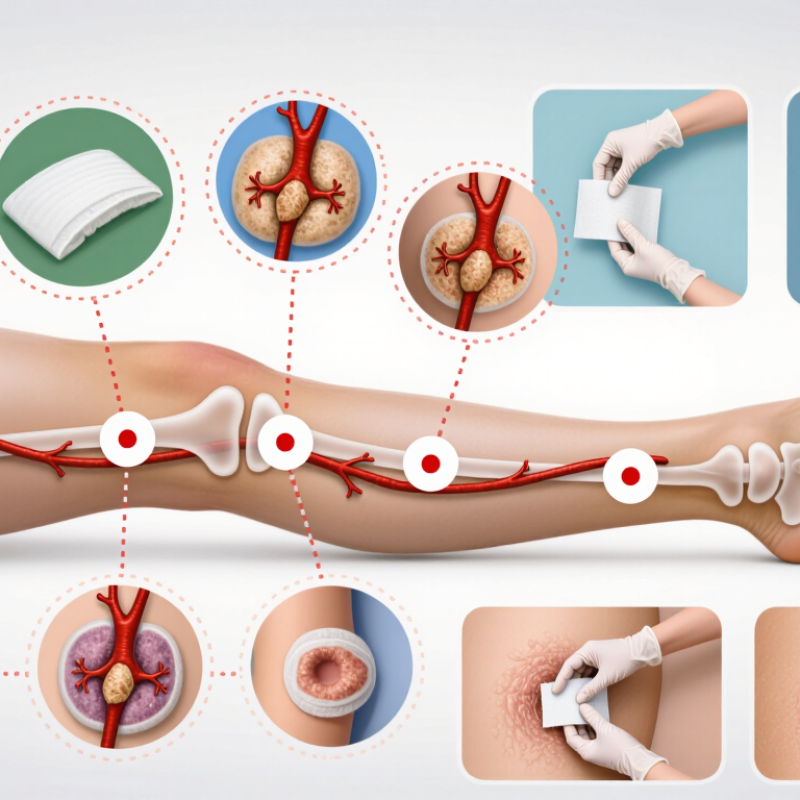
Assess the Ulcer’s Size, Depth, and Healing Stage
Before choosing a venous ulcer dressing, record the wound’s length, width, and depth. Measure length and width in centimeters, using the same method each time. Note undermining, tunnels, wound-bed tissue, drainage, and the condition of nearby skin. A shallow, lightly draining ulcer needs different coverage from a deep cavity with heavy exudate. Do not pack a cavity tightly; excess pressure can injure fragile tissue. Venous ulcers are not pressure injuries, so pressure-injury staging labels do not apply. Healing stage is better judged by tissue appearance and change over repeated assessments.
Track measurements regularly, ideally with consistent positioning and documentation. A smaller surface area may be encouraging, but measurement is not perfectly precise. That matters. The 2018 Cochrane review examined 78 studies involving 7,014 people with venous leg ulcers. It found mostly low-certainty evidence and no clearly superior dressing type when dressings were used with compression.
Compression and wound care should be guided by a qualified clinician, especially when the ulcer deepens, drainage changes, or surrounding redness develops.

Match Dressing Absorbency to Wound Exudate
For venous leg ulcers, dressing absorbency should match changing exudate, not follow a fixed routine. A lightly moist wound may need a low-absorbency contact layer; pooling fluid may require greater capacity. Watch for leakage, wet edges, or softened, pale skin around the wound. These signs suggest fluid is exceeding the dressing’s capacity. Compression is central to venous-ulcer care, so dressing choice should support clinician-directed compression, not replace it.
Tip: Check how saturated the dressing is at each change. If fluid reaches the edges early, ask a clinician about greater absorbency or a shorter change interval. If the wound looks dry or removal is painful, the dressing may be drawing away too much moisture. It is not always obvious.
The 2018 Cochrane review of dressings and topical agents included 78 studies and 7,014 people with venous leg ulcers. It found no reliable evidence that one dressing type consistently heals ulcers faster than another when compression is used; much of the evidence was low certainty. This supports matching absorbency to drainage and surrounding-skin condition, then reassessing. Record exudate as light, moderate, or heavy, and check the nearby skin at each dressing change.
Choose Materials That Protect Skin and Support Healing
7 Tips for Choosing Venous Ulcer Dressings
Choose Materials That Protect Skin and Support Healing
Venous ulcers often produce heavy drainage, while the surrounding skin can be thin, itchy, and easily damaged. A dressing should manage moisture without sticking to the wound or stripping skin during removal. Compression is central to venous-ulcer care when clinically appropriate; a dressing cannot replace assessment or compression. A 2018 Cochrane review examined 78 studies involving 7,014 people and found low-certainty evidence was insufficient to show that one dressing type consistently heals ulcers better than another.
Tips: Match absorbency to the amount of drainage; a saturated dressing can soften nearby skin. Choose a gentle, non-adherent contact layer for fragile wound tissue. Protect the surrounding skin with a suitable barrier product, and check for redness or sogginess at each change. Fit matters. Reassess the dressing if pain, leakage, or skin irritation develops.
Comfort and practical use matter, too. A bulky dressing may slip under a compression bandage, while frequent changes can disturb new tissue. The right schedule depends on drainage, wound condition, and the care plan. One detail is easy to overlook: a worsening wound may signal a problem beyond the dressing. New pain, spreading redness, or a cool, pale foot calls for prompt clinical review, especially before compression is adjusted.
7 Tips for Choosing Venous Ulcer Dressings — Choose Materials That Protect Skin and Support Healing
Evidence context: In a Cochrane review, compression was associated with a higher rate of complete healing than no compression (hazard ratio 2.17; 95% CI 1.52–3.10). This is a relative rate, not the percentage of ulcers healed. Dressings support care by managing exudate and protecting the wound and surrounding skin; select them according to the ulcer’s needs and use compression when clinically appropriate.
Source: O’Meara et al., Cochrane Database of Systematic Reviews, 2012, CD000265.
Coordinate Dressings with Compression Therapy
For a venous leg ulcer, compression is often central to treatment, but it must be chosen and fitted safely. A clinician should assess blood flow before compression begins, since reduced arterial circulation can make it unsafe. The dressing manages moisture and protects the wound; it does not replace compression. Keep that distinction clear.
Choose a dressing for the wound’s drainage and surrounding skin. A highly absorbent option may suit a wound that soaks through gauze, while a lightly draining wound may need less. Check that the dressing lies flat beneath the wrap. Small details matter. Folds or bulky padding can create pressure points, especially around the ankle. Protect fragile skin from adhesive and moisture where practical, and change the dressing according to the care plan—not just the calendar.
Compression and dressings should be reviewed together as the wound changes. More drainage, leakage, or softened skin around the wound may call for a different dressing or change schedule. Increasing pain, numbness, cool toes, or a color change needs prompt clinical review. A change in pain matters. Even a well-chosen dressing can fail if the wrap slips or becomes too tight, so report problems rather than adjusting the system without guidance.
| Tip | What to assess | Dressing considerations | Coordinate with compression |
|---|---|---|---|
| 1. Check circulation before compression | Assess arterial blood flow and overall suitability for compression; an ankle-brachial pressure index or other vascular assessment may be needed. | Choose a dressing only after the wound and surrounding skin have been assessed. A dressing does not make compression safe when arterial supply is inadequate. | Have a qualified clinician determine whether compression is appropriate and what level to use. Avoid applying compression without assessment when arterial disease is suspected. |
| 2. Match absorbency to exudate | Note the amount of wound fluid and whether the dressing is becoming saturated or leaking between changes. | For heavier exudate, consider an absorbent dressing such as foam, alginate, or a superabsorbent option, selected for the wound and care plan. For low exudate, avoid unnecessarily drying the wound bed. | Ensure the dressing can manage fluid beneath the compression system without causing leakage, excessive bulk, or pressure points. Reassess if strike-through occurs. |
| 3. Protect fragile surrounding skin | Look for maceration, dryness, irritation, or skin damage around the ulcer, especially where wound fluid contacts intact skin. | Use a gentle, non-adherent contact layer when appropriate. A skin barrier product may help protect periwound skin; keep it off the wound bed unless directed. | Keep the dressing flat and contained under the wrap. Avoid folds or excess padding that could increase friction or create localized pressure. |
| 4. Choose a comfortable contact layer | Consider pain, tissue fragility, wound depth, and whether the dressing sticks during removal. | A non-adherent contact layer can reduce trauma during dressing changes. Use a dressing appropriate to the wound bed and follow its application instructions. | Confirm that the combined dressing and compression layers fit comfortably and do not bunch, slip, or restrict movement. |
| 5. Use antimicrobial dressings selectively | Check for clinical signs of infection, such as spreading redness, increasing warmth or pain, fever, or a rapid change in the wound. | Antimicrobial dressings are not routinely needed for every venous ulcer. Use them only when clinically indicated, with a review plan and duration set by a clinician. | Compression does not replace infection assessment or treatment. Seek prompt clinical review for suspected infection or systemic symptoms. |
| 6. Plan dressing changes around the wrap | Consider exudate levels, wound progress, comfort, and the care setting when planning review and change intervals. | Change the dressing when indicated by the wound, saturation, leakage, or product instructions. There is no single change interval suitable for every ulcer. | Choose a practical schedule that allows the compression system to remain effective while still permitting wound review and timely dressing changes. |
| 7. Reassess and adjust the plan | Track wound size, tissue, exudate, pain, skin condition, and tolerance of compression over time. | Change dressing type if the wound or fluid level changes, or if there is leakage, discomfort, or skin damage. Dressing choice should support wound care, not replace it. | Review compression fit and effectiveness at follow-up. Seek clinical advice if the ulcer worsens, fails to progress, or compression causes new pain, numbness, or color change. |
Clinical note: Venous leg ulcer care generally combines appropriate compression, wound-bed care, and assessment of the underlying cause. Dressing and compression choices should be individualized by a qualified healthcare professional.
Review Comfort, Cost, and Progress at Each Change
7 Tips for Choosing Venous Ulcer Dressings
Review Comfort, Cost, and Progress at Each Change
A venous ulcer dressing should manage drainage without making movement miserable. At each change, note pain during removal, leakage, odor, and whether surrounding skin looks white, soggy, or irritated. Record wound length and width in centimeters under consistent conditions. Small details matter. A dressing that looks tidy may still be uncomfortable or costly to replace. Seek clinical advice for worsening pain, spreading redness, fever, or sudden changes.
Tips: Check comfort before and after removal; use a consistent scale, such as 0–10. Compare total cost, including fixation materials and how often changes are needed. Photograph the wound only with consent and a consistent angle, then compare size and tissue appearance over time. Keep the plan practical. Perfect records are hard on busy days.
Evidence can guide choices, but it does not pick a dressing for every wound. A 2018 Cochrane review included 78 trials and 7,014 participants; it found no reliable evidence that one dressing type consistently heals venous ulcers better when used with compression. Compression is often central to care, but a trained clinician should assess whether it is appropriate. If drainage, pain, or wound size is not improving, review the treatment plan rather than simply buying a more expensive dressing.