Top 10 Cold Room Manufacturers for Global Buyers
A Cold Room is more than an insulated box with a cooling unit. Its performance depends on panel quality, refrigeration design, door seals, controls, and reliable installation. For global buyers, choosing a manufacturer also means weighing service access, lead times, product documentation, and experience with local operating conditions.
This guide introduces ten manufacturers for buyers comparing cold storage solutions across different markets. The selection considers practical factors: available room configurations, temperature options, energy-conscious features, technical support, and the clarity of product specifications. Buyers should verify current certifications, warranties, and service coverage directly with each supplier, since offerings can vary by region and project. Details matter.
A seafood processor may need washable surfaces and stable low temperatures. A produce distributor may focus more on humidity control and frequent door openings. These differences can change the right choice. A polished brochure is not proof of long-term performance; references and project details help fill that gap. No shortlist is perfect. Manufacturer capabilities change, and a strong brand may still be a poor fit for a specific site. This comparison is a starting point, not a substitute for engineering review. Before requesting quotes, define your storage volume, target temperature, loading pattern, available power, and installation location. Clear requirements make proposals easier to compare—and expose unanswered questions early.
What Cold Room Manufacturers Do and How the Market Is Structured
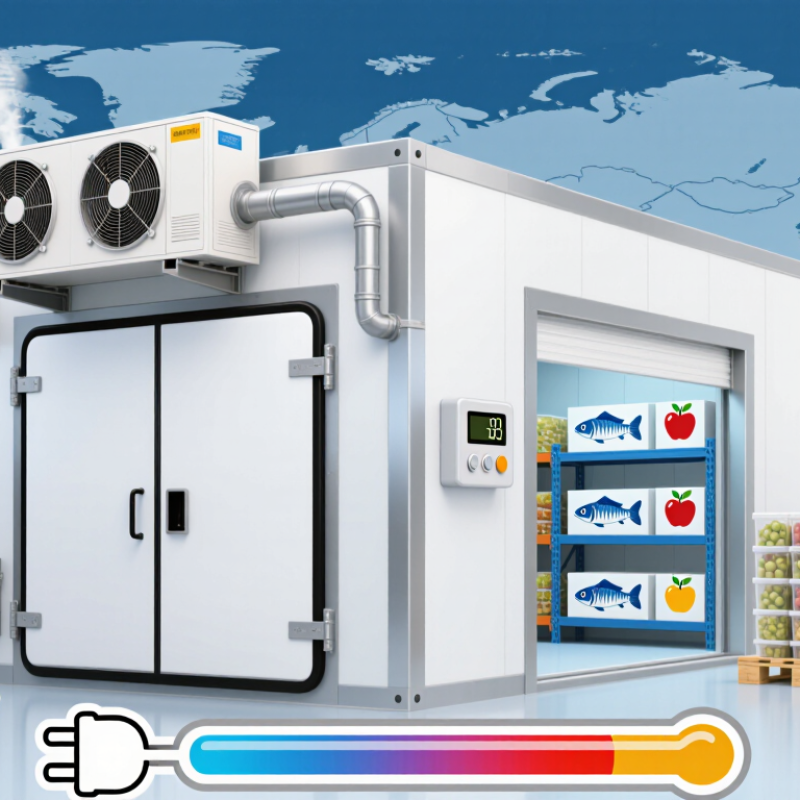
Cold room manufacturers turn an operating requirement into an insulated, temperature-controlled space. Their work may include panel sizing, floor design, refrigeration selection, doors, controls, and commissioning guidance. The exact scope varies. Some supply complete systems, while others focus on enclosures or refrigeration equipment.
The market includes manufacturers, system integrators, local distributors, and installation contractors. Manufacturers typically develop or produce key components. Integrators coordinate equipment and controls around a site’s needs. Contractors handle assembly and installation, often adapting plans to existing buildings. A small warehouse with frequent door openings needs a different design from a laboratory store. Details matter.
Buyers can compare insulation thickness, cooling capacity, temperature range, control accuracy, and access to spare parts. Ask how performance is checked after installation, and who responds when temperatures drift. It depends. A polished specification may still overlook daily loading patterns or local service availability. That is worth questioning. Even experienced teams can miss these practical details, so site measurements and operating discussions should shape the final design.
Criteria for Evaluating Cold Room Manufacturers
Choosing a cold room manufacturer means checking more than quoted capacity. Ask for measured pull-down time, temperature uniformity, and energy use under stated conditions. A room should hold its setpoint near the door, where warm air and busy staff test the design. Details matter. Request test records for panel joints, door seals, and refrigeration controls, not just brochure claims.
Efficiency deserves equal scrutiny. The IEA’s 2018 report The Future of Cooling projects global energy demand for space cooling to more than triple by 2050. This is not a cold-room forecast, but it underlines why buyers should compare energy use under realistic operating conditions. Ask whether figures account for local temperatures, loading, and defrost cycles; otherwise, comparisons can mislead. Not always.
Reliability becomes visible after commissioning. Check technician coverage, spare-part lead times, alarm records, and warranty exclusions in writing. FAO’s 2019 report The State of Food and Agriculture estimated that 14% of food is lost between harvest and retail worldwide. That broad estimate does not prove any specific room prevents losses, but it makes temperature control and service response relevant buying tests. Request references from similar climates and operating volumes. Some paperwork may still leave questions; record them before signing.
Top 10 Cold Room Manufacturers for Global Buyers
Top 10 Cold Room Manufacturers for Global Buyers
A global shortlist should compare engineering and support, not just quoted price. Check panel thickness, joint design, door seals, floor loading, and temperature range against your actual goods and climate. FAO’s 2019 report estimated that 14% of food is lost between harvest and retail worldwide. Reliable cold storage can help protect quality, but only when installation, loading practices, and temperature monitoring work together. A cold room is not a magic box.
Ask each supplier for documented pull-down times, energy-use assumptions, and references for similar operating conditions. Request drawings that show drains, door swing, service clearance, and where heat may enter. Confirm local access to spare parts and technicians before signing; a technically strong unit can still become a poor choice if service takes weeks. Compare the same specification across bids. Small omissions can distort the price comparison.
Tips: Test the door seals with a paper strip, log temperatures at several points, and inspect condensation around panel joints. Ask who handles commissioning and staff training. One uncomfortable question matters: what happens when the room fails on a hot weekend?
Reference temperatures help global buyers assess whether a cold-room system suits its intended application. These are food-safety and storage benchmarks, not manufacturer ratings: chilled food should be kept at or below 4°C (40°F), refrigerated vaccines are typically stored at 2–8°C, and frozen food at or below −18°C (0°F).
Sources: U.S. FDA; World Health Organization; USDA FSIS.
How to Compare Products, Services, and Global Support
Choosing among cold room manufacturers starts with the room’s actual demands, not brochure capacity. Record the target temperature, daily door openings, product load, ambient conditions, and available floor space. A room storing fresh produce has different needs from one holding frozen goods. Ask about panel thickness, insulation core, joint design, floor loading, refrigeration range, and temperature stability. Details matter. Request a layout and written performance assumptions; vague promises are difficult to compare later.
Global support deserves equal scrutiny. Check who handles commissioning, operator training, spare parts, and urgent faults in your region. Ask for realistic response times, technician coverage, and parts lead times—not just a worldwide service map. Confirm warranty boundaries, maintenance intervals, and what happens if site power or ventilation differs from specifications. References from projects with similar climates and usage can reveal more than polished case studies. No supplier is perfect; compare documented limits as carefully as strengths.
Tips: Send every shortlisted supplier the same room dimensions, temperature range, load estimate, and site photos. Ask each to list assumptions and exclusions in writing. Then compare installed cost, expected energy use, service access, and replacement-part availability. A small omission can become expensive. If an answer feels uncertain, clarify it before signing.
Steps for Selecting a Manufacturer for Your Project
Selecting a cold room manufacturer starts with the load, not a catalogue. Record the room’s dimensions, product type, daily throughput, target temperature, and door-opening frequency. A room storing fresh produce has different humidity and airflow needs from one holding frozen goods. Share these details with each shortlisted supplier and ask how they shaped the proposed design.
Check technical evidence. Request panel thickness and insulation data, refrigeration capacity calculations, temperature-uniformity targets, and a clear equipment schedule. Ask whether the design accounts for local ambient heat, defrost cycles, drainage, and staff access. Walk-in access matters. Request drawings showing door swings, evaporator locations, and service clearances; a neat rendering cannot reveal every maintenance problem. Compare warranty terms, commissioning scope, spare-part availability, and response times in writing. A low quote may omit installation or controls, so compare the same scope line by line.
Speak with customers who operate similar rooms, and ask about temperature stability during busy loading periods, not only startup. Verify relevant quality systems and project references directly, rather than relying on logos in a brochure. Visit a completed installation if practical. Notice condensation near joints, noisy fans, and awkward cleaning corners. Look closely. No specification removes every risk: site conditions and operating habits can change performance. Leave time for a site survey, confirm who handles electrical and drainage work, and agree on acceptance tests before production begins.