
News
What Is a Vaccine Bag and What Types Are Available?
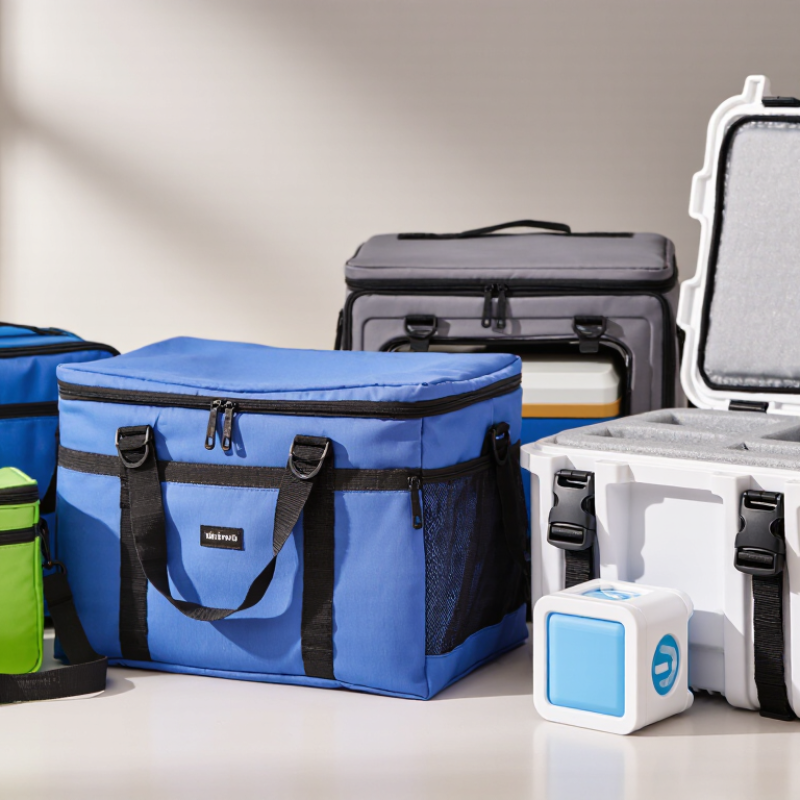
Vaccine Bags are purpose-designed carriers that help protect vaccines during transport, outreach clinics, and temporary storage. They usually combine insulation, durable outer fabric, secure closures, and space for coolant packs. A well-designed bag can reduce exposure to heat, sunlight, and sudden temperature changes. It cannot replace a validated cold-chain system.
In practice, healthcare workers may choose soft insulated bags for short journeys and mobile vaccination sessions. These bags are lightweight and easy to carry through crowded clinics. Rigid vaccine carriers offer stronger protection and better internal stability. Some models include temperature monitors, removable dividers, or separate compartments for ice packs. Passive containers can maintain a controlled temperature for longer periods, provided they are packed correctly and monitored continuously.
Details matter. A bag may look professional yet perform poorly if the insulation is thin or the seal is damaged. The correct choice depends on travel time, ambient conditions, vaccine requirements, capacity, and available monitoring equipment. Guidance from recognized public-health authorities should inform selection and handling procedures. Staff training remains essential, because even a high-quality carrier can fail through incorrect packing.
There is no universal “best” bag. That assumption deserves reconsideration. A compact soft carrier may suit a nearby clinic, while a rigid model may better serve remote routes. Users should review temperature records, cleanability, durability, and replacement-part availability before purchasing. Reliable Vaccine Bags support safe logistics, but careful procedures protect vaccine quality.
Defining Vaccine Bags: Purpose, Materials, and Cold-Chain Function
What Is a Vaccine Bag and What Types Are Available?
Defining Vaccine Bags: Purpose, Materials, and Cold-Chain Function
A vaccine bag is a temperature-controlled carrier for short-distance vaccine transport. It protects doses from heat, freezing, light, and physical damage. Unlike an ordinary cooler, it uses validated insulation and prepared coolant packs. Most routine vaccines must remain between 2°C and 8°C, according to CDC storage guidance. That range is narrow. A few minutes outside it can create uncertainty.
Common types include soft-sided vaccine carriers, hard-shell carriers, and larger cold boxes. Soft bags are lighter for outreach teams. Hard-shell designs usually resist crushing and repeated cleaning better. Cold boxes support longer journeys and higher payloads. Materials often include molded plastic, polyurethane foam, reflective layers, and leak-resistant pack compartments. WHO Performance, Quality and Safety specifications require vaccine carriers to maintain safe temperatures for defined periods. The exact duration depends on pack conditioning, ambient heat, and opening frequency.
WHO and UNICEF estimated that 20.6 million children missed at least one routine immunization dose in 2022.
Selection should match the route, dose volume, and monitoring plan. WHO and UNICEF estimated that 20.6 million children missed at least one routine immunization dose in 2022. Reliable transport cannot solve every access problem, but it reduces preventable losses. A carrier should have a calibrated data logger, clear packing instructions, and enough space for air circulation. Field teams sometimes overfill bags, which weakens cooling performance. That mistake is easy to make. No bag is fail-safe. A damaged seal, frozen pack, or forgotten temperature check can compromise valuable doses before anyone notices.

Refrigerated Vaccine Bags: Maintaining CDC’s 2–8°C Storage Range
What Is a Vaccine Bag and What Types Are Available?
Refrigerated Vaccine Bags: Maintaining CDC’s 2–8°C Storage Range
A vaccine bag is an insulated carrier designed for temperature-sensitive medical products. Common types include refrigerated bags, passive cold boxes, and compact transport carriers. The correct choice depends on journey length, payload, weather, and monitoring needs. A bag is not a refrigerator. That distinction matters.
The CDC’s 2024 Vaccine Storage and Handling Toolkit states that refrigerated vaccines must remain between 2°C and 8°C. Even brief temperature excursions can reduce product quality, although damage may not be visible. WHO’s Vaccine Management Handbook also separates three controls: proper packing, temperature monitoring, and trained handling. Refrigerated vaccine bags use insulation and cold packs to slow heat gain. Some include a digital data logger with a buffered probe, which records the internal temperature rather than outside air. Still, performance changes when packs are frozen incorrectly, the lid opens repeatedly, or the bag sits in direct sunlight. Real routes are rarely perfect.
Tips: Pre-condition cold packs according to the manufacturer’s instructions. Place a temperature indicator near the vaccines. Leave no empty spaces. Avoid direct contact between frozen packs and vaccine cartons. Record the temperature before departure, during handovers, and after arrival. If the reading looks wrong, pause and investigate. Guessing is not a control.
Frozen and Ultra-Cold Bags: −50 to −15°C and −90 to −60°C
A vaccine bag is an insulated container designed to protect temperature-sensitive doses during short transport or temporary storage. Its performance depends on insulation, coolant placement, loading space, and exposure time. A bag can look sturdy yet fail when opened repeatedly or left in direct sunlight.
Frozen vaccine bags usually support temperatures from −50 to −15°C. They use thick insulation and frozen packs, often with separators that prevent direct contact with vials. This detail matters because excessive cold can damage some products. A temperature logger should sit near the payload, not against an ice pack. Staff should also check the logger before and after each journey.
Ultra-cold bags target approximately −90 to −60°C. They need more specialized insulation and carefully conditioned cooling materials, such as validated ultra-cold packs or dry ice systems. Packaging must allow safe gas release when dry ice is used. The inner compartment should remain stable during handling, even when the outer surface feels cold. Small gaps can create warm spots. Cold packs can shift. No bag is perfect, and real loading tests may reveal weaknesses that specifications miss. Routes, opening frequency, and seasonal heat should be tested under realistic conditions. A simple transport record, including start time, temperature readings, and delivery time, improves traceability and supports informed handling decisions.
Insulated Carriers, Cold Boxes, and Soft Bags: Key Type Differences
A vaccine bag is a temperature-controlled carrier used to move vaccines safely between storage points and service locations. Its design matters because vaccines can lose potency after excessive heat or freezing. The right choice depends on travel time, load size, handling conditions, and monitoring needs.
Insulated carriers are compact and practical for short trips. They usually hold conditioned ice packs, a temperature monitor, and a limited number of vials. Their lightweight shape suits outreach visits, clinics, and motorcycle transport. However, frequent opening can quickly reduce cooling performance. Soft bags offer greater flexibility. They are easier to carry through crowded spaces and can fit around other medical supplies. Their insulation is often thinner, though, so they may require closer temperature checks.
Cold boxes provide stronger insulation and longer holding times. They are useful for bulk transport, remote facilities, or planned power interruptions. Their rigid walls protect contents from crushing, but the box can be heavy when fully loaded. Packing ice packs incorrectly may freeze sensitive vaccines near the container wall. That detail is easy to miss. A calibrated thermometer or data logger should confirm actual internal temperatures, not just the box’s rated duration. No container is perfect. I would select based on validated performance and real travel conditions, not appearance alone. A short route with careful handling may suit a soft bag, while a remote journey needs the stability of a cold box.
What Is a Vaccine Bag and What Types Are Available?
Cold-life comparison of insulated carriers, cold boxes, and soft bags
Compact containers designed for short-distance transport and outreach sessions. WHO performance specifications commonly require at least 15 hours of cold life at 43°C.
Rigid, higher-capacity containers used for longer transport or temporary storage. WHO performance specifications commonly require at least 48 hours of cold life at 43°C.
Lightweight and flexible carriers suited to short trips. Their cold-life performance varies by insulation, ice-pack layout, loading method, and ambient temperature, so there is no single universal benchmark.
The chart shows WHO/PQS-style minimum cold-life benchmarks at 43°C for standardized vaccine carriers and cold boxes. Soft bags are shown as not standardized because performance differs substantially between designs.
WHO PQS Testing: Capacity, Temperature Hold Time, and Reusability
What Is a Vaccine Bag and What Types Are Available?
A vaccine bag is an insulated container designed to protect vaccines during transport. Common types include soft-sided carriers, rigid vaccine carriers, and larger cold boxes. Their differences involve insulation, usable capacity, weight, and resistance to repeated handling. A practical design must also leave enough space for ice-packs and safe vaccine placement.
WHO PQS testing examines more than appearance. Capacity testing considers how many vaccine doses the container can hold without blocking cold air movement. Temperature hold time measures how long the internal temperature remains within the required range under defined test conditions. Test results may change with ambient heat, ice-pack conditioning, loading patterns, or frequent opening. Small details matter.
Reusability is assessed through repeated use, cleaning, transport, and handling checks. Hinges, straps, seals, and insulation can weaken before the container looks damaged. A bag that performs well in a laboratory may struggle on a dusty road. That is worth remembering. Temperature monitoring during actual trips remains important, even when a product has passed PQS testing. Capacity claims also need careful reading. Nominal volume is not always usable vaccine space. Field teams should review the approved specifications, loading instructions, and maintenance requirements before selecting a container. No vaccine bag is perfect.
What Is a Vaccine Bag and What Types Are Available? - WHO PQS Testing: Capacity, Temperature Hold Time, and Reusability
| Container Type | Main Application | Typical Vaccine Payload Capacity | Target Internal Temperature | Typical Temperature Hold Time | WHO PQS Testing Considerations | Reusability |
|---|---|---|---|---|---|---|
| Soft-Sided Vaccine Carrier | Short-distance transport by health workers, outreach teams, and mobile vaccination units. | Usually about 0.5–5 L of usable payload space, depending on design. | +2°C to +8°C for temperature-sensitive vaccines. | WHO PQS vaccine-carrier evaluations commonly use a minimum cold-life benchmark of approximately 15 hours under specified test conditions. | Testing can include cold-life performance, warm-condition exposure, coolant-pack configuration, internal temperature mapping, leakage, durability, and protection against freezing. | Reusable when cleaned, inspected, and maintained correctly. |
| Rigid Vaccine Carrier | Routine transport where greater structural protection and easier stacking are required. | Commonly about 1–6 L of usable payload space, varying by model. | +2°C to +8°C, with a design intended to prevent direct contact between vaccines and frozen coolant. | Approximately 15 hours is a commonly applied minimum benchmark for vaccine-carrier testing; some designs provide longer hold times. | Assessment may cover thermal performance, shock and drop resistance, lid security, coolant-pack placement, cleaning access, and payload protection. | Reusable; the shell and insulation should be checked for cracks, deformation, and loss of insulation. |
| Insulated Cold Box | Longer-distance transport, facility replenishment, and temporary storage during power interruptions. | Often about 5–25 L or more of usable payload space, depending on the class and configuration. | +2°C to +8°C for vaccines requiring refrigerated storage. | WHO PQS cold-box evaluations commonly use a minimum cold-life benchmark of approximately 48 hours under specified test conditions. | Testing generally considers cold life, ambient-temperature exposure, usable capacity, coolant conditioning, thermal uniformity, durability, and freeze protection. | Reusable for repeated distribution cycles with routine cleaning and maintenance. |
| Insulated Shipping Container | Domestic or international shipment of vaccines and other temperature-sensitive healthcare products. | From several litres to more than 100 L, depending on the shipping configuration. | Usually validated for +2°C to +8°C; other ranges may be used for products with different label requirements. | Typically validated for 24–120 hours or longer, based on route duration, ambient profile, payload, and coolant arrangement. | Validation should include thermal mapping, route simulation, worst-case ambient conditions, transport duration, payload configuration, and data-logger evidence. | May be reusable or single-use; the manufacturer’s validated life cycle must be followed. |
| Phase-Change Material Vaccine Bag | Compact last-mile transport using phase-change coolant packs designed for refrigerated products. | Commonly about 1–8 L of payload space, depending on the bag and insert system. | Designed to maintain the validated product range, commonly +2°C to +8°C. | Often approximately 12–30 hours, but the actual value must be established by product-specific testing. | The test must verify correct phase-change temperature, pack conditioning, thermal uniformity, payload arrangement, and protection from freezing. | Normally reusable; coolant packs require correct reconditioning before each cycle. |
| Passive Single-Use Shipping Bag | One-way delivery where return logistics, cleaning, or pack reconditioning is impractical. | Usually about 1–20 L, depending on the packaging format. | Must be validated for the vaccine’s labeled storage range, commonly +2°C to +8°C. | Usually 24–96 hours, subject to route-specific qualification and ambient conditions. | A transport qualification should document thermal performance, maximum duration, seasonal conditions, payload, coolant arrangement, and handling limits. It is not automatically a WHO PQS vaccine carrier. | Generally single-use unless specifically validated for reuse. |