What Is a Selectorized Machine?
A Selectorized Machine is a strength-training machine that uses a weight stack, cables, and a pin to set resistance. Move the pin, and the load changes. The machine guides the movement along a defined path, helping users focus on a particular exercise without balancing loose weights. You may recognize the setup: a padded seat, a handle, and a stack of metal plates clicking softly as the cable moves.
The format matters in today’s fitness facilities. The American College of Sports Medicine’s 2024 Worldwide Survey of Fitness Trends tracks strength-focused training among the programming priorities fitness professionals consider. The Health & Fitness Association’s 2024 Global Report offers a broader view of club participation and business conditions. Neither report is a direct count of selectorized machines, but together they help explain why accessible, space-efficient strength equipment remains relevant to gyms and training rooms.
This article explains how selectorized equipment works, what its main parts do, and how it compares with free weights and plate-loaded machines. It also considers practical details: selecting a suitable starting load, adjusting the seat, and checking whether the machine fits your body. These details can change how an exercise feels. Not every guided movement suits every person, either. That limitation is easy to overlook. A machine can make resistance easier to manage, but it cannot choose good technique or the right progression for you.
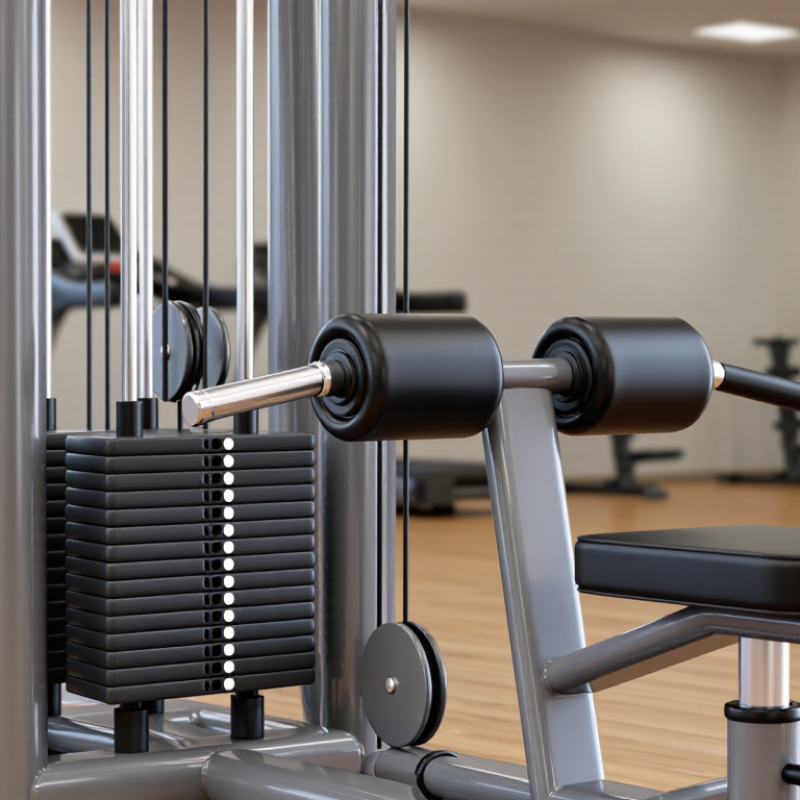
What a Selectorized Machine Is: Pin-Selected Resistance from a Weight Stack
What Is a Selectorized Machine?
What a Selectorized Machine Is: Pin-Selected Resistance from a Weight Stack
A selectorized machine uses a stack of weights to provide adjustable resistance. A metal pin slides into a marked slot, connecting a chosen portion of the stack to the machine’s cable or lever. Pull the handle, and those plates rise together. Replace the pin lower down, and the next set feels heavier. Simple to adjust, but not foolproof.
The number on the stack is a guide, not always the exact force felt at the handle. Pulleys and lever angles can change how resistance feels through a repetition. For example, a seated row may feel different near the start than near the finish. Check the machine’s instructions, then set the seat and pads so your joints line up with its pivot points. A poor fit can make even a suitable load awkward.
Tips: Insert the pin fully before starting, and make sure it sits straight. Begin with a load you can control through the full range. If the plates rattle, your posture shifts, or the movement gets jerky, reduce the weight. The stack makes changes convenient; it does not replace careful setup or attention to form.
How Cables and Pulleys Transfer Resistance Under ASTM F2216
A selectorized machine transfers resistance through a cable-and-pulley system. The weight stack rises when you pull the handle, while pulleys redirect the cable and shape its travel. A 2:1 arrangement, for example, can make the handle travel twice as far as the stack, with roughly half the force before friction. Actual feel also depends on pulley size, cable routing, and any cam that changes leverage through the movement. Small details matter.
ASTM F2216 sets safety and performance requirements and test methods for selectorized strength equipment. It offers a consistent reference for evaluating a machine; it does not mean every machine feels identical or that the selected plate weight equals force at the handle. The Centers for Disease Control and Prevention’s 2020 National Health Interview Survey reported that 24.2% of U.S. adults met both aerobic and muscle-strengthening activity guidelines. That figure describes activity, not equipment performance, but it shows why dependable strength-training access matters. During inspection, look for frayed cable strands, a pulley that wobbles, or a selector pin that will not seat fully. Those observations do not replace standardized testing. They do prompt a useful question: does the resistance move smoothly through the full range, or does it catch near the start? I still find that last check easy to overlook.
How Weight-Stack Increments Shape Load Selection
What Is a Selectorized Machine?
How Weight-Stack Increments Shape Load Selection
A selectorized machine uses a pin to connect you to part of a weight stack. Move the pin, and the selected load changes. The stack may rise in five- or ten-pound steps, depending on the machine. Those increments shape how precisely you can adjust resistance. A small jump can matter when a movement uses a limited range or a muscle is already tired. The number on the stack is useful, but it is not a perfect measure of what your body feels. Pulley arrangements and machine condition can affect the resistance at the handle.
Choose a load that lets you move smoothly through your planned repetitions. If the next pin setting makes your form break down, keep the lighter setting and build control there. You do not need to force a heavier jump just because it is available. Some machines offer add-on plates for smaller changes; others do not. That limitation can be frustrating. It is also a reminder that steady progress may mean adding repetitions before increasing weight.
Tips: Record the machine, pin setting, and repetitions, since stacks can differ between models. Leave a little effort in reserve, and reassess the load if you start swinging or shortening each repetition. The label is a guide, not a promise.
How to Adjust the Seat, Range of Motion, and Starting Load
What Is a Selectorized Machine?
A selectorized machine uses a pin to choose a weight stack, guiding resistance through a fixed path. The setup still matters. A poorly positioned seat can turn a controlled chest press into an awkward shoulder stretch.
Adjust the seat so the handles meet your chest or shoulder level, depending on the exercise. Keep your feet planted and your back against the pad. On a leg extension, align the machine’s pivot with your knee joint; the padded roller should rest just above your ankles. It may take two small adjustments to feel right. Don’t rush them.
Set the range of motion before adding much weight. Start where the movement feels smooth, then stop short of painful joint positions or forced end ranges. The U.S. Physical Activity Guidelines for Americans, second edition (2018), recommends muscle-strengthening activity on at least two days each week. That guidance supports regular training, not lifting through discomfort. Choose a starting load you can move slowly for several repetitions, without bouncing or losing posture. If the first rep already strains your face, lower the pin. A little too light is easier to correct than a rushed, heavy start.
How It Supports ACSM’s 8–12-Repetition Strength-Training Range
What Is a Selectorized Machine?
A selectorized machine uses a pin to choose weight from a built-in stack. Adjust the seat, align the joint with the machine’s pivot, then move the handles through a controlled path. It can make loading straightforward, especially when free weights feel unfamiliar. The guided movement is useful, but it does not guarantee good technique.
How It Supports ACSM’s 8–12-Repetition Strength-Training Range
ACSM’s 8–12-repetition range gives many beginners and intermediate lifters a practical target for strength training. Choose a load that lets you complete at least eight smooth repetitions, while making the last few feel challenging. Stop if your shoulders lift, your back arches, or the movement turns jerky. Keep some control.
If you can perform twelve repetitions easily, consider moving the pin one increment higher next time. If you cannot reach eight with steady form, reduce the load. Rest between sets, and record the weight and repetitions so progress is easier to judge. Small steps count. Machine increments can sometimes feel too large, so stay at the lighter setting until the next one feels manageable. The range is a guide, not a test; pain, fatigue, and individual ability matter. A qualified fitness professional can help adjust the setup when a machine’s path feels awkward.
What Is a Selectorized Machine? — How It Supports ACSM’s 8–12-Repetition Strength-Training Range
A selectorized machine uses a pin-adjustable weight stack to set resistance. The chart shows the commonly cited ACSM range of 8–12 repetitions per set for novice-to-intermediate adults; the midpoint is shown for reference.
Choose a load that lets you complete repetitions with controlled technique. Adjust the pin as needed; the appropriate resistance varies by person and exercise.