Why Choose an Electric Cargo Bike for Your Business?
For many businesses, the daily delivery problem is not distance. It is congestion, parking, fuel cost, and unreliable travel time. An electric cargo bike can address these pressures in a practical way. It carries tools, parcels, groceries, or service equipment through busy streets. It also fits narrow lanes and short urban routes that challenge larger vehicles.
The strongest case begins with the work itself. A bakery might use an insulated box for morning orders. A maintenance company could carry replacement parts and hand tools. A retailer may complete local deliveries without searching for a parking space. Battery range, payload capacity, charging access, weather protection, and rider training all deserve careful evaluation. Real businesses should test a route before making a large investment. A one-week pilot can reveal loading delays, steep hills, and customer access problems.
The benefits are not automatic. Batteries need charging, tires need inspection, and cargo must remain secure. Poor route planning can reduce productivity. Some riders may also need time to become comfortable with the bike’s weight and handling. These limits matter. A responsible decision uses delivery records, maintenance estimates, safety procedures, and feedback from riders. Local traffic rules and workplace requirements should be checked with qualified authorities. When the vehicle matches the route, an electric cargo bike can support cleaner, quieter, and more flexible operations. It is not a universal solution. It is a business tool that deserves evidence before enthusiasm.
What Is an Electric Cargo Bike and How Does It Support Businesses?
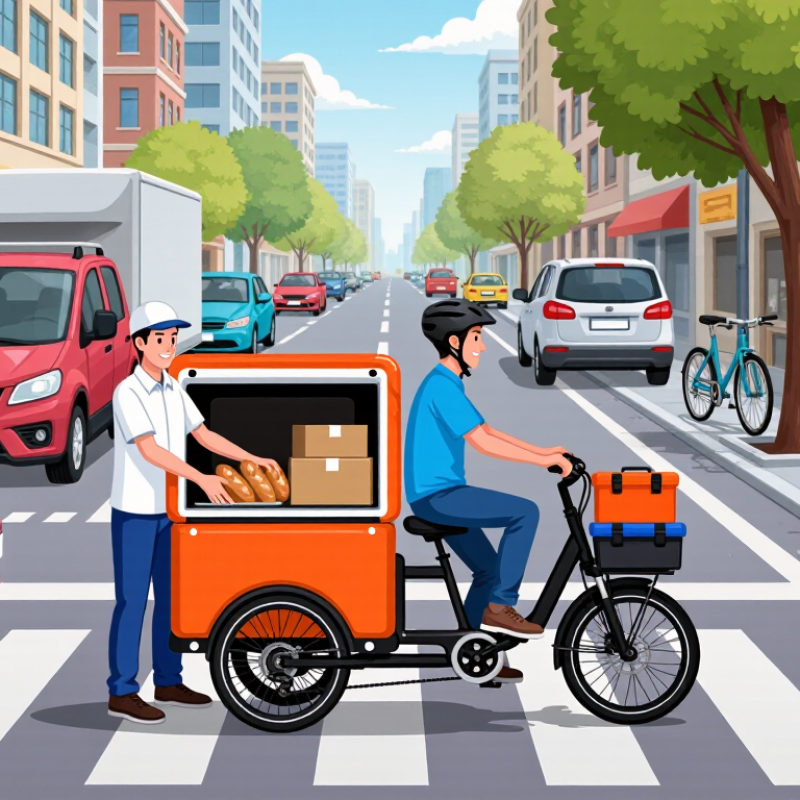
An electric cargo bike is a pedal-assisted cycle with a reinforced frame, battery, motor, and dedicated loading space. Businesses use it for parcels, groceries, tools, flowers, and small equipment. Unlike a standard bicycle, it can carry heavier loads while reducing physical strain on riders. The electric motor also helps on hills and during repeated stops.
The business value is clearest on short urban routes. The World Economic Forum’s 2020 Future of the Last-Mile Ecosystem report projected a 78% rise in urban delivery demand by 2030. It also forecast a 36% increase in delivery vehicles, with congestion rising by 21%. Cargo bikes can avoid much of that traffic. Transport for London’s Cargo Bike Action Plan reports that cargo bikes may travel up to 1.6 times faster than vans in central London. That difference can improve delivery windows and reduce parking delays.
Not every route fits.
Operators still need practical planning. Battery range changes with payload, hills, temperature, and stop frequency. Secure overnight storage is essential. Riders also need training, especially when turning with a loaded box. A cargo bike may struggle with long rural routes or bulky goods. That limitation deserves honesty. Businesses should measure route length, delivery density, load weight, and charging access before buying. A small pilot can reveal problems that spreadsheets miss.
Why Choose an Electric Cargo Bike for Your Business?
An electric cargo bike combines a bicycle drivetrain with battery-powered pedal assistance and a dedicated cargo area. Different configurations can carry substantial loads while helping businesses make efficient urban deliveries, reduce parking difficulties, and operate with lower local emissions.
The chart shows representative maximum payload capacities commonly associated with major electric cargo-bike formats. Actual capacity depends on the frame, battery system, cargo equipment, road conditions, and local regulations.
How Do Electric Cargo Bikes Compare with Delivery Vehicles?
Why Choose an Electric Cargo Bike for Your Business?
In dense urban areas, electric cargo bikes can outperform delivery vans on short routes. A University of Westminster study found cargo bikes were 1.61 times faster than vans in central London. Riders bypass queues, stop closer to entrances, and avoid searching for parking. That difference is visible during a rainy afternoon, when a van may spend ten minutes circling one block. Electric assistance also reduces physical strain on riders carrying parcels, tools, or food containers.
The comparison becomes stronger as urban delivery demand grows. The World Economic Forum’s Future of the Last-Mile Ecosystem report projects a 78% increase in last-mile delivery demand by 2030. It also forecasts 36% more delivery vehicles in major cities, with congestion rising by 21%. A cargo bike uses less road space and produces no tailpipe emissions during operation. It may also reduce fuel and parking costs. However, range, payload, weather, charging access, and secure storage still matter. Small details matter.
A van remains practical for bulky loads or long rural routes. Cargo bikes are less suitable there. The Westminster research focused on central London, so results may not transfer directly to every market. Businesses should test real routes, delivery windows, and payloads before changing fleets. I would measure completed stops per hour, not just advertised battery range.
What Features Should Businesses Consider Before Choosing One?
Choosing an electric cargo bike starts with the delivery route, not the motor. The World Economic Forum’s 2020 report projects a 78% rise in urban last-mile delivery demand by 2030. Businesses should therefore check payload, cargo volume, hill performance, and charging access. A bike carrying 120 kilograms may struggle on steep roads. Published range is not a promise. Cold weather, frequent stops, heavy loads, and tire pressure can reduce it.
Safety and daily usability deserve equal attention. Look for strong brakes, stable handling, lights, weather protection, and secure cargo compartments. The European Cyclists’ Federation reports that cargo bikes can replace a substantial share of urban commercial trips, but route design remains decisive. A narrow cycle lane may suit one operation and block another. Measure loading time, parking distance, battery charging time, and rider comfort during a small pilot. Five working days can reveal more than a sales specification.
Businesses should also compare total operating cost. Include electricity, maintenance, insurance, replacement batteries, staff training, and downtime. Check whether local technicians can repair the system quickly. Useful fleet data includes delivery time, energy use, failed deliveries, and rider feedback. The International Transport Forum has repeatedly identified urban freight as a growing source of congestion and emissions. Yet replacing every van is unrealistic. Some routes still need greater capacity, longer range, or secure overnight storage. That limitation should be recorded, not hidden.
How Can a Business Plan and Manage an Electric Cargo Bike Fleet?
Why Choose an Electric Cargo Bike for Your Business?
Managing an electric cargo bike fleet requires more than buying vehicles. Start with delivery zones, parcel dimensions, road gradients, and customer time windows. Record these details for two weeks. Real routes reveal problems that spreadsheets often hide.
The World Economic Forum’s 2020 Future of the Last-Mile Ecosystem report projects a 78% rise in urban delivery demand by 2030. It also forecasts 36% more delivery vehicles. A carefully planned cargo bike fleet can reduce pressure on congested streets. University of Westminster research found cycle freight was 1.61 times faster than vans in central London. However, that result may not fit every district. Weather, hills, and secure parking can change performance quickly.
Build a simple fleet dashboard. Track completed stops, delivery minutes, battery use, payload weight, repair time, and rider incidents. Keep spare batteries at a monitored charging point. Use manufacturer-approved chargers and inspect brakes, tires, lights, and racks each week. Schedule deeper maintenance monthly. Train riders to load heavy items low and close to the frame. Small operational choices matter.
Our first forecast may be wrong. Pilot three routes before expanding. Compare cargo bikes with existing delivery methods using the same time and service measures. The International Transport Forum’s Transport Outlook 2023 stresses that urban freight planning must reflect local conditions. A flexible fleet plan should therefore allow seasonal routes, replacement vehicles, and realistic charging breaks. Perfect utilization is unlikely. Reliable service matters more.