
News

Why Choose an SMPS Power Supply?

Why Choose an Smps Power Supply? The case starts with efficiency and size. A switched-mode power supply converts electrical energy through high-frequency switching, enabling compact transformers and lighter enclosures. That matters in a server rack, factory control cabinet, or the charger warming a crowded desk. ENERGY STAR reports that certified external power supplies are, on average, 30% more energy efficient than conventional models. Its program also evaluates power use when an adapter is connected but not actively charging. The U.S. Department of Energy’s technical documents on external power supplies offer further detail on efficiency and standby-power requirements. These benchmarks are useful, but they do not guarantee identical results in every application.

There is more to choosing an SMPS Power Supply than chasing a high efficiency figure. Robert W. Erickson, co-author of Fundamentals of Power Electronics, describes the field as “the application of electronics to the control and conversion of electric power.” In practice, a good design must also manage heat, electrical noise, output regulation, and changing loads. A small unit with poor cooling can still run hot. Not magic. Check the datasheet for efficiency across the expected load range, ripple limits, protection features, and operating temperature. Then consider input-voltage range, installation space, and the system’s real duty cycle. A quoted peak efficiency may look impressive, yet say little about everyday performance at partial load. That detail is easy to miss. Choosing carefully can reduce wasted energy and simplify equipment design, but the right supply depends on the actual load and operating conditions.
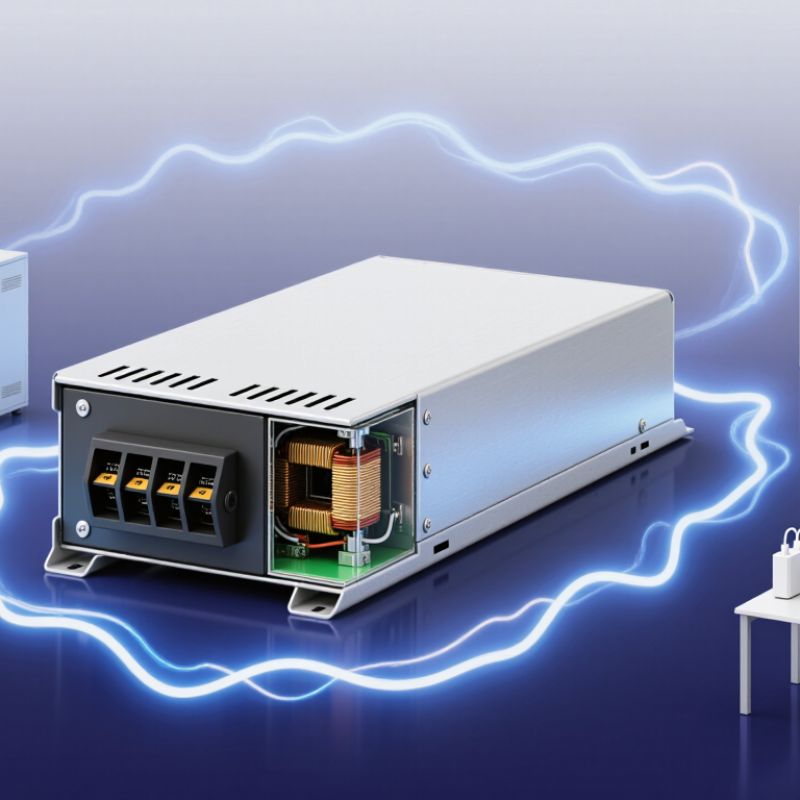
Why Choose an SMPS Power Supply?

What an SMPS Power Supply Is and How It Works

Why Choose an SMPS Power Supply?

What an SMPS Power Supply Is and How It Works

An SMPS, or switched-mode power supply, converts incoming power into regulated voltage for electronic devices. In a typical AC-to-DC unit, a rectifier first converts AC into DC. A transistor then switches that current rapidly, creating high-frequency pulses. A transformer or inductor adjusts the voltage, and output circuits smooth it into usable DC. Feedback continuously checks the output and corrects changes in load or input.

That switching action allows smaller magnetic components than many traditional line-frequency designs. It can also reduce wasted energy, though actual efficiency depends on design and operating load. The IEA’s Electricity 2024 report estimates that data centres, AI, and cryptocurrency used about 460 TWh in 2022. That figure is not specific to power supplies, but it shows why conversion losses matter at scale. Not magic. A poorly matched supply can still run hot or deliver unstable output.

Tips: Check the required voltage, current, and connector before choosing a supply. For a bench test, measure output under load, not only at idle. Keep ventilation openings clear; a warm enclosure is a useful clue, but not a precise efficiency reading. ENERGY STAR’s computer specifications assess power-supply performance at multiple load levels, reflecting a practical point: one rating alone may not describe real use.

How Switching Conversion Can Improve Energy Efficiency

An SMPS power supply uses switching conversion to regulate voltage efficiently. Instead of continuously reducing excess voltage as heat, it switches current rapidly and transfers energy through components such as inductors or transformers. This approach can reduce wasted power during normal operation. Less heat is produced.

In a compact control cabinet, lower heat can mean cooler components and less demand on nearby cooling equipment. The benefit depends on the load, input voltage, and quality of the power supply’s design. Efficiency may fall when equipment runs very lightly, so one headline figure does not tell the whole story. Heat matters.

Switching circuits can also create electrical noise, which designers manage with filtering and careful layout. A power supply may run efficiently yet still need suitable filtering for sensitive sensors or audio circuits. Check efficiency across the expected load range, not just at full output. Real conditions can be messy. A useful choice balances energy savings, temperature, output stability, and the needs of the equipment it powers.

Benefits in Size, Heat Management, and Voltage Regulation

An SMPS power supply converts electrical energy by switching it rapidly, allowing smaller magnetic components than many traditional linear designs. That can free space inside a control cabinet, desktop device, or compact test setup. A few centimeters can make cable routing noticeably easier. Small does not mean simple. The layout still needs sensible airflow, secure connections, and room for service access.

Switching can reduce wasted heat, especially when the supply operates efficiently across its intended load range. But heat still matters. A unit packed tightly beside warm components may run hotter than its rating suggests. Check the manufacturer’s derating curve, ambient-temperature limits, and ventilation guidance rather than judging by case size alone. Real enclosures can be less forgiving than a bench.

Voltage regulation is another practical advantage. Many SMPS designs hold their output steady as input voltage or load changes, helping sensitive circuits avoid unwanted dips. Look at load regulation, ripple, transient response, and the required output tolerance; “regulated” does not mean perfectly flat. A motor starting nearby, for example, can create brief disturbances. Measure the output under realistic conditions, and leave some margin. I would not assume a supply behaves ideally just because its label looks generous.

Common Applications Across Devices and Systems

Why Choose an SMPS Power Supply?
Common Applications Across Devices and Systems

Switch-mode power supplies (SMPS) appear in laptop adapters, Wi-Fi routers, LED lighting, and industrial control cabinets. They convert incoming power into regulated outputs, often with less weight and heat than comparable linear supplies. Inside a router, that can mean a small board supplying steady voltage while nearby components process network traffic. In a factory cabinet, an SMPS may power sensors and control circuits. The application matters: voltage range, load changes, ventilation, and electrical noise all affect the right choice.

Servers are another major use. The International Energy Agency’s Electricity 2024 report estimates data centres used about 460 TWh of electricity in 2022, with demand potentially exceeding 1,000 TWh by 2026. Efficient power conversion matters at this scale, but efficiency figures alone do not tell the whole story. A poorly ventilated rack can still run hot. That is worth considering.

Tips: Check the supply’s rated output, operating temperature range, and protection features against the actual load. Leave space for airflow, and allow for startup surges. In the field, wiring and dust can undermine an otherwise sound design.

Factors to Consider When Choosing an SMPS Power Supply

Choosing an SMPS power supply starts with the load, not the label on the enclosure. List each device’s required voltage and current, then calculate the combined demand. Leave a sensible margin for startup surges and future additions; a supply sized exactly to today’s steady load can become unreliable. Small details matter. Check the input-voltage range, too, especially if the unit will operate where mains supply varies.

Next, consider electrical quality and protection. Sensitive sensors or audio circuits may need low ripple and noise, while motors can draw brief inrush current. Compare the datasheet’s ripple limits, regulation, and overload behavior with the equipment requirements. Look for overvoltage, overcurrent, overtemperature, and short-circuit protection. Heat adds up. Efficiency reduces wasted power, but it does not remove the need for cooling.

Installation conditions can change the decision. A compact metal cabinet with little airflow may run warmer than an open test bench, so check derating curves at the expected ambient temperature. Confirm mounting space, connector style, and wiring access before ordering. Also verify that the unit’s safety approvals suit the intended market and application. I sometimes find this part less tidy than the calculations: real enclosures are crowded, and measured temperatures may differ from estimates. Test the supply under representative load, then review voltage, temperature, and noise before finalizing the design.