
News
Why Choose a Smart Wall Socket for Global Buyers?
Global buyers are rethinking ordinary electrical accessories for connected homes, offices, hotels, and rental properties. A Smart Wall Socket can add remote control, scheduling, energy monitoring, and voice-assistant compatibility without replacing every appliance. Imagine switching off a desk lamp from an airport lounge or checking a heater before leaving home. Small convenience can create meaningful daily value.
However, the right product requires more than attractive packaging. Buyers should examine voltage ranges, plug standards, communication protocols, load ratings, child-safety features, and installation requirements. Regional certification matters. A socket suitable for one market may not meet another market’s electrical expectations. Experienced suppliers should provide test reports, wiring diagrams, firmware information, and clear after-sales support. These details help importers reduce returns and protect end users.
Performance also depends on the surrounding network and building conditions. Thick walls, unstable Wi-Fi, or an overloaded circuit can reduce reliability. Not every “smart” function deserves attention. Sometimes, a simple timer is better than a complex application. That is worth admitting. Global purchasing teams should compare long-term safety, compatibility, warranty service, and total ownership costs rather than chasing the lowest unit price. With careful evaluation, a Smart Wall Socket can become a dependable part of a modern electrical system, not merely another connected gadget. Always confirm local requirements with qualified professionals before installation.
What Is a Smart Wall Socket?
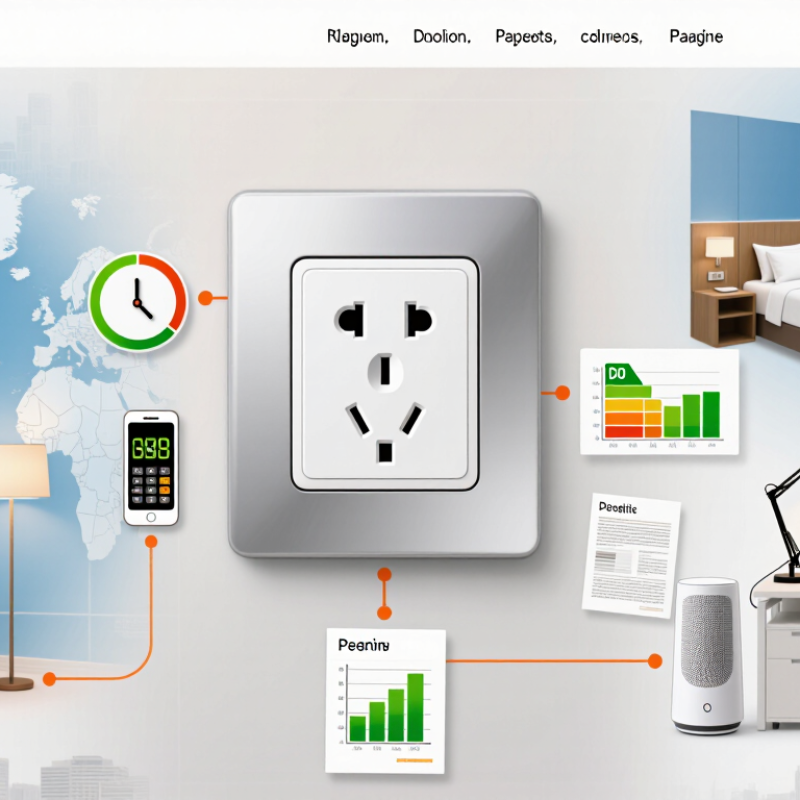
A smart wall socket is a wall-mounted power outlet with connected control features. It can switch appliances on or off through an app, timer, or voice command. Some models also measure energy use, helping buyers notice waste from heaters, lamps, or kitchen devices. The socket usually connects through Wi-Fi, Bluetooth, or another wireless network. It is more than a traditional outlet, but it still depends on safe electrical installation.
For global buyers, compatibility deserves careful attention. Check voltage, frequency, plug shape, grounding, and box dimensions before ordering. A socket designed for one market may not fit another country’s wiring system. Look for overload protection, child safety shutters, clear instructions, and recognized safety testing. In practical use, remote control feels convenient when a lamp is left on upstairs. However, network failure can interrupt smart functions. That limitation is easy to overlook.
Tips: Confirm local electrical requirements first. Choose a qualified installer when wiring changes are needed. Test the timer with a low-power lamp before connecting larger appliances. Keep the manual, and update the device only through secure channels. Smart control is useful, but it should not replace basic electrical safety. Some energy readings may also be approximate, so treat them as guidance rather than laboratory measurements.

Why Choose a Smart Wall Socket for Global Buyers?
What Is a Smart Wall Socket?
A smart wall socket is a wall-mounted electrical outlet that can be controlled through a mobile app, voice assistant, timer, or automation platform. For global buyers, electrical compatibility is essential because household voltage varies by market.
The chart shows representative nominal household voltages. A smart wall socket should be selected with the correct voltage rating, plug format, grounding design, and applicable safety certification for its target market. Japan commonly uses 100 V, North America commonly uses 120 V, while many European, UK, and Australian installations commonly use 230 V.
How Does a Smart Wall Socket Work?
A smart wall socket is a regular power outlet with a small electronic control system inside. It connects your appliance to electricity through a relay, which opens or closes the circuit. A wireless module then links the socket with a mobile app, voice assistant, or home automation network.
When you tap “on,” the app sends an encrypted command through Wi-Fi, Bluetooth, or another supported protocol. The socket receives the signal and activates the relay. Many models also measure voltage, current, and energy use. This information helps users notice unusual consumption, such as a heater drawing power overnight. However, remote control is not always instant. Network delays, weak signals, or router changes can interrupt operation. It is useful, but not magic.
Tips: Check voltage, frequency, wiring type, load rating, and plug standards before purchase. Some global buyers overlook neutral-wire requirements. That mistake can cause installation trouble. Choose a qualified electrician for fixed wiring, especially in older homes. Test the socket with a small lamp before connecting high-power equipment. Also review data permissions and update the control app regularly. A smart socket should improve convenience without replacing basic electrical safety.
Why Choose a Smart Wall Socket for Global Buyers? - How Does a Smart Wall Socket Work?
| Evaluation Dimension | Typical Technical Data | How It Works | Why It Matters to Global Buyers |
|---|---|---|---|
| Input Voltage | Regional mains commonly range from approximately 100 to 240 V AC. | The internal power supply converts mains electricity into low-voltage power for the control electronics and wireless module. | The socket must match the destination country’s voltage, frequency, plug format, and electrical regulations. |
| Operating Frequency | Most utility systems operate at 50 or 60 Hz, depending on the region. | The switching circuit and power supply are designed to operate within the specified mains frequency range. | Correct frequency compatibility helps prevent malfunction and supports reliable long-term operation. |
| Rated Load | Common ratings are approximately 10–16 A, subject to the regional socket standard and product design. | A relay or solid-state switching component connects or disconnects power to the appliance. | Buyers should compare the rating with the appliance’s continuous current and starting current, especially for motors, heaters, and pumps. |
| Wireless Connectivity | Wi-Fi at 2.4 GHz is widely used; Bluetooth Low Energy, Zigbee, Thread, or other technologies may also be available. | The wireless module receives commands from a mobile application, local hub, or compatible smart-home platform. | Protocol choice affects installation, network coverage, hub requirements, interoperability, and regional availability. |
| Remote Switching | Remote ON/OFF control is typically available through an app or smart-home system. | A command is authenticated by the controller and sent to the socket, which changes the relay state. | Users can control lighting and appliances without physically reaching the wall socket. |
| Scheduling and Automation | Schedules, countdown timers, sunrise/sunset routines, and sensor-based scenes are common functions. | The control software triggers the socket according to time, device status, sensor input, or a user-defined rule. | Automation can improve convenience and reduce unnecessary operating time. |
| Energy Monitoring | Selected models measure voltage, current, instantaneous power, and accumulated energy consumption. | Current and voltage sensors measure electrical parameters, while software calculates power and energy data. | Consumption data can help users identify standby loads and compare appliance operating patterns. |
| Manual Control | A physical push button or touch control is commonly included. | Pressing the local control changes the switching state and may also start pairing or reset procedures. | The socket remains usable when the phone, cloud service, or wireless network is unavailable. |
| Safety Features | Depending on the model, protections may include overload, over-temperature, surge, child protection, and flame-retardant materials. | Sensors or protective components interrupt or limit operation when unsafe electrical or thermal conditions are detected. | Protection levels vary by product, so buyers should verify test reports, certification, and installation requirements. |
| Standby Consumption | The control electronics consume a small amount of power while connected; the exact value depends on the design and communication protocol. | The wireless module and power supply remain active to receive commands and report status. | Low standby consumption is important when many smart sockets are installed in one property. |
| Installation Method | Options include replacement wall sockets and retrofit plug-in adapters. | A replacement unit is wired into the wall circuit, while an adapter is inserted into an existing outlet. | Replacement units provide a cleaner appearance; plug-in adapters usually offer simpler installation. |
| Interoperability | Compatibility depends on the communication protocol, application, hub, and smart-home ecosystem. | The socket exchanges device status and control commands through supported interfaces and software services. | Selecting an open or widely supported standard can reduce dependence on one control platform. |
| Regional Compliance | Required approvals differ by market and may cover electrical safety, radio equipment, electromagnetic compatibility, and environmental requirements. | Testing evaluates insulation, temperature rise, mechanical safety, electromagnetic behavior, and wireless performance. | Compliance documentation supports legal import, safer installation, and smoother distribution in the target market. |
Which Features Matter to Global Buyers?
For global buyers, a smart wall socket must solve practical problems before offering clever features. Electrical compatibility comes first. Check the destination country’s voltage, frequency, plug shape, wiring method, and load rating. A socket designed for one market may not fit another safely. Look for documented testing and approval requirements in the target market, not vague claims. Installation should also be clear enough for a qualified electrician to verify.
Remote control matters, but dependable local control matters more. Buyers should consider scheduling, energy monitoring, overload protection, and child-safety shutters. A useful socket can still operate when the internet fails. That detail is easy to miss. Support for common wireless standards can simplify installation across different homes, although compatibility lists deserve careful reading. Some devices connect quickly in a showroom but struggle through thick walls or crowded networks.
Data handling is another serious feature. Check whether the device explains permissions, storage, updates, and account recovery in plain language. Multilingual instructions and responsive technical support can prevent small installation errors from becoming expensive returns. A clear warranty helps, too. I once focused too heavily on app design and ignored the socket’s physical depth. It did not fit a shallow wall box. That mistake changed my evaluation process. Measure the wall box, confirm the wiring, and test the expected appliance load. No product is perfect. The best choice is transparent about its limits and reliable in ordinary daily use.
How Can Buyers Check International Compatibility?
Why Choose a Smart Wall Socket for Global Buyers?
How Can Buyers Check International Compatibility?
Global buyers should inspect electrical details before choosing a smart wall socket. Start with the destination country’s voltage, frequency, plug shape, and grounding system. A socket designed for one voltage range may fail in another market. Check the rated voltage, current, and maximum load printed on the product label. Do not guess. A plug adapter changes shape, not voltage.
The wiring requirements also matter. Some smart sockets need a neutral wire, while older homes may not have one. Confirm the wall box depth and terminal layout before installation. A qualified electrician should handle unfamiliar wiring. Check local safety certifications and required markings for the destination market. These details show whether the product can be legally and safely sold there.
Smart functions need a second review. Confirm support for local Wi-Fi bands, especially 2.4 GHz networks, and check whether the control app works in the buyer’s region. Some features may depend on regional servers or account settings. That can be overlooked. Review firmware update methods, privacy controls, and offline operation before ordering. In practical product checks, specifications sometimes omit important installation limits. Asking the seller for wiring diagrams, test reports, and compatibility confirmation is wiser than trusting a product photo. Even careful buyers can miss one detail. Recheck everything.
How Should Buyers Compare Safety, Cost, and Support?
Why Choose a Smart Wall Socket for Global Buyers?
How Should Buyers Compare Safety, Cost, and Support?
Safety should be checked before connectivity. Look for overload protection, heat-resistant materials, secure terminals, and reliable grounding. Ask for test reports that match the destination market’s voltage, frequency, and installation rules. A socket used in a humid kitchen needs a different risk assessment than one installed in a dry office.
Cost means more than the purchase price. Compare installation time, energy monitoring accuracy, warranty coverage, and replacement expenses. A cheaper unit may require extra adapters or frequent support. That savings can disappear quickly. I would also check whether firmware updates remain available after the first year. This detail is often overlooked.
Support shows how dependable the supplier may be. Clear wiring diagrams, multilingual manuals, responsive technical staff, and accessible spare parts matter during installation. Ask how software faults are diagnosed and how defective units are replaced across borders. Real experience suggests that even a well-tested socket can fail in unusual conditions. Buyers should leave room for that possibility, rather than trusting specifications alone. A small pilot order can reveal packaging damage, connection problems, or confusing instructions before a large purchase.