News
Why Choose Solar Street Lights Outdoor for Global Projects?
Why Choose Solar Street Lights Outdoor for Global Projects? The answer begins with changing infrastructure economics. IRENA’s Renewable Capacity Statistics 2024 reported approximately 346 gigawatts of new solar capacity in 2023. Solar represented about 73% of total renewable additions. This momentum supports wider confidence in decentralized energy systems, including public lighting.
Yet solar lighting is not a universal shortcut. The World Bank’s guidance on municipal public lighting emphasizes energy efficiency, lifecycle costs, maintenance, and reliable service delivery. These factors matter on a dark rural road, a coastal walkway, or a remote construction site. A well-designed Solar Street Lights Outdoor system can combine photovoltaic panels, LED luminaires, batteries, and smart controls without extending underground power cables. Installation may be faster. Disruption can also be lower.
Practical design decides whether the investment succeeds. Engineers should examine solar radiation, rainy-season autonomy, pole spacing, road classification, wind loading, battery temperature, and nighttime traffic. IEC 60598-1 and relevant regional standards provide useful safety benchmarks for luminaires. However, certification alone does not guarantee performance. Poor battery sizing can leave a road unlit before dawn. Dust can reduce panel output. Salt air can damage unprotected hardware.
The technology is promising. It is not magic. Project owners should request photometric simulations, warranty terms, replacement plans, and measured operating data. IRENA’s cost analysis also shows that falling renewable technology costs do not remove financing, maintenance, or supply-chain risks. For global projects, the strongest choice is therefore not the cheapest fixture. It is a tested, serviceable system matched to local conditions, transparent procurement, and long-term public safety.
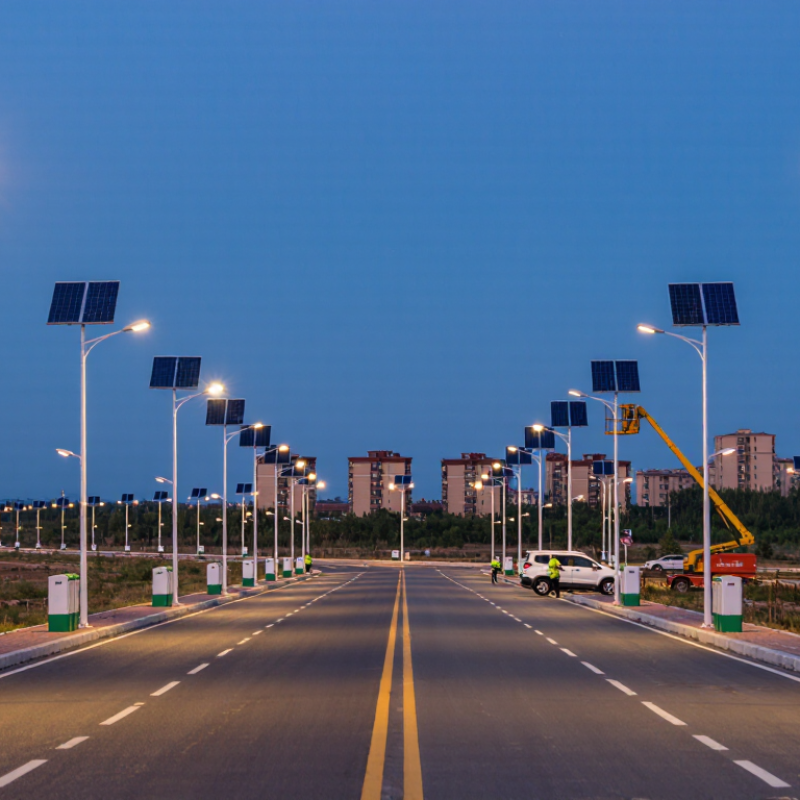
Solar Street Light Systems: PV Modules, Batteries, LEDs, and Controllers
Solar street lights suit global outdoor projects because they generate power where grid access is limited or unreliable.
Their performance depends on four connected parts: PV modules, batteries, LEDs, and controllers. A field survey should check sunlight, road width, shadows, rainfall, dust, and seasonal changes before installation.
PV modules convert daylight into electricity, but their angle and cleanliness matter. A nearby tree can reduce daily charging more than expected.
The battery stores energy for cloudy nights and should match local temperature and required autonomy. In very hot regions, heat can shorten battery life.
That detail is often underestimated.
Correct capacity is not simply a larger capacity.
LEDs provide efficient illumination with controlled beam patterns. Good optical design places light on the road, not in drivers’ eyes or nearby windows.
Controllers manage charging, lighting schedules, dimming, and battery protection. Some systems reduce output after midnight, saving energy while preserving essential visibility.
This setting needs testing, not guessing. Installers should verify wiring, enclosure protection, grounding, and local electrical requirements.
Salt air, sand, and heavy rain can expose weak components quickly. Reliable projects include routine inspections, spare-part planning, and clear performance records.
The design may look simple, yet small mismatches between these four components can cause dark streets.
Energy Efficiency: U.S. DOE Reports 50–70% Savings from LED Lighting
Solar street lights are gaining attention in global outdoor projects because they combine efficient LEDs with independent power generation. The U.S. Department of Energy reports that LED lighting can reduce energy use by 50–70% compared with conventional lighting. That difference matters along rural roads, public paths, and remote work sites. Lower consumption allows smaller solar panels and batteries. It can also reduce trenching and grid connection costs.
Real project performance depends on more than the LED fixture. Designers should review sunlight levels, seasonal weather, pole spacing, lighting schedules, and battery temperature. A well-sized system can illuminate a pathway through the night, even after a cloudy day. However, poor calculations may cause dim lighting before dawn. The first design is rarely perfect. Field measurements and nighttime inspections remain valuable.
Tips: Use verified local solar data, not broad regional averages. Set realistic lighting levels and dim during low-traffic hours. Check battery capacity after several cloudy days. Keep panels clear of dust, leaves, and snow. Review the site after installation; actual shadows may differ from planning drawings. Saving 50–70% is a credible benchmark for LED efficiency, but total project savings require honest maintenance and lifecycle cost analysis.
Global Solar Potential: IRENA Recorded 1,419 GW of PV Capacity in 2023
Why Choose Solar Street Lights Outdoor for Global Projects?
IRENA recorded 1,419 GW of global photovoltaic capacity in 2023. This figure shows how quickly solar energy has moved from a niche option to core infrastructure. For outdoor lighting, that growth matters. Solar street lights can serve roads, pathways, parking areas, and remote settlements without extensive grid trenching. They collect sunlight during the day, store energy, and provide illumination after sunset.
The hardware still needs careful engineering. Project teams should study local solar radiation, seasonal cloud cover, temperature, dust, and pole spacing before installation. A coastal road may require corrosion-resistant materials, while a snowy region needs panels with suitable tilt and reliable battery performance. In field planning, lighting calculations are as important as solar calculations. Poor spacing can leave dark patches, even when the system produces enough energy.
No design is perfect.
A cloudy week can expose weak assumptions. Oversized batteries may increase cost, while undersized systems can reduce nighttime reliability. Practical projects benefit from verified lighting standards, realistic autonomy targets, and routine inspections. Data from IRENA supports solar’s global potential, but each location remains different. Local testing, honest maintenance planning, and measured performance should guide the final choice.
Off-Grid Reliability: Battery Autonomy, IP Ratings, and IEC 60598 Standards
Why Choose Solar Street Lights Outdoor for Global Projects?
For global projects, solar street lights offer reliable illumination without grid connections or long cable runs. Remote roads, ports, and community paths often face unstable power access. Off-grid reliability begins with realistic battery planning. Battery autonomy should cover several low-sun days, not only one clear night. Local weather data matters. So does seasonal shading.
Battery capacity, temperature, load, and charging efficiency affect actual performance. A larger battery is not always better. It can increase cost, weight, and replacement difficulty. Field teams should review night-time dimming schedules and emergency lighting needs. These details often reveal hidden energy demand. No design is perfect. Conservative calculations are safer, but excessive margins may waste resources.
Protection ratings also deserve close attention. An IP65 enclosure can resist dust and water jets, while higher exposure may require stronger protection. Installation quality still matters. Poorly sealed cable glands can undermine a good enclosure rating. IEC 60598 provides important requirements for safety, construction, testing, and performance. Project teams should verify applicable sections and request clear test documentation. Independent inspection adds confidence, especially across different climates and contractors. Regular checks should include battery condition, panel cleanliness, corrosion, and pole stability. Small details matter. Reliability is built through verified specifications, careful installation, and honest maintenance planning.
Project Evaluation: Life-Cycle Cost, CO₂ Reduction, and Grid-Extension Benefits
Choosing outdoor solar street lights requires more than checking panel wattage. Project teams should compare lifetime costs, carbon reductions, and avoided grid-extension expenses. IRENA reported a global weighted-average solar PV electricity cost of about USD 0.044 per kWh in 2023, although street-light economics also include batteries, poles, controls, maintenance, and replacement cycles.
The economics are local. A remote road may need kilometres of cable, transformers, trenching, and permits before one lamp operates. World Bank ESMAP studies find that decentralized energy systems can be more economical than grid extension in dispersed settlements. A proper evaluation should compare both options over 15 to 20 years, using discounted cash flow, battery replacement dates, lamp failures, and transport costs. Field assessments often reveal an overlooked issue: poor installation or weak maintenance can erase expected savings.
Carbon performance also deserves measured assumptions. NREL’s harmonization review places utility-scale solar PV near a median lifecycle intensity of roughly 40 grams of CO₂-equivalent per kWh, far below fossil-based generation. Solar street lights can therefore reduce operational emissions and night-time diesel use, especially where generators serve isolated roads. Results depend on battery life, recycling practices, shading, and local electricity sources. The estimate may be optimistic. A pilot installation, seasonal monitoring, and recorded maintenance data should test the model before large-scale procurement. IEA PVPS reports that global PV deployment continues to expand rapidly, but that trend does not remove site-specific engineering risks.
Related Posts
-
China Best Solar Street Lights Outdoor for Global Buyers
-
How Solar Street Lamps are Revolutionizing Urban Lighting and Enhancing Sustainability
-

2026 Best Solar Street Lights Outdoor for Global Buyers?
-
Challenges in Choosing the Best Solar Led Street Light for Global Buyers
-

China Top 10 Solar Street Lamp Brands You Should Know?
-
Best Commercial Solar Street Lights for Global Buyers?