News

How to Choose the Best Outdoor Solar Panel Lights?

Choosing outdoor solar lights is not just a matter of comparing brightness claims. A fixture may look impressive on a product page, yet disappoint beneath a porch roof or beside a shaded fence. Solar Panel Lights Outdoor work best when their panel receives useful daylight, their battery suits the expected hours of darkness, and their beam reaches the area that actually needs light.

The International Energy Agency’s Renewables 2024 report says global renewable capacity additions reached nearly 560 gigawatts in 2023, with solar PV contributing about three-quarters. That growth shows how important solar technology has become, but it does not guarantee that every small garden light will perform equally well. Site conditions still matter. The U.S. Department of Energy’s Energy Saver guidance likewise recommends placing solar lighting where panels can receive adequate sunlight. A few hours of afternoon shade can change the result.

Small details matter. Check the panel type, battery capacity, weather-resistance rating, and stated runtime together. A bright beam is useful for a path, while a softer, wider glow may suit a patio. Also consider winter daylight and cloudy stretches, not only a clear summer afternoon. Product specifications can be incomplete, and runtime claims may reflect ideal test conditions. That deserves a closer look. This guide explains how to compare those trade-offs, assess installation needs, and choose lights suited to your space rather than relying on headline numbers alone.
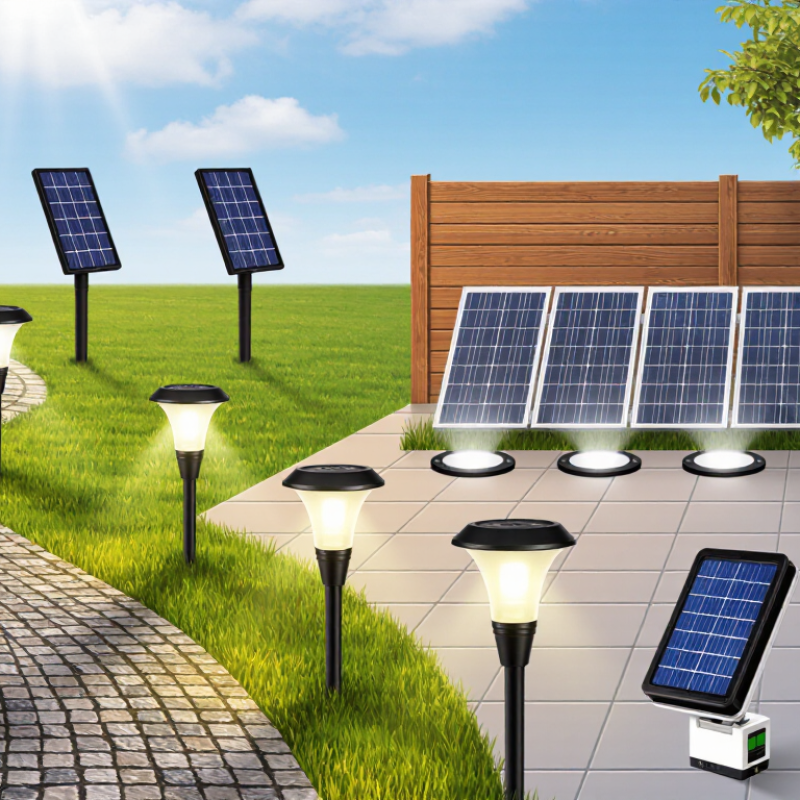
How to Choose the Best Outdoor Solar Panel Lights?

Assess Your Outdoor Lighting Needs and Available Sunlight

Before comparing fixtures, decide what each area must do after sunset. A path needs low, even guidance; steps need visible edges, while a patio may need broader light for dining. Mark the spots on a simple sketch and note where people walk, sit, or carry items. That small exercise can prevent buying bright lights for the wrong places.

Then watch the sun, not just the weather app. Solar panels generally charge best with several hours of direct sunlight. Shade from eaves, trees, or fences can reduce charging. Check each proposed panel location in the morning, at midday, and in late afternoon. If possible, repeat the check in another season. A sunny winter day may still leave a panel shaded for much of the afternoon. Not every day.

If the design allows a separate panel and lamp, measure the cable route before installation. Note nearby security lights and reflective windows, which can affect placement and comfort. Estimate nightly use: a motion-triggered entrance light usually runs less than one kept on all evening. It is easy to overlook one shaded corner when the rest of the yard looks bright. Small details matter. Treat runtime estimates as a starting point; actual performance varies with sunlight, temperature, battery condition, and settings.

Compare Solar Panel Types, Battery Capacity, and Charging Time

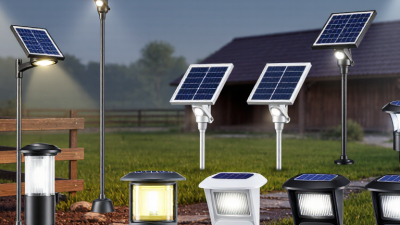
Choose the panel for the available space and sunlight. Monocrystalline panels generally deliver more power from a small surface; polycrystalline panels can be a practical lower-cost option, while thin-film panels are lightweight but often need more area. Fraunhofer ISE’s 2024 Photovoltaics Report places commercial silicon-module efficiencies broadly around 20–24%, though small light fixtures may use different components. Check the product’s rated output, not just the panel’s appearance. A shaded fence post changes the equation.

Battery capacity needs context. Compare watt-hours when possible: multiply amp-hours by battery voltage. A 2,000 mAh battery at 3.2 volts stores about 6.4 Wh. The same mAh rating at another voltage does not mean equal stored energy. A 6 Wh battery paired with a 2 W panel needs at least three peak-sun hours on paper. Real charging takes longer. Conversion losses, heat, and partial shade all reduce the energy reaching the battery.

Look for charging-time claims tied to sunlight conditions. “Full charge in six hours” is hard to assess without knowing panel output and test conditions. NREL’s PVWatts tool estimates solar production using location and weather data, a useful reminder that sunlight varies by place and season. Check the panel’s direction and nearby tree cover at midday. Cloudy weeks can leave a light dimmer than expected. One limitation: published battery capacity may not equal energy available to the lamp.

Choose Brightness, Coverage, and Nighttime Runtime

Start with the task, not the advertised lumen count. A gate needs a clear pool of light; a long path needs even coverage without dark gaps. Lumens measure total light output, but beam angle, mounting height, and distance determine how much reaches the ground. Walk the area at night and mark the dim spots. Coverage matters.

Solar fixtures usually use LEDs, so efficient light output can stretch a small battery. The U.S. Department of Energy’s Energy Saver guidance reports that LEDs use at least 75% less energy and last up to 25 times longer than incandescent bulbs. That comparison is useful, but it does not predict a specific light’s runtime. Check the battery capacity and the maker’s stated hours, then treat those hours as a best-case estimate.

Runtime depends on sunlight as much as battery size. NREL’s National Solar Radiation Database provides location-based solar and weather data, underscoring why exposure varies by place and season. Keep panels clear of branches and shade; a bright winter afternoon may still store less energy than a long summer day. Cloudy weeks happen. I still find runtime easy to misjudge, so compare performance after several nights, not just one. A motion setting may preserve charge, but test whether it leaves the path bright enough when someone actually arrives.

How to Choose the Best Outdoor Solar Panel Lights? - Choose Brightness, Coverage, and Nighttime Runtime

Lighting Need Typical Brightness to Consider Coverage Guidance Nighttime Runtime to Look For Useful Features Best Fit
Pathway or step lighting About 5–50 lumens per light for low-level guidance Place lights along the route; spacing depends on beam spread, path width, and how much overlap you want. Look for several hours after a full charge; actual runtime varies with sunlight, season, and battery condition. Low-glare optics, dusk-to-dawn operation, weather-resistant construction Walkways, garden borders, and steps where subtle orientation lighting is enough
Doorway or small wall area About 100–300 lumens for practical local illumination Check the stated beam angle and mounting height; a wider beam spreads light over a larger area but may appear less intense. Choose a model that can remain on through the hours you need; motion-activated operation can conserve stored energy. Separate solar panel, adjustable head, dusk sensor, motion sensor Entrances, sheds, and small outdoor work areas
Security lighting About 300–1,000+ lumens, depending on the area and desired intensity Use beam angle and installation height to judge usable coverage; avoid aiming light into neighboring windows or public roads. For motion-triggered models, check standby behavior and how long the light stays on per activation; frequent triggers can reduce runtime. Adjustable motion detection, selectable brightness, replaceable battery where available Driveways, garage approaches, and larger entrances
Garden accent or spotlighting About 20–200 lumens for many decorative or focused applications A narrow beam highlights a feature; a wider beam illuminates more of a planting bed or wall. Compare the advertised runtime at the selected brightness setting, not only the lowest setting. Adjustable spotlight head, ground stake, separate panel for better sun placement Trees, landscape features, signs, and architectural details
Patio or general outdoor area Approximately 100–500 lumens per fixture as a starting point; the required total depends on area and task For even light, use multiple fixtures or a broad beam rather than relying on one small point of light. Compare full-brightness runtime and charging conditions; cloudy weather and shade can shorten operating time. Multiple brightness modes, larger solar panel, replaceable battery, suitable outdoor rating Seating areas, small decks, and outdoor dining spaces

Selection note: These are general planning ranges, not guarantees for a specific product. Lumens measure light output, while real coverage depends on beam angle, mounting position, and obstructions. Solar charging and runtime vary with panel exposure, weather, season, battery capacity, and brightness setting. Check the product’s stated water-resistance rating and runtime conditions before buying.

Check Weather Resistance, Materials, and Installation Options

Outdoor solar lights face more than rain. Check the IP rating before buying; IP65 indicates protection against dust and water jets, while IP44 offers less protection. Match the rating to the spot: a sheltered porch differs from an exposed garden path. Look for UV-resistant housings and corrosion-resistant fasteners, especially near sprinklers or salty coastal air. A sturdy lens should seal evenly, with no visible gaps around the panel or battery compartment.

Panel durability also matters. A 2013 meta-analysis by NREL researchers Jordan and Kurtz found median photovoltaic module degradation near 0.5% per year. That figure describes modules, not a complete light; its small battery may wear sooner. Installation affects real-world output, too. Mount panels where branches and roof edges will not cast afternoon shadows, and angle them toward the strongest available sun. Wall mounts suit narrow paths, while stake mounts allow easy repositioning. I have found that “full sun” can be misleading in winter.

Tips: Inspect seals and mounting hardware each season. Keep panels clear of leaves and dust. Test the proposed location for a day before fixing it permanently. Small details matter.

Compare Useful Features, Warranty, and Overall Value

Outdoor solar panel lights are easiest to compare when you focus on how they will work in your space. Check the panel’s size and cable length, especially if the light will sit beneath an eave while the panel needs direct sun. Look for a stated weather-resistance rating and clear details about battery capacity, charging time, and run time. Motion sensing can save stored power near a driveway, while steady, softer light may suit a path. More settings are not always better.

Warranty terms can reveal how confidently a product is supported. Read what the coverage includes, how long it lasts, and whether the battery is excluded or replaceable. A low purchase price may not be good value if a weak battery fades after one cloudy season. Still, advertised run times can be optimistic; shade, winter days, and installation angle all matter. I would compare the conditions behind the numbers, not just the numbers themselves.

Tips: Check the spot at midday and again near sunset before choosing a panel location. Keep it clear of branches and dust. If possible, test one light through a few ordinary weather changes before buying several. A little extra setup can prevent a dim corner later.