News
What Are the Top Types of Solar Street Lights in 2026?
Solar Street Lights are no longer one-size-fits-all fixtures. In 2026, buyers can choose from all-in-one units, split-panel systems, motion-sensing models, and connected street-light networks. Each design solves a different problem. A compact all-in-one light can simplify installation along a footpath, while a separate panel may offer better positioning beside a shaded road. The right choice depends on more than brightness claims.
This guide compares the leading types by examining their layouts, operating features, and practical trade-offs. It considers details that matter in the field: panel exposure, pole height, battery capacity, lighting schedules, and access for maintenance. A narrow lane with limited sunlight has different needs from an open parking area. So does a location that must stay lit through long winter nights. Small details count.
Product labels can be confusing. “Smart” does not automatically mean reliable, and a larger battery alone cannot guarantee dependable lighting. Specifications should be checked against the site, and performance claims deserve careful scrutiny. That takes time. Some comparisons will still depend on local conditions, which product summaries cannot fully capture. By understanding how each type works, readers can ask better questions and shortlist options with clearer expectations. The aim is practical guidance, not a universal winner.
How Solar Street Lights Generate and Store Power
What Are the Top Types of Solar Street Lights in 2026?
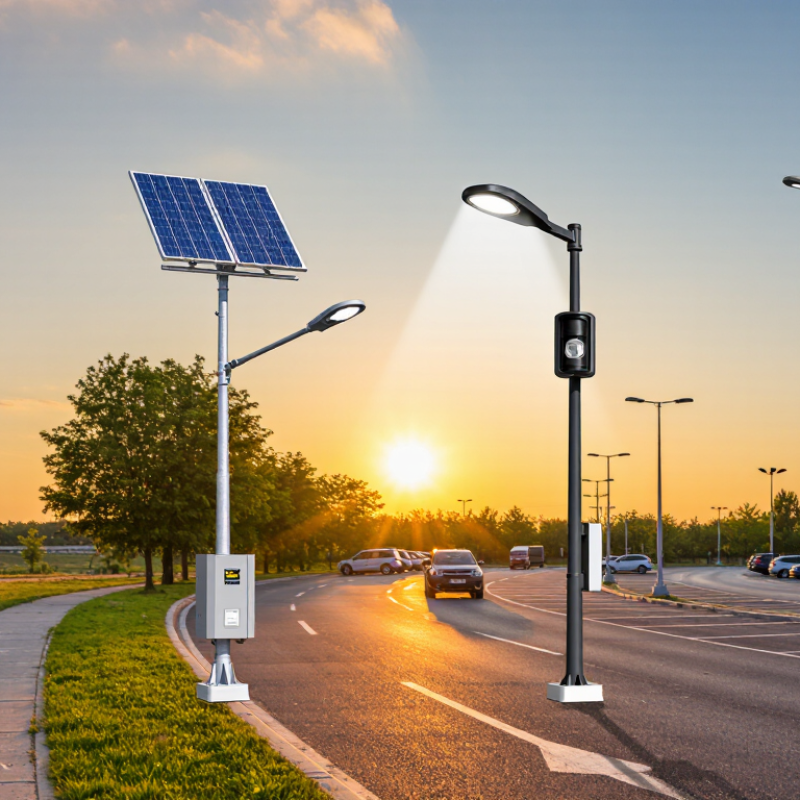
Solar street lights generate electricity through photovoltaic panels. During daylight, the panels convert sunlight into direct-current power. A charge controller regulates that energy and sends it to a rechargeable battery. After sunset, a light sensor activates the LED fixture, which draws power from the battery. Power flows quietly. No trenching for grid cables is needed, though installation still requires careful planning.
In all-in-one models, the panel, battery, controller, and lamp sit in one compact unit. Split-type designs place the panel apart from the light, allowing more flexible positioning. Both rely on the same basic process, but their performance depends on sunlight, battery capacity, and operating settings. A row of shaded trees can reduce charging, even when the fixtures look identical. Cloudy days matter, too. Battery aging can also shorten overnight run time, a detail that is easy to overlook.
Tips: Check the site’s sun exposure before choosing a system. Keep panels clear of leaves and dust, and compare battery capacity with expected nightly operating hours. Motion dimming can save energy, but test whether the light level suits the road or walkway. Planning is rarely perfect. Regular inspection helps catch problems early.
The Main Types of Solar Street Lights in 2026
Solar street lights in 2026 are usually classified by panel placement and system design. All-in-one models combine the solar panel, battery, LED lamp, and controller in one fixture. They suit sidewalks, small parking areas, and sites where quick installation matters. Their compact shape is convenient, but the panel angle may be difficult to adjust. Shade and winter sunlight can also limit charging.
Split solar street lights place the panel apart from the lamp, often on a separate pole bracket. This allows installers to face the panel toward stronger sunlight and choose a larger panel when the site needs it. The trade-off is more cabling and mounting work. More parts to inspect. Semi-integrated models sit between these designs: the lamp and battery share a housing, while the panel remains separate. They can offer a useful balance, though the final layout depends on pole space and local weather.
Some systems add adaptive controls, such as dimming lights during quieter hours and increasing output when movement is detected. This is a control feature, not a separate panel configuration, and it can be combined with different system types. Before choosing, compare expected nightly runtime, battery capacity, shading, and maintenance access. A bright fixture is not automatically the better choice. I would also check real site conditions; paper specifications can make an undersized system look adequate.
All-in-One, Split, and Semi-Integrated System Designs
What Are the Top Types of Solar Street Lights in 2026?
All-in-One, Split, and Semi-Integrated System Designs
Choosing a solar street light starts with its layout, not just its wattage. An all-in-one unit places the panel, battery, controller, and LED head together. It is compact and quick to install, which suits paths and small parking areas. But the battery sits close to the lamp and may face heat; check replacement access and operating-temperature specifications.
IRENA’s Renewable Capacity Statistics 2025 reports 1,865 GW of global solar PV capacity by the end of 2024. That figure shows the technology’s scale, not a guarantee of good nighttime lighting.
Split systems separate the solar panel from the light head, allowing installers to angle the panel toward the sun while positioning the lamp for road coverage. They can suit shaded sites or poles with room for separate components, though extra wiring and mounts need careful protection.
Semi-integrated designs typically combine the panel and lamp head while locating the battery or controller elsewhere. They offer a middle ground, but product terminology varies. Ask for a wiring diagram. Then compare battery capacity, expected autonomy during cloudy periods, and local shade conditions. A neat fixture can still disappoint if its panel faces a wall or nearby trees.
Key Differences in Lighting, Batteries, and Smart Controls
What Are the Top Types of Solar Street Lights in 2026?
Key Differences in Lighting, Batteries, and Smart Controls
Solar street lights generally come as all-in-one, semi-integrated, or split systems. In all-in-one units, the panel, battery, and lamp share one housing. They install neatly, but the panel angle may be harder to adjust. Split systems place the panel apart from the lamp, which can help in shaded locations. Semi-integrated designs offer a middle ground. Lighting quality depends on more than wattage. Check the beam pattern, brightness, and color temperature. A narrow road and a broad intersection need different light distribution.
Battery choice affects runtime and replacement planning. Lithium iron phosphate batteries are often selected for their long cycle life and thermal stability, while other lithium-ion options may suit different budgets and designs. Actual performance still depends on capacity, temperature, charging, and installation. Smart controls add another layer. Photocells switch lights on at dusk, while motion sensors can raise brightness when people or vehicles approach. Dimming schedules save energy, though overly aggressive settings can leave dark patches. Small details matter.
Tips: Ask for expected nighttime runtime under local winter conditions, not just a battery capacity figure. Check whether controls allow practical dimming adjustments. Review a lighting layout before installation; pole spacing and tree shade can change the result. Even good equipment can disappoint when the site assumptions are wrong.
Choosing a Solar Street Light Type for Each Application
Choosing a solar street light starts with the site, not the product label. All-in-one lights combine the panel, battery, and LED head in one compact unit. They suit paths, small parking areas, and locations where quick installation matters. That matters. But a tidy, self-contained design may offer less freedom to position the panel away from shade.
Split-type lights separate the panel from the lamp, allowing installers to angle it toward stronger sunlight. They can be a better fit for wider roads, tall poles, or sites with changing shade. Check the cable route, mounting strength, and battery capacity, not just the advertised brightness. A larger panel helps only when the system receives enough sun and stores enough energy for darker days.
For essential routes or cloudy regions, hybrid solar lights can use solar power alongside a grid connection. They may provide more dependable lighting, but add equipment and maintenance needs. For a quiet walkway, that can be unnecessary. For a road junction, it may be worth considering. Compare the required light coverage, winter sunlight, operating hours, and expected cloudy-day backup before choosing. Specifications can look reassuring; real site measurements are better.
| Type | Basic Configuration | Best-Fit Applications | Key Advantages | Planning Considerations |
|---|---|---|---|---|
| All-in-One Solar Street Light | The solar panel, battery, LED light, and control electronics are combined in one luminaire assembly. | Paths, parks, small parking areas, residential streets, and sites where installation simplicity is important. | Compact layout, fewer separate components, and relatively straightforward installation and maintenance access. | Confirm that the panel and battery capacity suit local sunlight, lighting hours, and required autonomy. The fixed assembly may offer less flexibility in panel orientation. |
| Semi-Integrated Solar Street Light | The panel and LED luminaire are combined or mounted together, while the battery and sometimes the controller are housed separately. | Roads, campuses, and public spaces needing a neater appearance with some flexibility in battery placement. | Can keep heavier battery components separate from the light head while retaining a relatively streamlined installation. | Product configurations vary. Check component locations, cable routing, service access, and whether the panel can be aimed appropriately for the site. |
| Split-Type Solar Street Light | The photovoltaic panel is mounted separately from the LED luminaire; the battery and controller may be installed on the pole, in a cabinet, or at another protected location. | Major roads, high-latitude or shaded sites, larger lighting loads, and locations where panel orientation or component sizing needs more flexibility. | Allows independent placement and sizing of the panel and battery, which can help address site-specific sunlight and lighting requirements. | Requires more cabling and installation work. Allow for secure mounting, suitable cable protection, and accessible, weather-protected equipment locations. |
| Solar-Grid Hybrid Street Light | Uses solar power and battery storage, with a grid connection available to supplement charging or provide backup, depending on the system design. | Busy urban roads, intersections, public areas, and other locations where lighting continuity is especially important. | Can reduce reliance on the grid while providing an alternative energy source during periods of limited solar generation. | Requires grid connection, compatible controls, and electrical installation planning. Confirm how the system switches between sources and what happens during grid outages. |
| Solar Street Light with Remote Panel | A split-system arrangement in which the photovoltaic panel is placed away from the pole-mounted light to reach a sunnier or more suitable location. | Sites where the pole is shaded, the luminaire position limits panel exposure, or nearby open space offers better solar access. | Separates the panel location from the lighting location, helping avoid some shading and orientation constraints. | Assess cable length, voltage drop, protection, and mounting security. Remote placement does not remove the need to size the system for local weather and lighting demand. |
Selection note: Choose a system based on the required light level and operating schedule, local solar resource, shading, battery autonomy, installation conditions, and maintenance access. A site-specific lighting and energy assessment is recommended before installation.
Related Posts
-
Top 10 Solar Street Lamp Suppliers Worldwide
-
Why Choose Solar Street Lights Outdoor for Global Projects?
-
China Top 10 Solar Street Lamp Brands You Should Know?
-

2026 Best Solar Street Lights Outdoor for Global Buyers?
-
Top 10 Outdoor Solar Panel Lights for Global Buyers?
-
Top 5 Tips for Choosing the Best Solar Tree Lights?